A sub-basement in Whitehall. A filing cabinet against the far wall, olive-drab, three drawers, government issue 1938. The top drawer holds everything Division 5 has ever admitted to on paper. It is empty. The middle drawer is locked with a key no living person has ever held. The bottom drawer is full.
A woman in her sixties unlocks the bottom drawer with a key she has carried since 1974. She lifts out a single manila folder, sealed in red tape across four edges. She does not open it. She signs a ledger with a pen she borrowed from a man who died in Prague in 1983, and returns the folder to the drawer.
The world of Division 5 is the world outside your window, give or take eighty years. The headlines are the same headlines you remember. The difference is everything behind the headlines, the conversations in embassy basements, the tap on a Warsaw Pact phone line, the dossier a junior analyst will not live to file.
This chapter describes that world. When a table asks what does it feel like to work here? the answer is in this chapter.
How to Read This Chapter
This chapter has four layers, each progressively tighter. Start at the outside.
- The World as It Stands is the view from ten thousand feet: the geopolitical shape of the Universe and the three layers of an operative’s daily life.
- Division 5: What It Is is the institutional biography. Six phases from founding to present. Read this once; reference it forever.
- The Three Eras is the meat of the chapter. Each era gets its own theaters, its own agencies, its own doctrine, and one vignette of daily life at full resolution.
- Factions, Assets, and Conceits is the connective tissue, who else is on the board, what it costs to work with them, and the eight non-negotiable truths that hold the Universe together.
GMs should read the whole chapter. Players should at minimum read the era their table has chosen and skim the two they have not.
The World as It Stands
The world of Division 5 is the real world. The maps are the same maps. The currencies are the same currencies. The presidents and premiers and prime ministers are the ones history recorded. What this Universe adds is a second map: the one that was never printed, the one where the safe houses are dots and the compromised embassies are crosses and the dead drops have colors assigned by the decade they were installed.
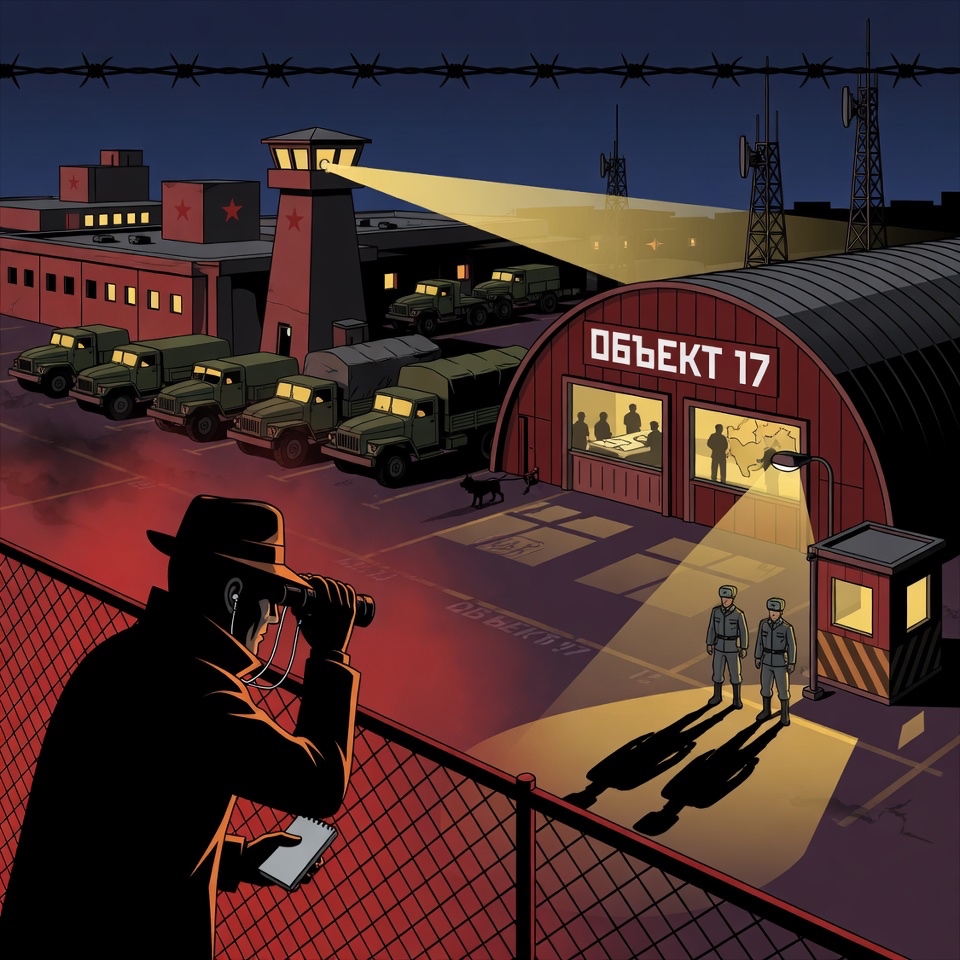
An operative lives on both maps simultaneously. The public map tells them what street they are on. The second map tells them which side of the street to walk down, and at what speed, and whether to meet the eyes of the man reading a newspaper on the bench.
There is no moment at which an operative is not on the clock. Even asleep, even drunk, even in love, especially in love, the reflexes keep ticking. Who followed me home? Did I leave the curtains the way I always leave them? Is that lightbulb the same lightbulb I screwed in last Tuesday?
Retirement, when it comes, does not end the reflex. It only takes away the paycheck for using it.
The Three Layers of an Operative’s Life
Every D5 agent carries three lives stacked on top of one another. They run concurrently and cannot be separated without disaster.
The cover life is the one the neighbors see. The one on the tax returns. The job at the small trade consultancy in Brussels, the imported-wine shop in Paris, the freelance photography practice in Istanbul. The cover life is designed: it is a fiction, carefully maintained, with receipts. It has friends, a favorite café, a dentist. It is plausible under a thirty-minute conversation and defensible under a three-hour interrogation. It is also, in the end, disposable.
The service life is the one the Division knows about. The real name on the real file in the real vault. The paycheck deposited through three shell accounts. The handler who calls at odd hours from a number that does not exist. The safe houses, the cleared stations, the coded phrases. The service life is institutional, it is the life you share with the other people who do the same job, and it is the only place you can talk about any of it without lying.
The field life is the one the mission happens in. The meet in the park at 0300. The border crossed at the slowest hour. The asset convinced, or bought, or turned, or broken. The field life has no documents. It runs on muscle memory and the plans you made last week that were only half right. It is the life the other two lives exist to make possible.
An operative manages all three with the same face. The mistake is never that the lives collide, the lives always collide, eventually. The mistake is having any one of them so thin that the collision is fatal.
What Has Changed, and What Has Not
Between 1939 and the present, everything about spying has changed except the part that matters.
The technology has moved through four or five complete revolutions. The wireless-set-in-a-suitcase of 1943 is the satellite uplink of 1983 is the encrypted sideband on a stolen phone of 2024. The dead-drop brick in 1961 East Berlin is the drop in a public wiki revision in 2017 Kyiv. The one-time pad of 1944 is the quantum-resistant key-exchange of next Tuesday.
The tradecraft is the part that matters. Making and breaking a Legend, building trust with an asset, walking a surveillance route to be certain you are alone: these were learned the hard way by people who did not live to teach them, written down in compendia that have been revised but never rewritten, and passed to each new officer by example, by correction, and by the stomach-drop of being caught in a training exercise by someone senior enough to be disappointed.
So are the stakes. The mission is still to know what the other side knows, to keep what you know from them, and to bend an event that has not yet happened toward a preferred outcome without leaving a fingerprint. The casualty rate has dropped since the 1940s. The consequences of being caught have not.
The Shape of the Board
At any moment in any of the three eras, the board has the same shape: adversary services, allied services, neutral services, and the non-state actors who do not respect the other three categories. Division 5 treats all four with the same calibrated distrust, scaled by how recently any of them tried something.
The ratios change. In the Shadow War, two axis services commanded most of the threat budget, the Abwehr (military intelligence) and the RSHA (which swallowed the Gestapo and the SD). In the Long Dark, it was the KGB and the Stasi and sometimes the Cubans. In Nightscreen, the ratio is fractured, state services matter, but so do five private firms in Herndon and a ransomware collective nobody has put a face on.
Division 5’s answer does not vary: work the asset, build the Legend, run the operation, and do not fall in love with the theater or the decade.
What is Division 5
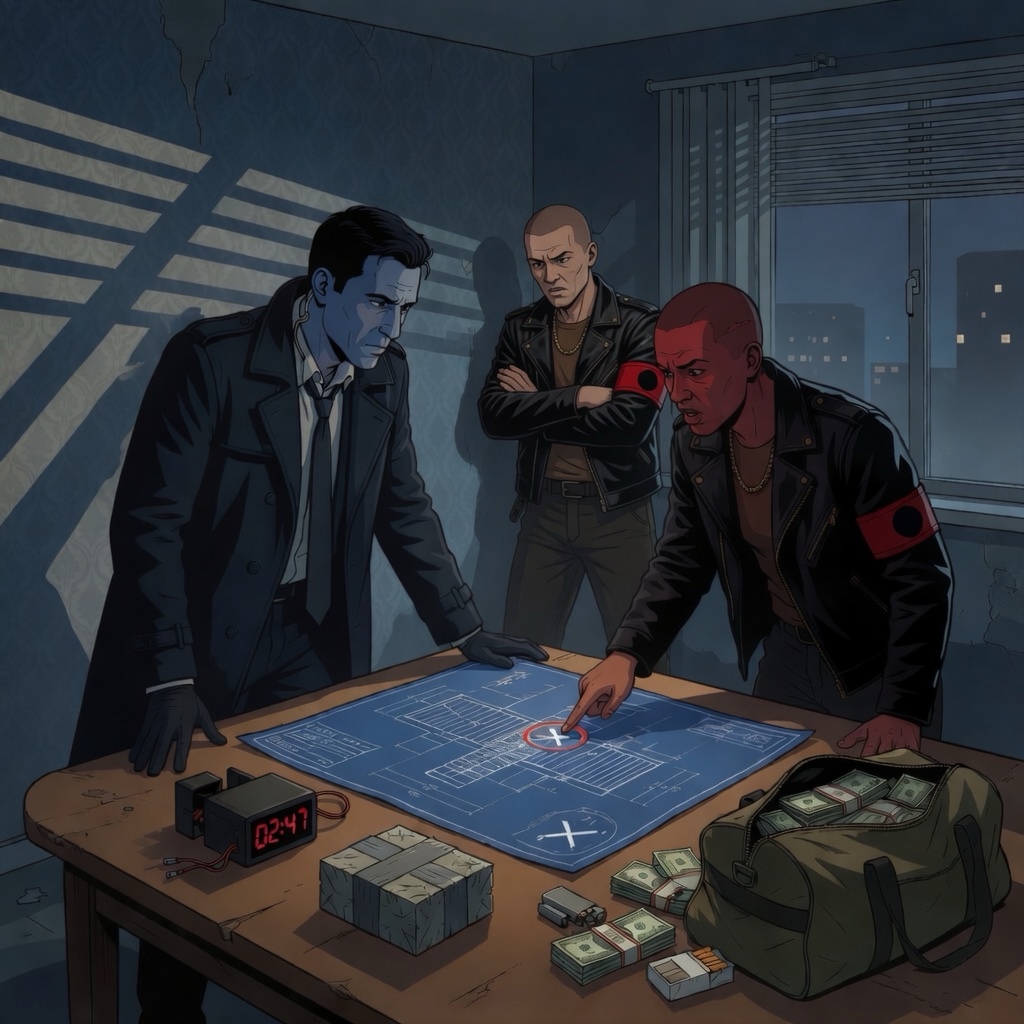
Division 5 is an institutional fact and a bureaucratic ghost. It has a director, a budget, a charter, and a telephone number none of these can be proved. Six files in the Cabinet Office in London reference it obliquely; four in the National Archives in College Park, Maryland do the same; an unknown number in Moscow; an unknown number in Paris. No government has ever acknowledged it publicly, and none has ever officially disavowed it.
It has operated continuously from 22 September 1939 to the current date. It has never been audited. It has buried three of its own directors and lost two more to retirement that was officially a quiet death in Portugal and unofficially nothing of the kind.
This section is its institutional biography, in six phases.
Phase I: The Founding (1939)
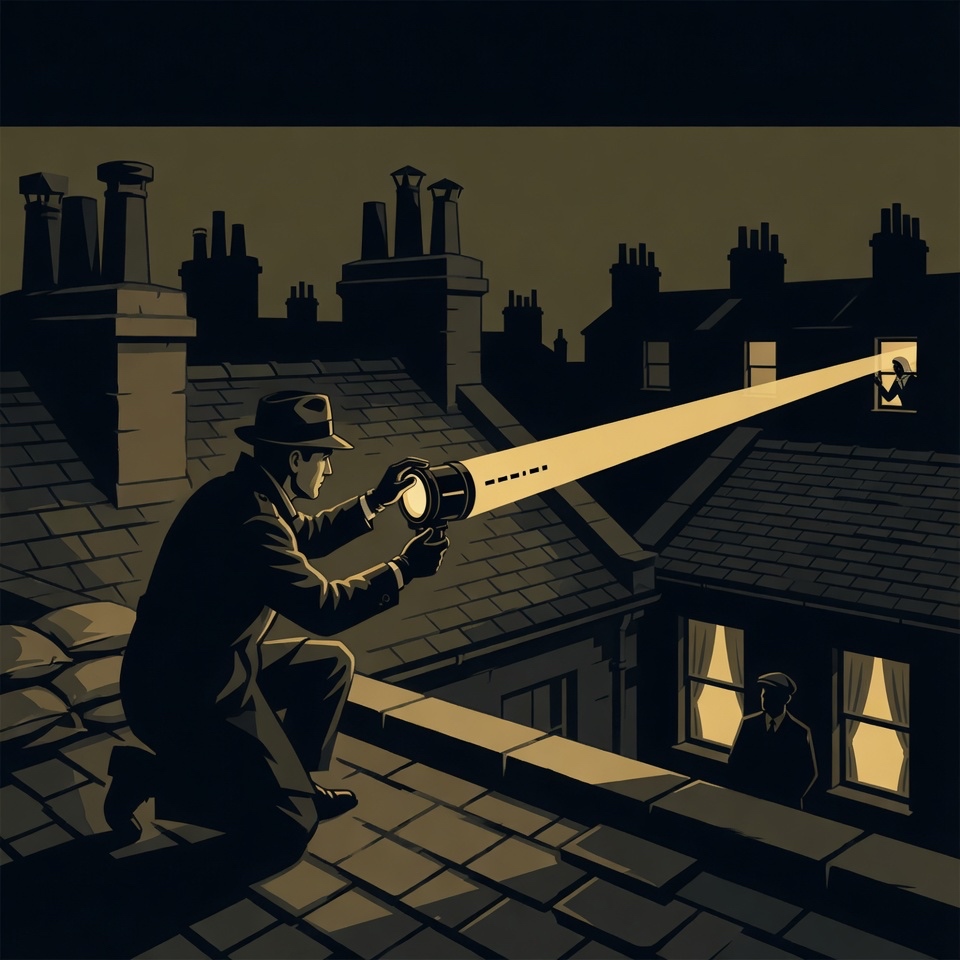
In the first month of the war, two men met in a closed office at Gatwick Aerodrome, in a terminal that had been requisitioned and then, within three days of the meeting, un-requisitioned and returned to civilian function as though nothing had happened there at all.
The men were Major General Sir Stewart Menzies (SIS, “C”) and Colonel William Donovan (then a private American citizen, soon to be the first head of the OSS). A third man was present: a French Deuxième Bureau officer named only by initials in every surviving document, whose identity to this day is disputed by the three official historians who have ever been allowed near the file.
The meeting produced a document of seven paragraphs. The document was never signed. A copy of it exists in the bottom drawer of a filing cabinet in a sub-basement in Whitehall and another copy was burned in Paris in June 1940 by a secretary who was shot the same week. The content of the document can be summarized in one clause: the three services would share a back-channel that answered to none of them, operated in territory where none of them could be seen to operate, and kept no records the three of them could not deny.
Division 5 was never “Division Five” of any named organization. The name is a fossil of the meeting: somebody on the Gatwick blackboard had drawn a five-pointed star linking the three services, a fourth point labeled field, and a fifth point labeled ?, and the joke stuck. The fifth point. Division Five. D5. It was on no letterhead for the first four years because no letterhead existed.
Phase II: War Years (1940–1945)
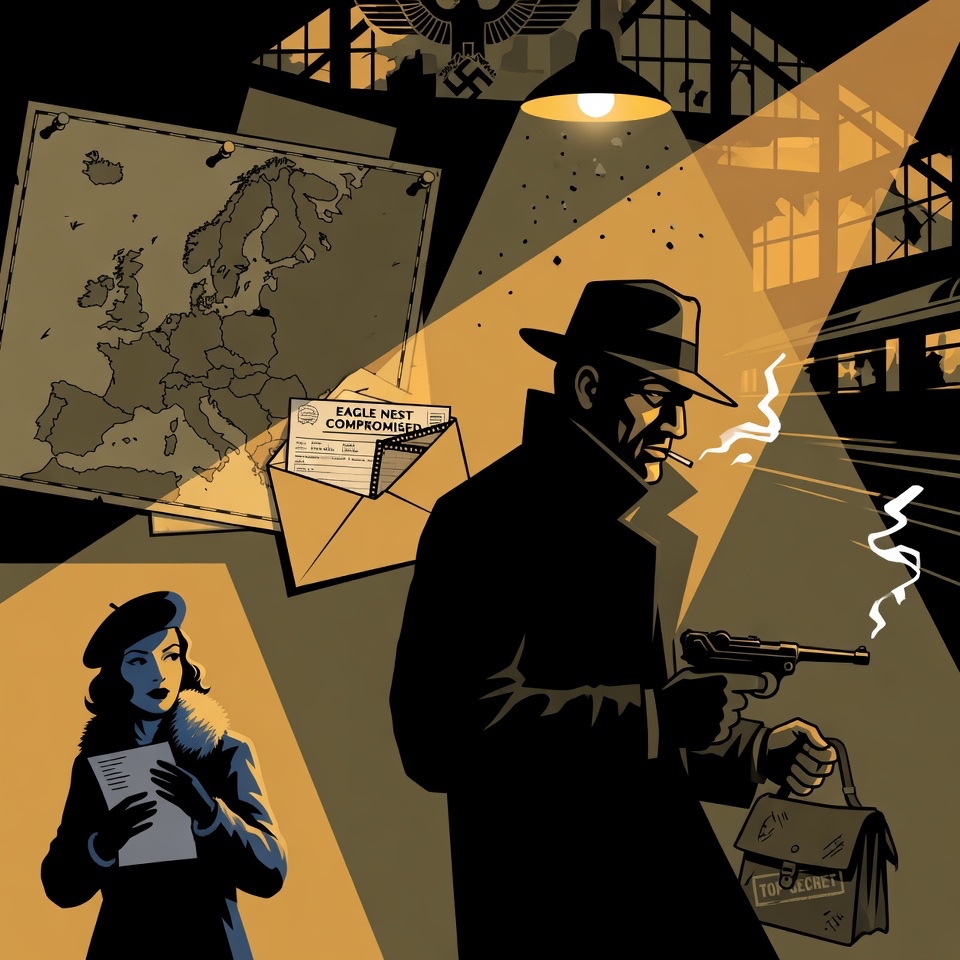
Division 5 in the Shadow War was three dozen people across four continents, most of whom did not know the others existed. The model was deliberately radial: a London controller, a small Washington liaison, a Free French shadow-office that relocated six times in twelve months, and a field roster that existed only in the controller’s memory.
D5 field operatives in this phase were borrowed, seconded from OSS, SOE, SIS, BCRA, and a handful of private volunteers, for specific operations, then returned to their parent services with no acknowledgement that the interval had occurred. The seconding is the security. An operative could not betray D5 because they did not know, most days, whether they had been working for D5 or for the named service that had posted them.
The war record of Division 5, the operations that can be reconstructed from archives, is good. Not miraculous. Dozens of exfiltrations that would otherwise have failed. Four sabotage operations of strategic value. Two assassinations that are still officially attributed to other hands. One asset who is still, in 2026, the most productive source any Western service has ever run inside a German industrial combine.
The war record of Division 5 that cannot be reconstructed from archives, everything that is in the bottom drawer, is assumed by those who have read the summaries to be roughly three times larger.
The casualty rate among D5’s own wartime roster was 42%.
Phase III: The Near-Dissolution (1946)
At the war’s end, every intelligence service on the winning side was either demobilized, folded into a new service, or rebuilt at a fraction of its wartime size. The OSS was dissolved in October 1945. The SOE was dissolved in January 1946. The Free French intelligence apparatus had already been absorbed back into the newly legitimate French state.
Division 5 was dissolved by no one, because Division 5 appeared on no list.
This is the pivot moment of the institution’s history. In the spring of 1946, an officer the surviving record identifies as M.G. walked into an office in the new Ministry of Defence in London, produced a file folder containing the original Gatwick agreement and five addenda, and asked the man behind the desk whether the file should be shredded or continued.
The man behind the desk, whose name is on no memorial, read the file, asked one question (“Has it done any harm?“), received the answer (“Quantifiably, no“), and told her to continue it. He signed nothing. He said nothing further. The institution continued.
By the end of 1946, Division 5 had seventeen personnel, no budget, two safe houses, and three active operations. By the end of 1950, it had eighty-one personnel, a budget that ran through six shell arrangements with three governments, twenty-two safe houses on four continents, and an active caseload that would not drop below two dozen operations for the next forty years.
On the “Six Governments” Question
It is a matter of active dispute, among the very small number of people allowed to dispute it, whether Division 5 in 2026 draws operational funding from three governments, six governments, or eleven. Every director of D5 since 1958 has refused to answer the question. The refusal is itself the answer.
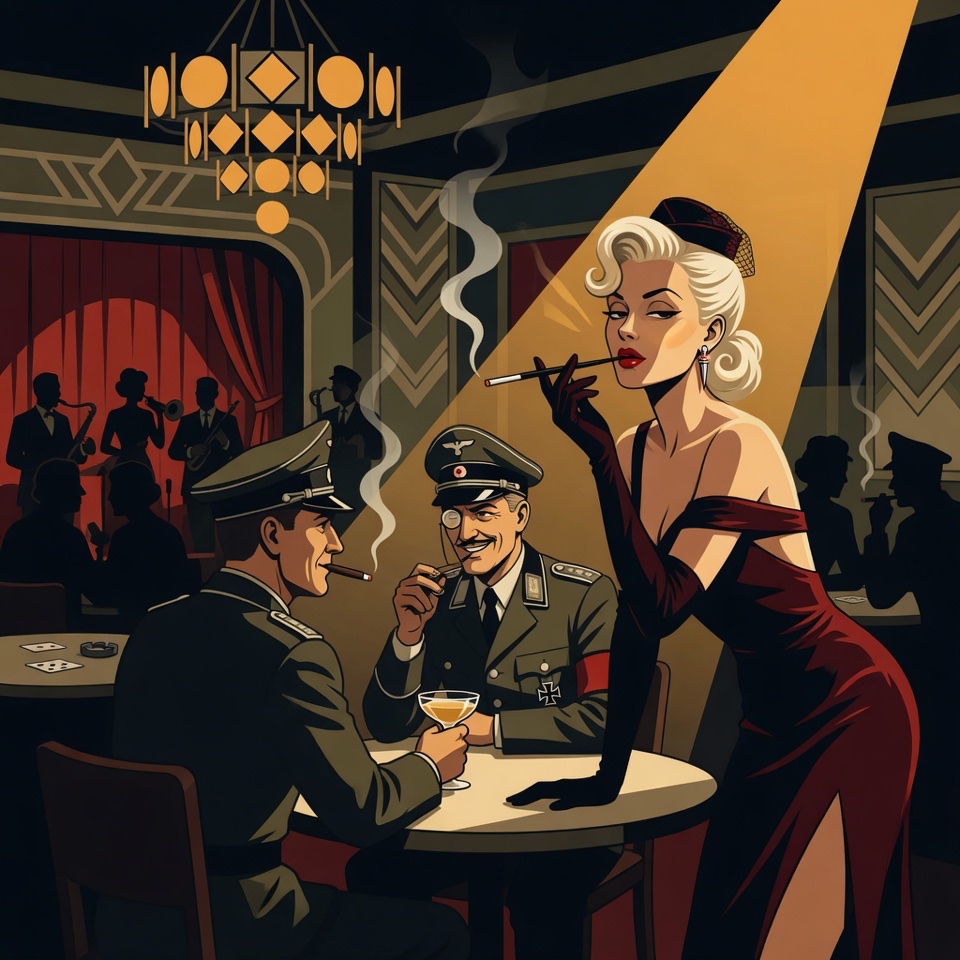
Phase IV: The Long Dark Period (1946–1989)
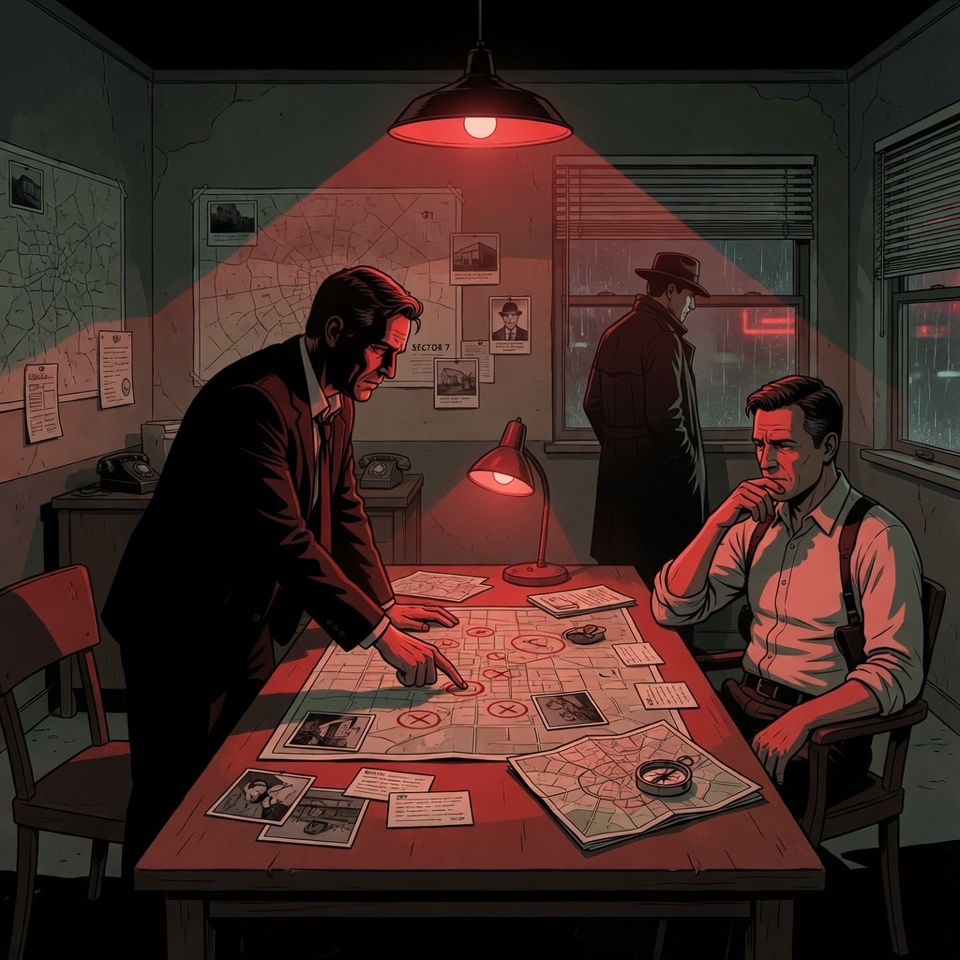
Division 5 in the Cold War grew quietly and sideways. It did not keep pace with the named services: the CIA went from nothing to 20,000 personnel in a decade, while D5 went from seventeen to two hundred in forty years. But it grew better, and it grew into the gaps.
The doctrine of this phase, articulated by the third director (Director III, “The Gardener,” 1955–1971) and still in effect today: the named services handle the visible work; we handle the work whose existence cannot be admitted. An exfiltration from East Berlin, if it could be admitted, belonged to MI6 or the CIA. An exfiltration that could not be admitted, because the asset was the wife of a serving Warsaw Pact general, or because the exfiltration route crossed a third country that was officially neutral and unofficially furious, came to D5.
In practical terms this meant the Cold War D5 ran:
- Approximately four long-term assets of strategic value at any given time, none of whom were ever publicly exposed. Two retired. One defected upward. One died of natural causes in 1981, was buried under his cover identity, and has a grave that has never been visited.
- An unknown number of shorter-term operations, most of which were over before their targets knew they had begun.
- A small but extraordinary counterintelligence capability, responsible, probably, for at least two of the mole hunts credited to other services.
By the end of this phase, Division 5 had stations in capitals that mattered and several that did not. Station is a D5 term of art; it does not mean an embassy office with a brass plate. It means a presence: an officer, a safe house, a local network, a burn protocol. D5 stations are named after the local cover function. London is the bookshop. Vienna is the optician’s. Berlin was the tailor’s until 1989 and has not been replaced by name since. Lisbon is the café. Dubai is the import office. Kigali is the clinic. There are, as of this writing, twenty-three.
Phase V: The Quiet Drift (1989–2001)
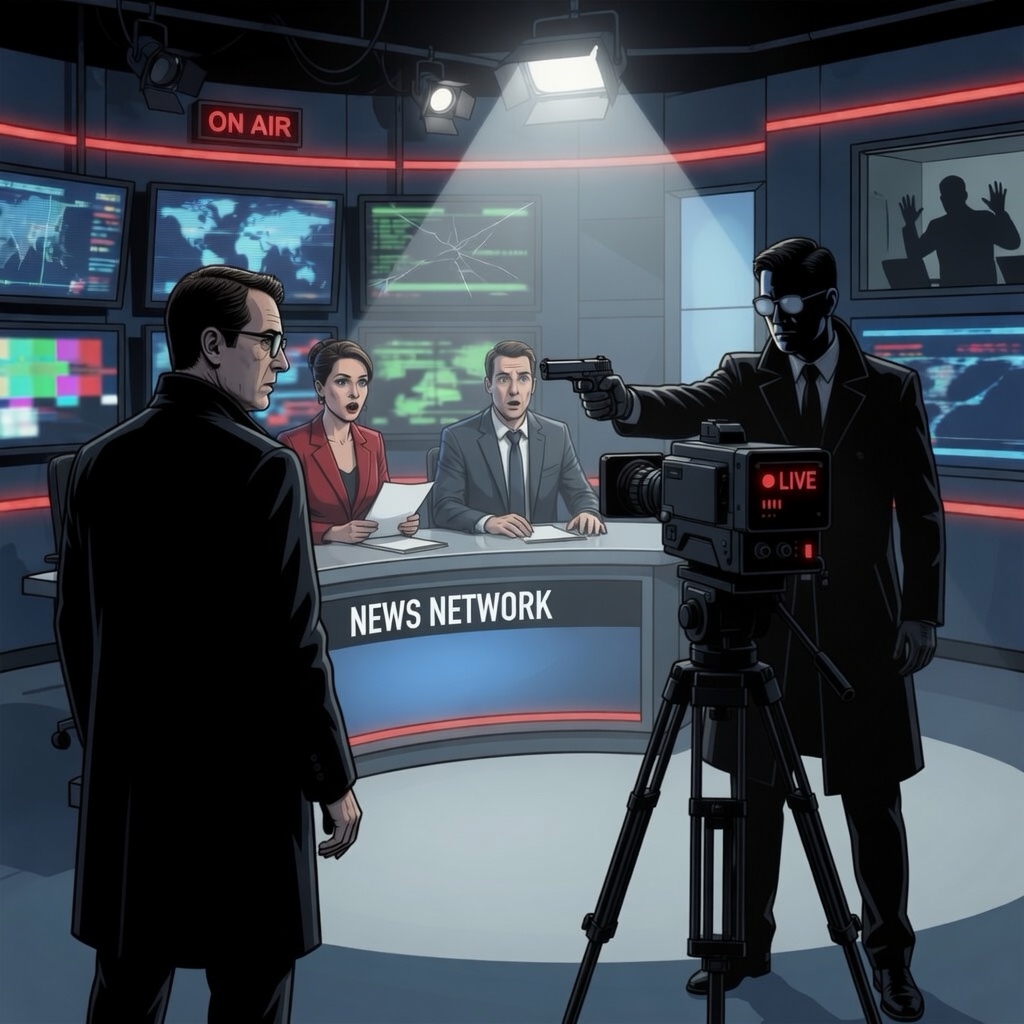
The end of the Cold War should have been the end of Division 5. The agreement that founded it was structured around a three-nation back-channel in a world where three nations could plausibly coordinate an operation the fourth did not know about. In a post-1989 world, with one bloc, an unstable set of successor states, and no obvious adversary worth that kind of back-channel, the original logic simply stopped applying.
What happened instead, over twelve slow years, is that the institution drifted away from its founding nations.
Nobody decided this. There is no meeting one can point to, no memo, no purge. What happened is that the originating services stopped prioritizing Division 5, the CIA of the 1990s had other problems, MI6 was reinventing itself, the French services were preoccupied with Africa, and the institution was left to find its own reasons for continuing.
The director of that phase (Director VI, “The Librarian,” 1987–2002) took the institution through the drift with a single stated principle: our loyalty was always to the mission, not the flag. The flag changed. The mission did not.
What this meant in practice: by 2001, Division 5 was taking operational direction from a rotating committee of six services, none of which had a majority vote. It was funded by nine, by the least deniable count. It had stations in capitals whose governments had no idea it existed. It had begun recruiting personnel who had never served in any originating nation’s uniform at all: the first Kenyan officer came aboard in 1994, the first Japanese in 1996, the first Brazilian in 1999.
By any measure an originating-service lawyer would accept, Division 5 had left. It had not been dismissed. It had simply not been asked to stay in any particular lane, and had therefore kept walking.
Phase VI: The Present (post-2001 Nightscreen)
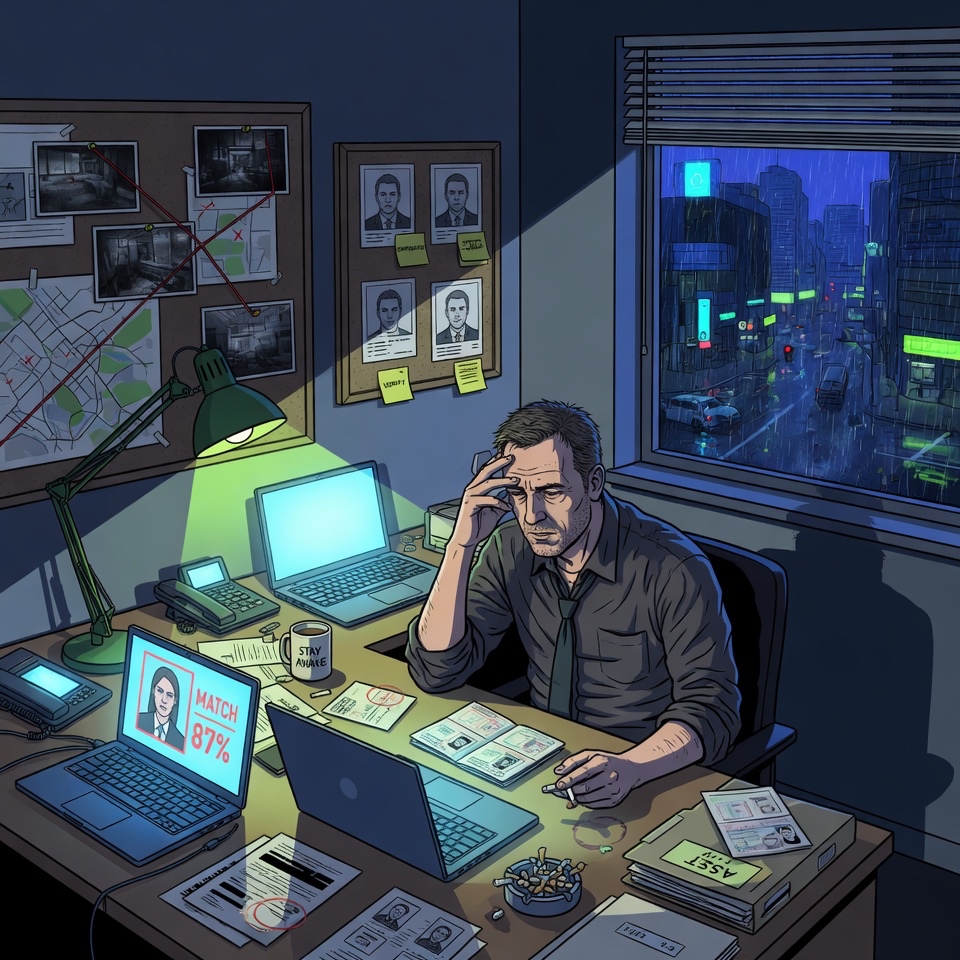
Division 5 today is the institution that survived the drift.
It answers to no single government. It operates under a charter that is either the original 1939 document or a rolling series of amendments to same, depending on who is counting. Its director (Director VIII, unnamed in this book, installed 2019) is known to the field only by a three-letter rotating codename; the name has been Redwood, Sable, and Ferryman during the writing of this text.
The institution’s personnel count is, by policy, not a number that is written down in one place. Estimates by the handful of external parties who have been permitted to estimate range between 350 and 900. The true figure is somewhere in that range.
The founders would recognize the caseload. The missions still split evenly between the operations no single government can be seen to run and the operations no government knows it needs until D5 tells it.
The Gatwick File
The founding document sits in no national archive. Six living people have read it. The most recent of those was appointed Director of D5 in 2019.
It has never been copied or photographed. It is written in a dialect of French that one of the three founders spoke with his grandmother and nobody else. This is intentional.
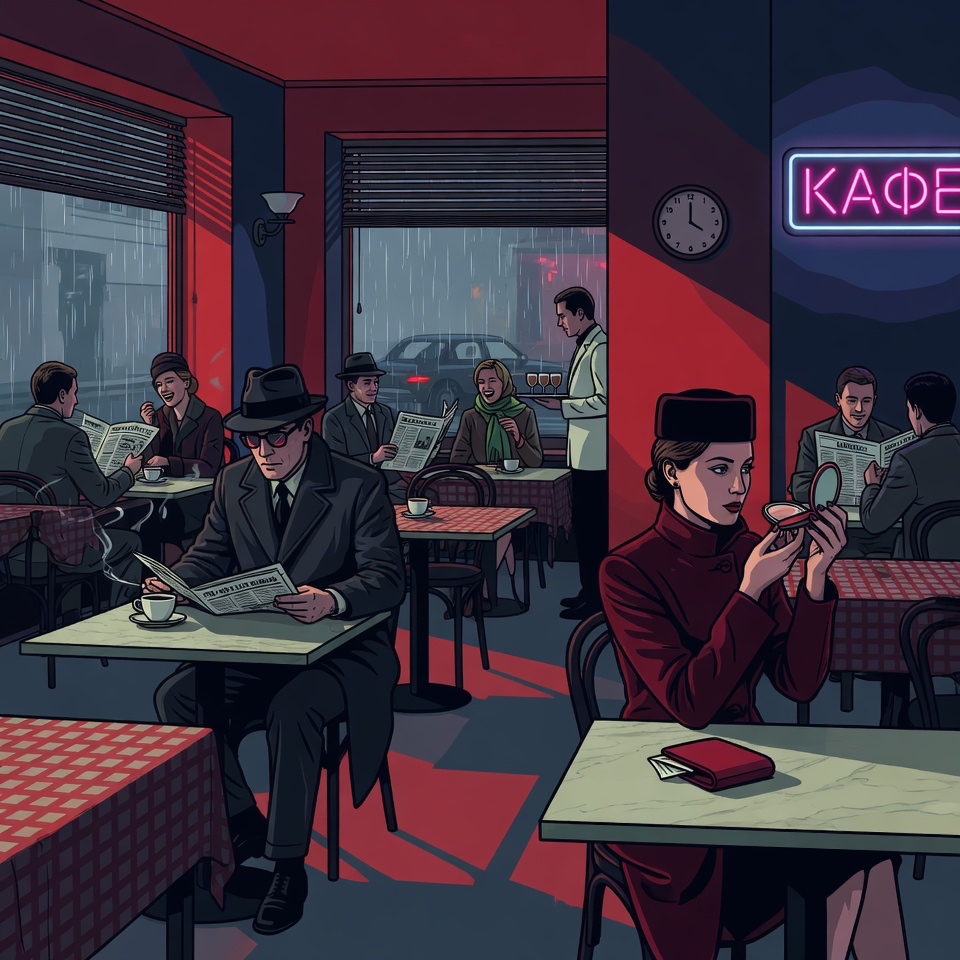
Culture, Ritual, and Ledger
Division 5 has lived long enough to have a culture. The culture is thin, because the institution is deliberately decentralized, most officers meet one or two others in their career, and meet the director never, but the culture is real, and the rituals are observed.
The Handshake
D5 officers identify each other, when they have to, which is rare, with a verbal exchange rather than a sign. One officer asks: “Whose man are you?” The correct answer is: “My own.” The exchange has been standard since 1944. It is never spoken in public. An officer who spoke it in front of a civilian would be reprimanded, then probably reassigned.
The Stations
An officer cleared for a station knows the address, the cover, and the burn protocol, and nothing else about who else works there unless the operation requires it. The station chief is known by a color code, not a name. The Vienna Red. The Dubai Yellow. Color codes rotate every six years.
The Ledger
D5 has no institutional memoir, no declassified history, no memorial wall. What it has is the Ledger: an oral and partially written institutional memory maintained by the most senior officers and passed verbally during the long debriefs that accompany a transfer of station. The Ledger is what retains continuity across directors. It is also what keeps the institution honest: an operation that went badly is in the Ledger, remembered by name, learned from by every subsequent generation.
An officer who has contributed a story to the Ledger has been at the job a long time. An officer whose name is in the Ledger has either done something extraordinary or died doing something ordinary. There is no third category.
Retirement
D5 officers do not retire with a party and a gold watch. They retire by gradual disinvitation. First the operations taper off. Then the invitations to debrief other officers’ missions. Then the access to the stations. At some point an officer realizes, usually months after it has happened, that they have not been in a D5 room in a year, and understand that they have been retired.
A handful keep a reduced role, teaching, writing portions of the Ledger, occasionally consulting. The rest become what D5 calls grey, known to the institution, trusted by it, available for a call if the call is serious enough, but no longer on the rolls. Grey is where most of the institution’s veterans live out their actual old age.
An officer who dies in the field is acknowledged only in the Ledger. An officer who dies in grey is acknowledged nowhere at all.
What It Is Not
Division 5 is not a shadow government. It has no ideology, no platform, no goal beyond the missions it accepts. It does not select those missions: they are proposed by originating services, evaluated by the director, accepted or declined on operational merit. D5 has declined more missions than it has accepted. The percentages are not public, because they are not tracked.
Division 5 is not a mercenary service. No officer has ever been hired by a private party to do a D5 operation. Private parties have on rare occasions supplied information that led to a D5 operation. That is the closest the institution has ever come.
Division 5 is not a black-ops service in the sense the public means by black ops. The institution is fastidious about the law: its own internal law, which is narrower than any public law. The director has, by policy, the authority to veto any mission for moral reasons as well as operational ones. Three of the eight directors have exercised that authority. The institution remembers which three.
Division 5 is not, finally, good. It has killed people who arguably did not deserve to die. It has betrayed assets who trusted it. It has, in at least one documented case, allowed an operation to go bad in order to protect the institution itself. Every officer who has served long enough has done something they will not forgive themselves for. That is the price of admission.
The institution’s only promise is the one it has kept since Gatwick: the nations will not follow us where we go, and in return, we will never ask them to.
The Director’s Desk
Every director of Division 5 has worked from the same desk. It is a walnut writing desk, wartime utility build, one shallow drawer, no lock, no ornamentation. It sits in whichever office the current director keeps. It is the only piece of institutional furniture: there are no D5 crests, no plaques, no founding documents on the wall.
Director II, asked by her deputy in 1951 why this desk and no other, said: “Every mistake this institution has ever made was signed off from this desk. We owe it the courtesy of remembering.”
The desk has been to London, Bermuda, Valletta, Lisbon, London again, and one location not named here.
Era I: The Shadow War (1939–1945)
An attic in Lyon in November 1943. Rain on the slate roof. A woman crouches over a wireless set, British make, crystal-controlled, battery-powered, four valves, tapping out a 200-character burst in a schedule that expires in ninety seconds. She has been on the air for six minutes. The Germans triangulate in seven.
She finishes. She unplugs the set, hides it under a floorboard that is designed to look exactly like the other floorboards, and descends the stairs to sit at the kitchen table and shell peas.
Down the street, a radio-direction-finding van has just turned the corner. It is too late. The schedule has ended. She is invisible again.
Forty-three percent of British Special Operations Executive radio operators in France did not survive the war. She is in the other fifty-seven. Next Tuesday she will be on the air again.
The Shadow War is the deadliest era Division 5 has ever operated in and, by common agreement among the few veterans who lived to compare, the cleanest. The lines were clear. The enemy was unambiguous. The work had a shape that a professional could understand.
That clarity made the work comprehensible, not survivable.
Theaters
The Shadow War had five major theaters. D5 operated in all of them; its weight was in the first two.
Occupied Europe was the center of gravity. France, the Low Countries, Norway, Denmark, and after 1943 progressively more of Italy. This is the theater of SOE, the OSS Special Operations branch, the SIS field networks, the BCRA (Free French intelligence), and the local Resistance cells that those services supported, supplied, and sometimes failed. If a Shadow War campaign has one default theater, this is it.
The Balkans and the Eastern Med were the second center: Yugoslavia, Greece, Albania, with extensions into Turkey and the Levant. The fighting was more overtly partisan here, the politics more tangled, and the distinction between “intelligence operation” and “unconventional warfare” was thinner. Many D5 veterans consider it the harder theater to work in; fewer consider it the more dangerous one.

North Africa, the ports of Casablanca, Algiers, Tangier, Cairo, Tunis, was a theater of espionage rather than sabotage. Double agents, currency manipulation, and counter-espionage against the Abwehr’s substantial North African operations. The Tangier station of D5 was one of its most productive in the war.
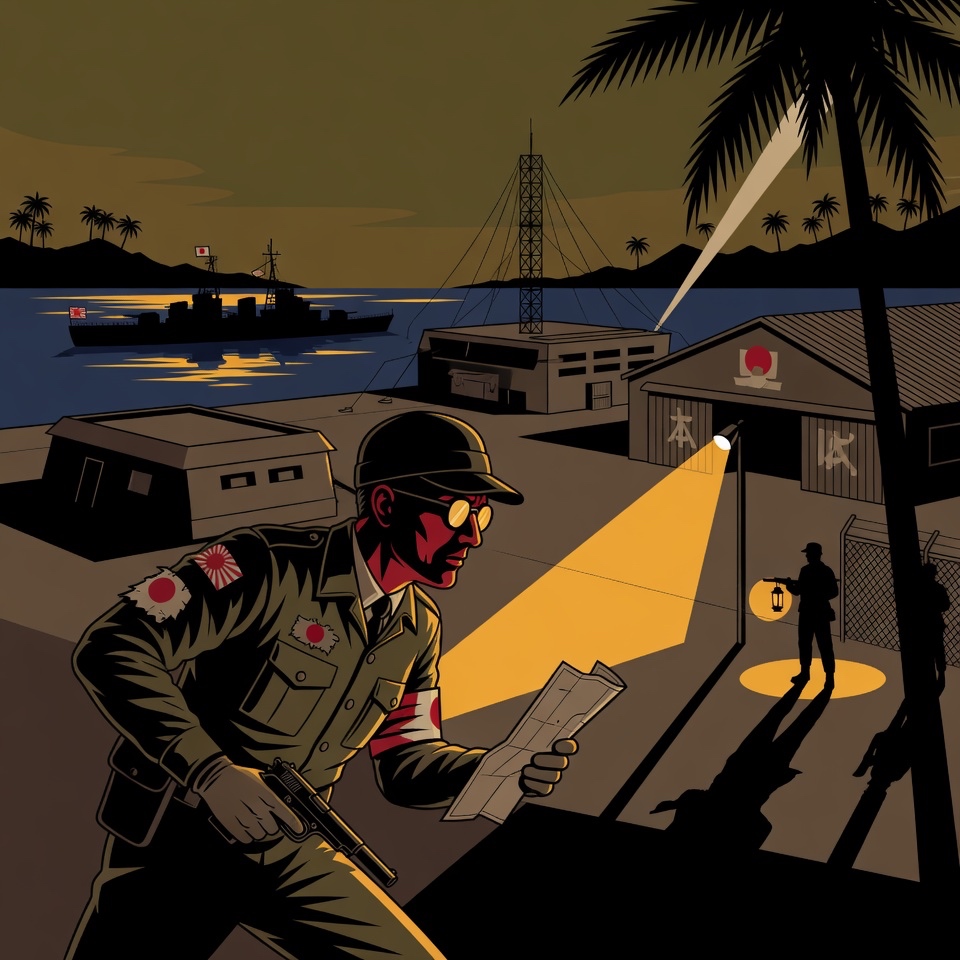
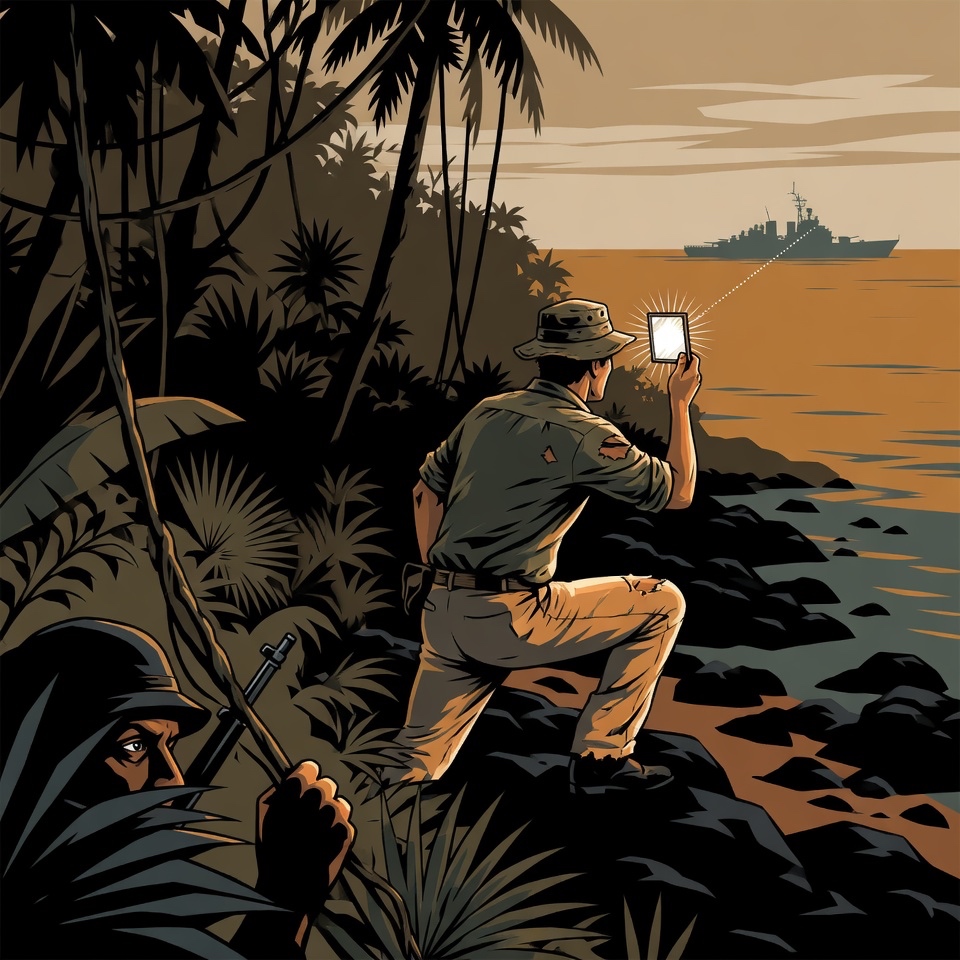
The Pacific was where Western intelligence services were weakest and where D5 did comparatively little. The OSS Detachment 101 in Burma, the Coastwatchers in the Solomons, Allied Intelligence Bureau operations in occupied Southeast Asia: D5 supported these operations where it could, but its institutional weight stayed in Europe. Tables wanting to run a Pacific campaign will find the material thin and will need to extrapolate.
The Western Hemisphere was the quiet theater, the Americas. The Abwehr’s South American operations, the counter-intelligence war against them (largely run by the FBI and the British Security Coordination in New York), and the currency and sabotage wars across the neutral zones. D5 had a small but active presence in Rio, Mexico City, and, more important than either, New York, which served as the institution’s primary Atlantic hub for the middle years of the war.
Agencies of the Shadow War
The public record lists two dozen agencies that mattered. The short list that a Shadow War campaign needs:
Allied Services.
- SIS (MI6): UK. The senior British service. Intelligence collection, not sabotage. Ran the networks D5 often inherited or supplied.
- SOE: UK. “Set Europe ablaze,” Churchill’s instruction. Sabotage, unconventional warfare, support to resistance. The most operationally close sister-service of D5 during the war.
- OSS, US. Founded 1942. William Donovan’s service, modeled partly on SOE, with branches for intelligence, operations, research, and, infamously, morale operations. The OSS was enthusiastic, uneven, and in the last two years of the war, extraordinary.
- BCRA, Free France. Intelligence service of the Free French government in exile. Politically fraught, the BCRA had relationships inside France that the Anglo-American services could not match, and resentments to go with them.
- NKVD / GRU: USSR. Officially allied, operationally not to be trusted with anything that mattered. D5 never ran a joint operation with Soviet intelligence during the war. The word in the Ledger is do not ever.
Axis Services.
- Abwehr. Wehrmacht military intelligence. Professional, competent, politically ambivalent. It was the intelligence service Allied officers most respected and, toward the end of the war, the service most likely to contain quiet opposition to the regime. Operation Double-Cross, which fed the entire Abwehr agent network in Britain back to the Germans under British control, is one of the signature Allied counter-intelligence achievements of the era. D5 had a hand in the tail end of it.
- RSHA. The Reich Main Security Office: umbrella organization that contained the Gestapo, the SD, and the Kripo. Ideological, ruthless, less professionally competent than the Abwehr and more dangerous precisely because of it.
- Sicherheitsdienst (SD). Party intelligence service within the RSHA. D5 considered the SD more dangerous than the Abwehr because they were less predictable.
- Kempeitai. Japanese military police / intelligence. Operated across Japanese-occupied Asia. Brutal, effective, under-studied in Western sources.
Doctrine and Tempo
The Shadow War is fought at two speeds: deliberate and desperate.
Deliberate is the planning speed: the slow build of a network, the insertion of an agent by Lysander into a field in Picardy, the weeks of training before a raid. A Shadow War operation is planned for days, briefed in hours, executed in minutes. Everything about the preparation is patient.
Desperate is everything after the first thing goes wrong. And something always goes wrong. The radio schedule gets missed, the drop-zone is compromised, the Resistance contact is taken on the way to the meet. Shadow War operations have no margin: there is no cavalry, no exfiltration on demand, no quick-reaction force. An operation that goes sideways is saved by the operatives in the moment or not saved at all.
D5’s doctrine in this era reflected this. Keep the plan thin. Keep the team small. Keep the exfiltration route independent of the mission route. Keep the documents in a pocket that can be emptied into a fire in three seconds.
A D5 officer in the Shadow War expected to be on operations approximately one month in three, and to be dead inside eighteen months if they were unlucky or careless. The institutional assumption was that every officer would, eventually, be caught; the job of the service was to make sure that when they were caught, they had already completed the operation they were caught after.
What Daily Life Looks Like
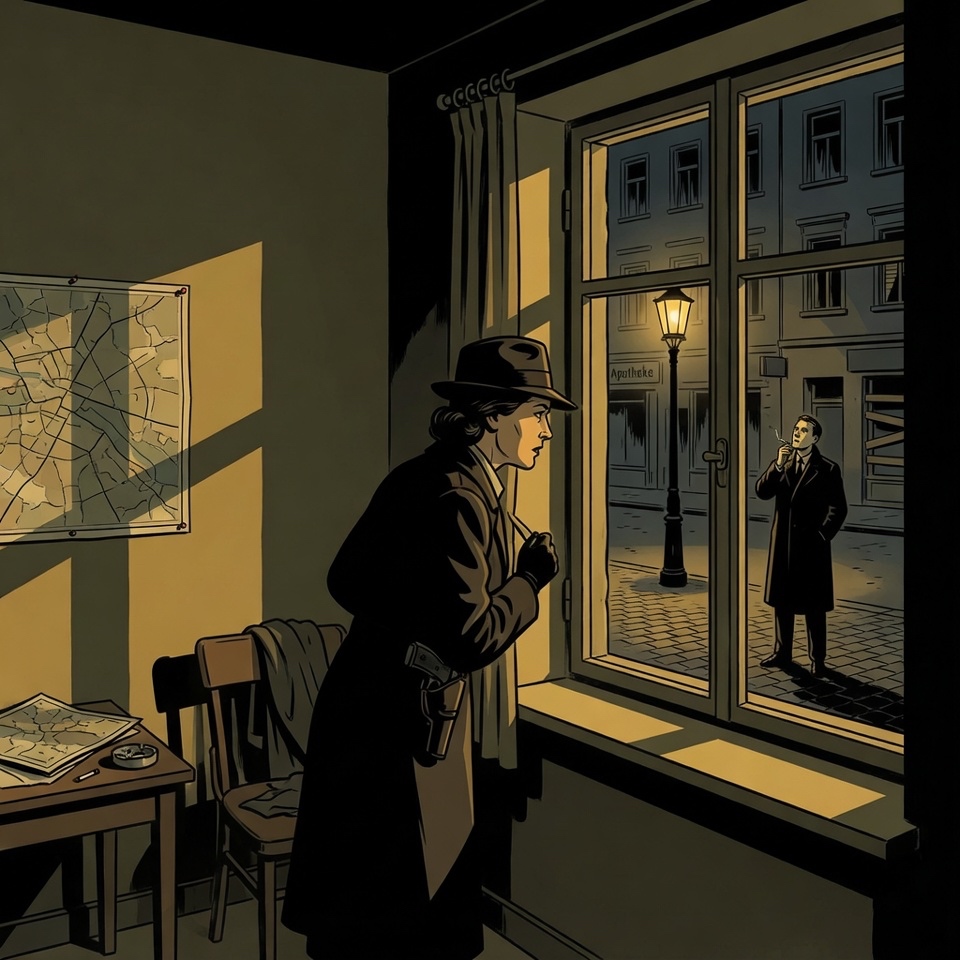
Paris, 1943. The city has been occupied for three years. The population has adjusted to the occupation the way a body adjusts to a chronic disease: bitterly, inventively, and with a steady accumulation of small betrayals. Coffee is acorn-coffee. Bread is rationed. The métro is running on a reduced schedule. German officers are everywhere and invisible simultaneously: the eye stops registering them after six months.
A D5 operative in this city has a cover that plausibly explains their presence: they are a Belgian commercial agent, a Swiss insurance representative, a French collaborationist journalist. Most active field covers are thin. They have to be, because a deep cover requires a pre-war backstory the operative usually does not have time to build. A Shadow War Thin Legend has a three-month shelf life at most. After three months, too many people know the operative’s face. Standard and Deep Legends exist in the era, but they are institutional investments prepared before the operation, not covers improvised in the field.
The operative’s day is small, patient, and continuous. Morning: a walk through the arrondissement, checking the chalk mark on the third pillar from the left of a particular building, which tells them whether tonight’s meet is on. Afternoon: the cover job. A real office. Real paperwork. Real colleagues who must notice nothing. Evening: dinner somewhere unremarkable. Night: the meet, if the chalk mark said go.
A meet goes for six minutes or less. Longer than six minutes is dangerous. The operative and the asset walk in the same direction on opposite sides of a street, cross once, exchange a phrase, cross back, go home. If one of them is not there, the other one keeps walking and does not look for them.
Home is three apartments, not one. The operative sleeps in whichever one the week has assigned them. None of the three has anything incriminating in it. The incriminating material lives in a fourth location, a dead drop or a buried cache, and is touched only on operational need.
The operative does not carry a pistol. A pistol in Paris in 1943 on a man who is not obviously a German soldier is a death sentence under search. The operative’s weapons are two: the Sykes-Fairbairn knife in a boot, and the suicide pill, the L-pill, in a back molar or a signet ring or a seam. The L-pill is not carried in case of capture. It is carried in case of interrogation, which is not the same thing. An operative who swallows the pill has a ninety-second window to get away from the interrogators before the seizure starts. The calculation of when to swallow is the single hardest decision of the profession.
The radio operator is the exception to everything above. Radio operators are treated, by D5 and by every other service that runs them, as delicate irreplaceable instruments. They have thicker cover, more support, more caution around them. They also have the highest casualty rate of the era; the figure from the Lyon attic is theirs.
Signature Missions of the Era
- The Lysander Pickup. Agent exfiltration by black-painted Westland Lysander, landing at night in a field marked by three torches. The signature set-piece of the SOE era. D5 ran seventeen of these over the course of the war, by that count alone.
- The Sabotage Op. Train derailment, factory demolition, assassination of a specific technical asset. Weeks of preparation buy a few minutes at the target, and the exfiltration has no scheduled end.
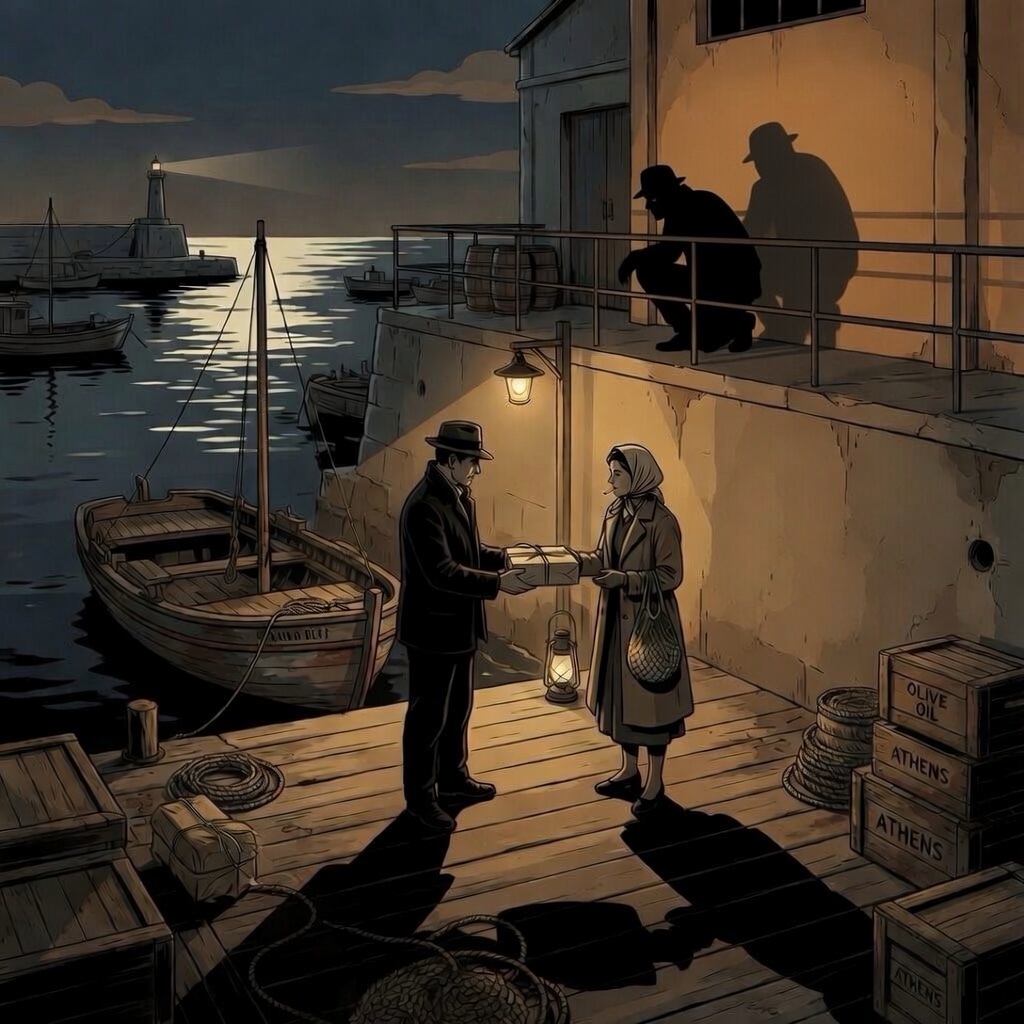
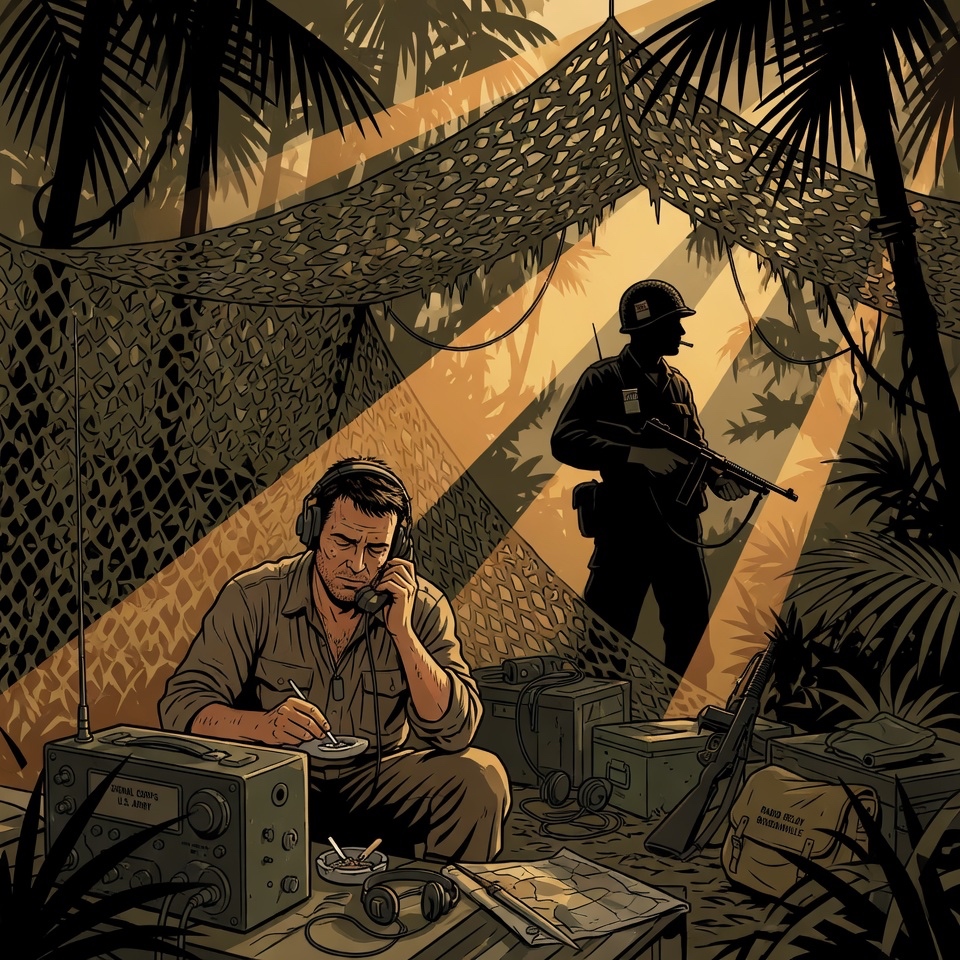
- The Wireless Run. Continuity of communication with London through a theater saturated with direction-finding. A good wireless operator was worth a division.
- The Turn. Converting a captured Abwehr agent into a double feeding controlled intelligence back to Berlin. The Double-Cross system was the largest sustained version of this in human history.
- The Quiet Extraction. Removing a single asset, a scientist, a senior officer’s wife, a willing defector, from an occupied country without drawing attention. Done by D5 seven times in the war that the Ledger records. Attempted eleven.
Why the Shadow War Hurts
A Shadow War campaign, played honestly, will kill characters. The era is built that way. The Compromise Track and the capture rules in Chapter Eight are calibrated assuming a certain attrition, and tables running the Shadow War should plan to introduce replacement characters.
The good news is that Division 5 never ran out of people willing to sign on. Neither will your table.
Era II: The Long Dark (1946–1989)
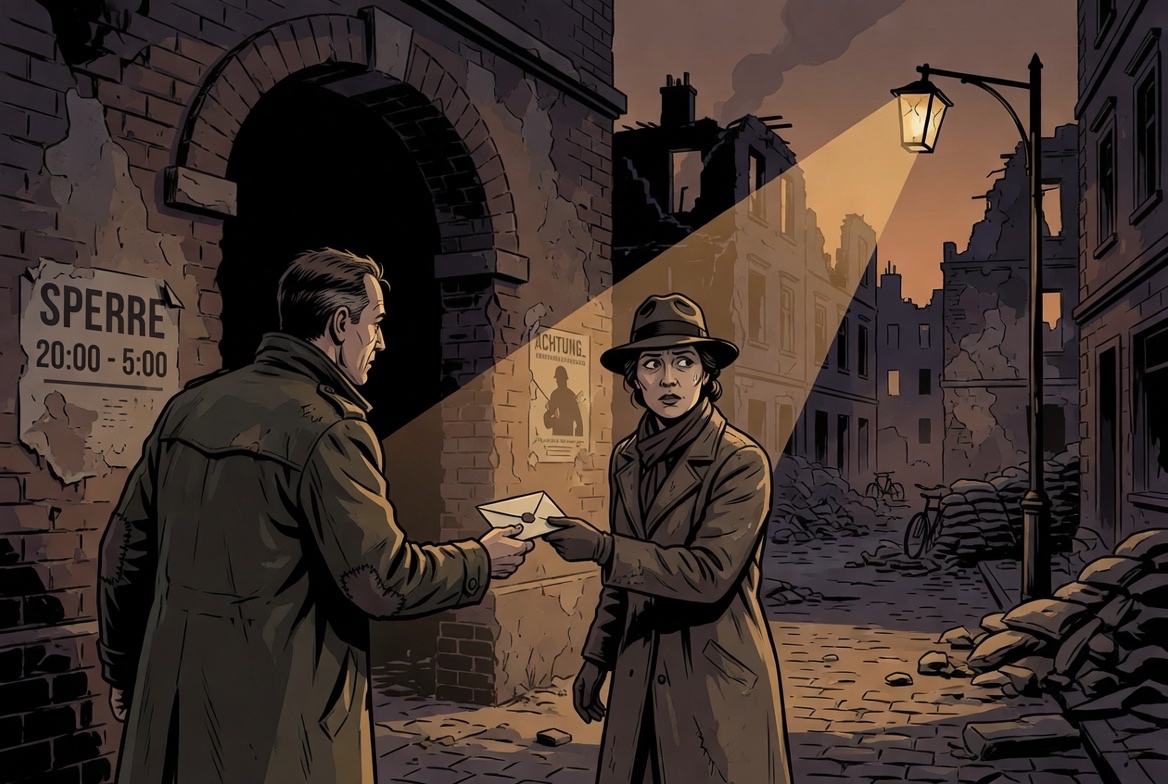
A park in Vienna, 1974. The bench at the foot of the lime tree. An officer, late thirties, coat, newspaper, sits with his back to the footpath, reads the paper for exactly the time it takes a casual reader to finish two columns, folds it, crosses his legs, and in the small unnoticed motion of shifting his weight, lets a folded paper wedge slip from his sleeve into a gap in the slats of the bench.
He stands. He walks away. He does not look back. Three minutes later a woman with a stroller sits on the bench, takes the paper out of the slats without any part of her body betraying that she has taken anything, and puts it in the bag hanging from the stroller’s handle.
Between them, the city is on fire and nobody has noticed. The fire is information. They are carrying it across the line.
The Long Dark is the tradecraft era: the era the public pictures when they picture spies. For most of it, the same twelve cities mattered: Berlin, Vienna, Moscow, Washington, London, Paris, Bonn, Havana, Tel Aviv, Beirut, Hong Kong, Cairo. Division 5 operated in all twelve. Its signature work was in the first two.
The killing rate of the Long Dark was a fraction of the Shadow War’s. The burn rate, the rate at which operatives were compromised, traded, exposed, or pulled off the field, was higher than anyone during the war would have believed possible. The Long Dark was survivable in a way the Shadow War was not. It was also, in many officers’ judgment, more corrosive than the Shadow War had been, because it was longer.
Theaters
The Long Dark had four theaters that mattered and several that sometimes did.
Divided Berlin anchored the era from the immediate postwar occupation through 1989. Four occupation zones, then two cities, then one city with a wall through it. Every major Western service had a station in West Berlin; every major Warsaw Pact service had one in East Berlin. The two sides were close enough to shoot each other and most of the time did not.
Vienna was the neutral capital. Austrian neutrality, declared in 1955, made it legal for every service in the world to operate there, and so every service in the world did. Vienna in the Long Dark was the meeting city: the place where a Soviet officer and an American officer could share a beer, in public, without either of their embassies being forced to notice. It is also the city in which D5 had the densest station outside of London.
Latin America was the warm theater. The US-Soviet proxy conflict in Central and South America was bloodier than anywhere in Europe after 1953. Cuba, Nicaragua, Chile, Argentina, Brazil: these were live fronts for decades. D5 operated laterally in this theater, usually not with the CIA and usually not against it, but alongside.
The Middle East, Beirut in particular, was the third warm theater, especially after 1970. The Lebanese Civil War made Beirut into a theater where every major service had to work through local militias, which introduced a style of operation that was half espionage and half negotiation with armed non-state actors. A style Nightscreen would later recognize as normal.
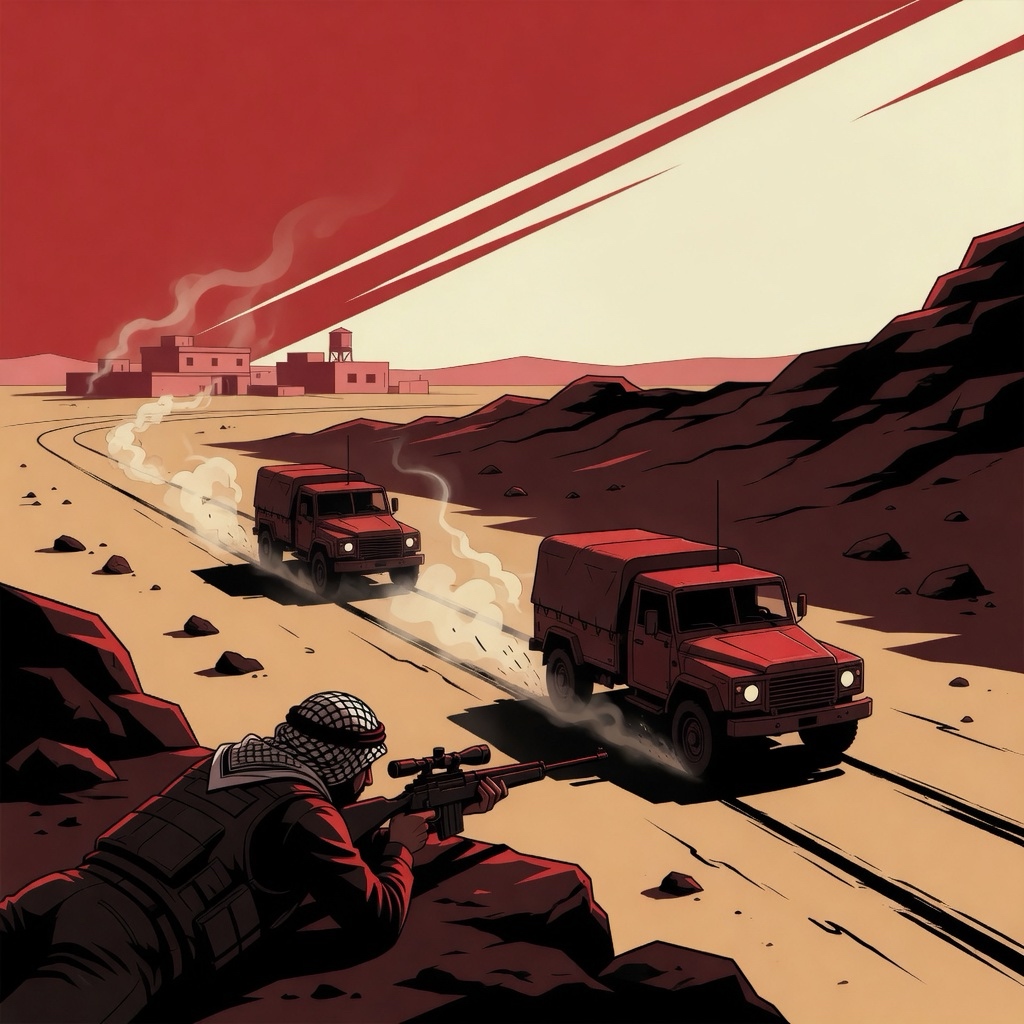
A table running a Long Dark campaign should pick a theater and stay in it. Moving between theaters in a single campaign is possible but expensive: the tradecraft, the languages, the contacts, and the feel are all different, and a campaign that floats between Berlin and Beirut will lose the grain of either one.
Agencies of the Long Dark
The Western Bloc.
- CIA, US. The Central Intelligence Agency. Post-OSS, founded 1947, grew rapidly, made errors memorable and formative, Bay of Pigs, the Chilean coup, the Phoenix Program. The CIA of the Long Dark is not monolithic: a campaign can set officers of the Directorate of Operations against officers of the Directorate of Intelligence, or either against the Office of Policy Coordination in the early years, and be historically correct.
- SIS (MI6): UK. The senior British service, now formalized, now more bureaucratic, now still more professional than most of its competitors. The Cambridge Five betrayal (1951, 1963) shaped a generation of British officers; the mole-hunt culture of MI6 from 1965 onward was an institution-wide post-traumatic response.
- DGSE: France. The Direction Générale de la Sécurité Extérieure, successor to the SDECE, was the French external service. Political, willing to work at arm’s length from NATO, capable of operating independently of the Anglo-American services.
- BND, West Germany. Founded in 1956 from the remnants of the Gehlen Organization, the BND carried with it a complicated early history, former Abwehr officers, former SD officers, a culture of deniable about the deniable.
- Mossad / Shin Bet: Israel. The Mossad (external) and Shin Bet (internal) became, over the course of the Long Dark, among the most respected services in the world. D5 cooperated with both at the officer level more than at the institutional level.
- MI5: UK. The Security Service. Counter-intelligence and domestic. Mentioned here because D5 repeatedly tripped over MI5 in the UK and had to develop a protocol for it.
The Eastern Bloc.
- KGB: USSR. The Komitet Gosudarstvennoy Bezopasnosti. Intelligence, counter-intelligence, border troops, the lot. A service of enormous scale, uneven quality, and occasional brilliance. The First Chief Directorate (foreign intelligence) was the part D5 most often encountered.
- GRU: USSR. Military intelligence. Smaller than the KGB, more compartmented, often more professional. Operationally distinct; politically an irritant to the KGB. A campaign can exploit the internal rivalry.
- Stasi: East Germany. The Ministerium für Staatssicherheit. Per capita the most intrusive internal-security service in the Eastern Bloc, with a substantial external arm (the HVA, under Markus Wolf) that ran some of the most damaging moles inside Western governments during the era.
- StB, Securitate, UB, Darzhavna Sigurnost. The national services of the satellite states. Variable quality, always working under KGB direction at strategic levels, often with tactical autonomy.
Moscow Rules
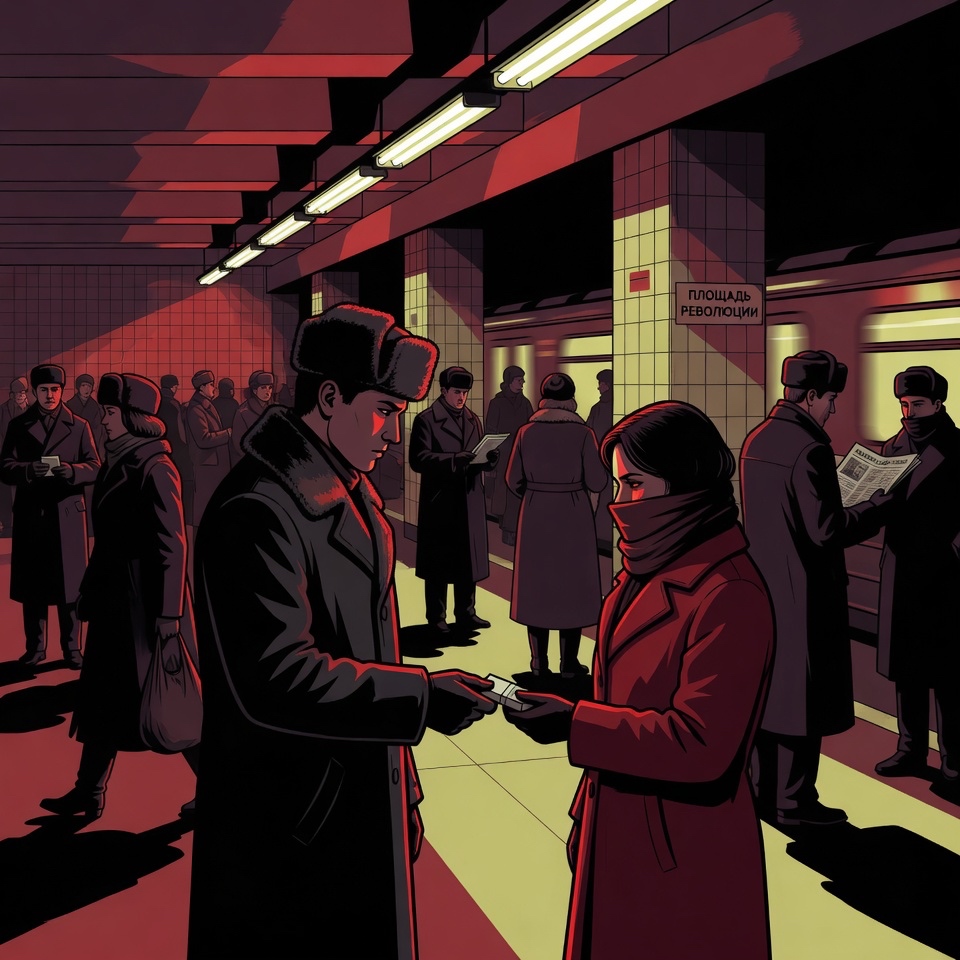
The operational doctrine of the Long Dark, codified by the CIA in the 1960s, accepted across the Western bloc, taught to every D5 officer who worked the era, is a single page of instructions. Tables running a Long Dark campaign should post a version on the wall.
Assume nothing. Never go against your gut. Everyone is potentially under opposition control. Don’t look back; you are never completely alone. Go with the flow; blend in. Vary your pattern and stay within your cover. Lull them into a sense of complacency. Don’t harass the opposition. Pick the time and place for action. Keep your options open.
Moscow Rules are reflex rules, not rules of law: rules so ingrained that an officer who has internalized them does the right thing before they notice they are doing it. In the Long Dark, an officer who has not internalized the rules is dead within twelve months. Sometimes sooner.
The Tradecraft skill in Chapter Four is Moscow Rules made mechanical. The Moscow Rules talent in Chapter Five is a deliberate mechanical call-out to the doctrine. A Long Dark operative who does not have the skill, or at least a tolerance for it, is playing the wrong era.
What Daily Life Looks Like
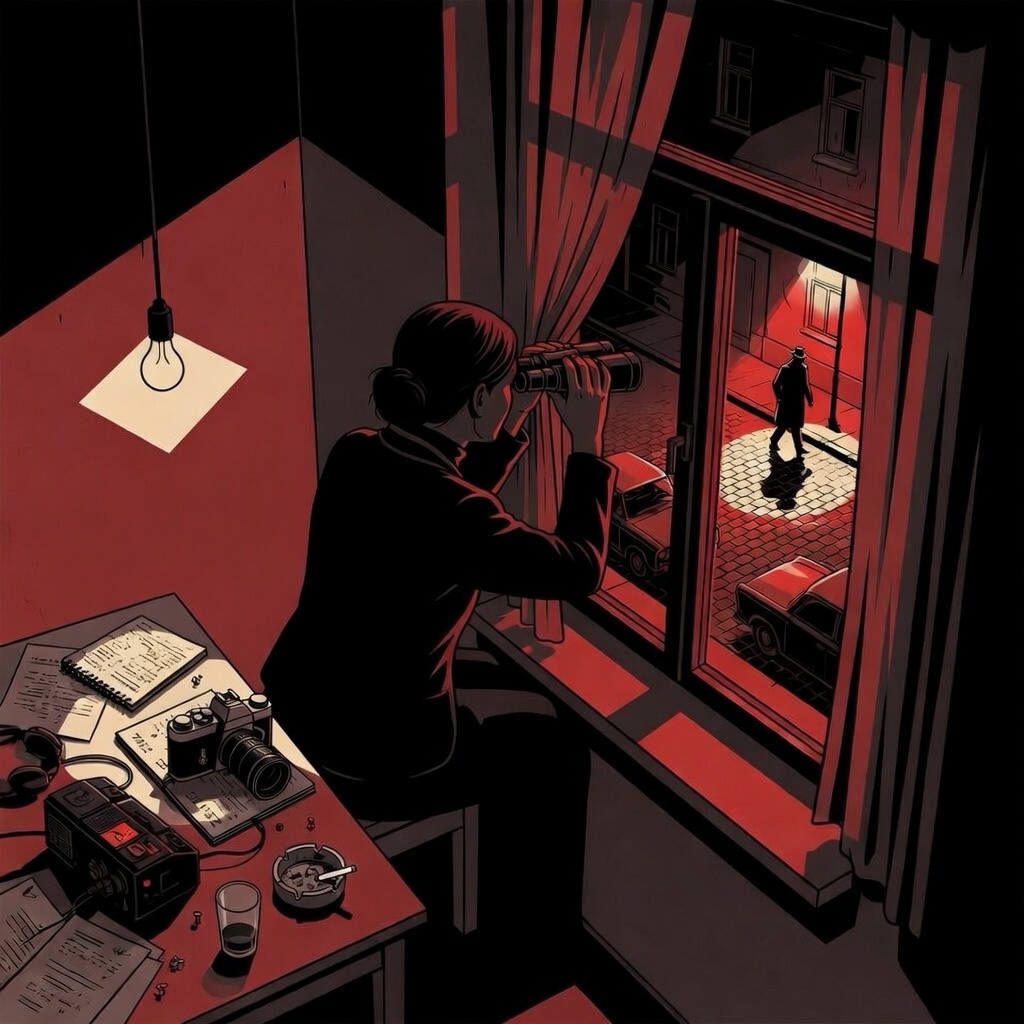
Vienna, 1974. The city is neutral. The city is also the busiest intelligence theater in Europe, by several service’s internal estimates. A D5 officer in Vienna in this year has a cover: commercial attaché at the Canadian trade office, say, or Swiss-born curator at a small private museum. The cover is deeper than a Shadow War cover. It has years of backstory, an apartment with a lease, a wardrobe, a bank account. It also has three prepared escape protocols, any of which can be activated within twenty-four hours.
The day begins with a surveillance-detection run. Officer’s commute from flat to office is thirty-five minutes. The cover commute is thirty-five minutes. The operational commute, the one taken on days when there is a meet that afternoon, is ninety minutes, through four tram changes, two coffee shops, and one long walk through a public park. The operational commute has seven dead-drop locations, twelve choke-points for spotting tails, and three places to abort the whole day if something feels wrong.
Nothing ever feels completely right in Vienna in 1974. The officer has to distinguish between the background paranoia (ignore) and the actionable paranoia (act on). This is a skill that takes about three years to develop and is not fully transferable to other cities.
Mid-morning is cover-work. Real meetings, real calls, real paperwork. A senior D5 officer in Vienna will have a cover job that produces actual commercial or cultural output: the museum shows real exhibitions, the trade office processes real trade. This is essential. A cover job that does not produce output is a cover job that attracts notice.
Afternoon is when the day splits. On most days, nothing happens in the afternoon, the officer goes home, reads, has a drink, sleeps. On operational days, the afternoon contains the meet, a brush pass, a dead drop, a conversation on a bench in the Volksgarten that looks like two strangers sharing a park. The meet lasts ninety seconds at most. It has been prepared for three weeks.
Evening is for assets. A Long Dark officer’s relationship with their assets is the central professional relationship of their career, and most of it happens over dinner.
The asset trusts you. The asset has reasons to trust you. The asset’s reasons are the hook on which the whole operation hangs. An officer who cannot sit at a table with a frightened man who is risking everything and make him believe the risk is worth it is an officer in the wrong profession.
Night is for reading. The Long Dark officer’s reading list is heavy: daily briefs, agency traffic, economic indicators, cultural magazines, three newspapers in three languages. An officer who stops reading falls behind.
The Long Game
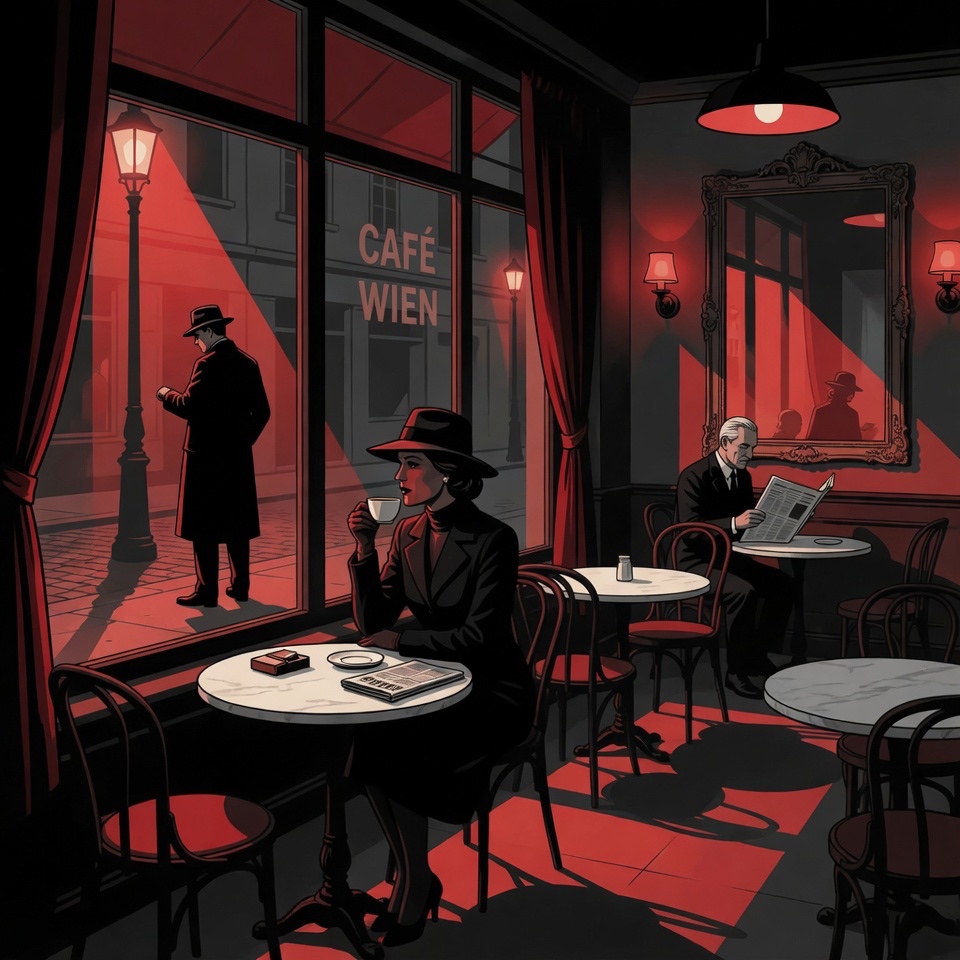
Long Dark operations are slow. An asset recruitment takes eighteen months on average. A mole penetration takes five to seven years. The mole hunt that finds the mole takes twelve years. A career consists of perhaps four operations of real consequence, with a great deal of maintenance work in between.
The maintenance work is the texture of a Long Dark campaign. It is not less important than the headline operations; it is how the headline operations become possible. Tables should not skip it.
Signature Missions of the Era
- The Recruitment. Turning a foreign official, a scientist, a diplomat into an asset. Months of patient cultivation. Entire seasons of a campaign can live here.
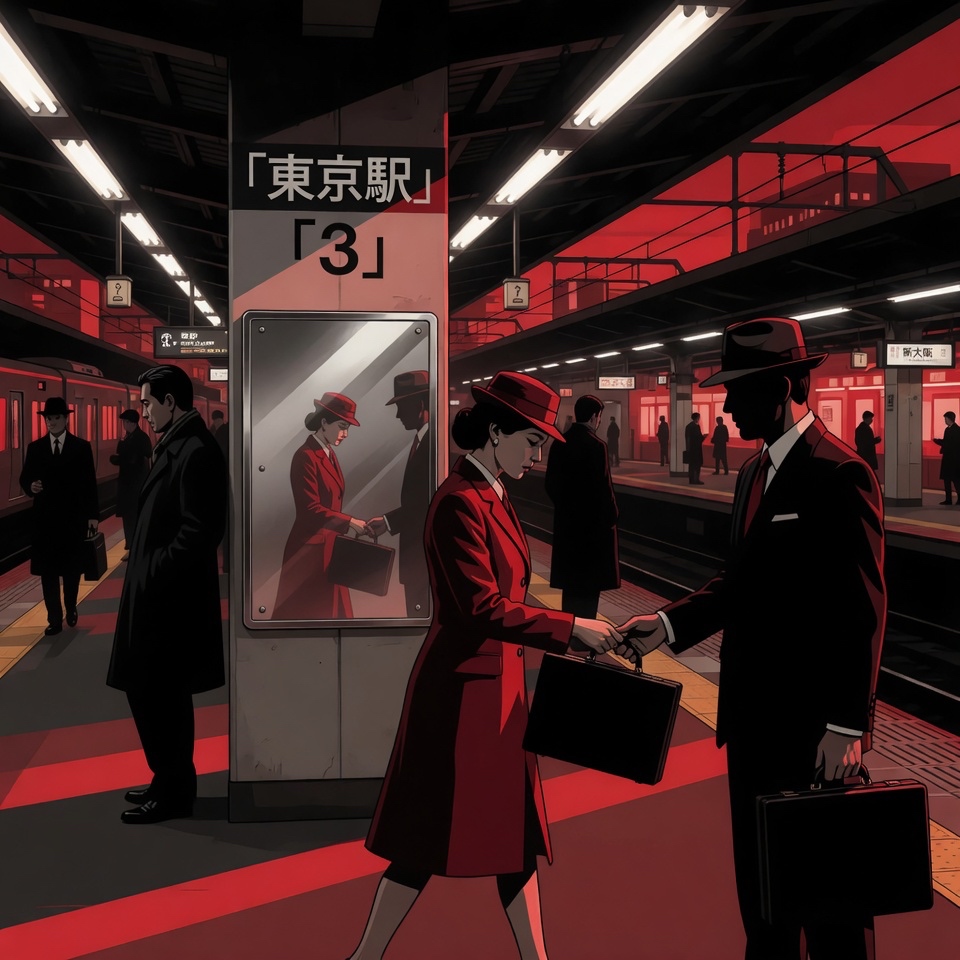
- The Mole Hunt. Someone inside the service is working for the other side. Who? The Cambridge Five took the British thirty years to fully uncover. A Long Dark campaign can be a two-year mole hunt and nothing else.
- The Exfiltration. An asset has been compromised, or is about to be. Get them out. Cross the Wall with them. The Berlin crossings of the Long Dark are the set-pieces of the era.
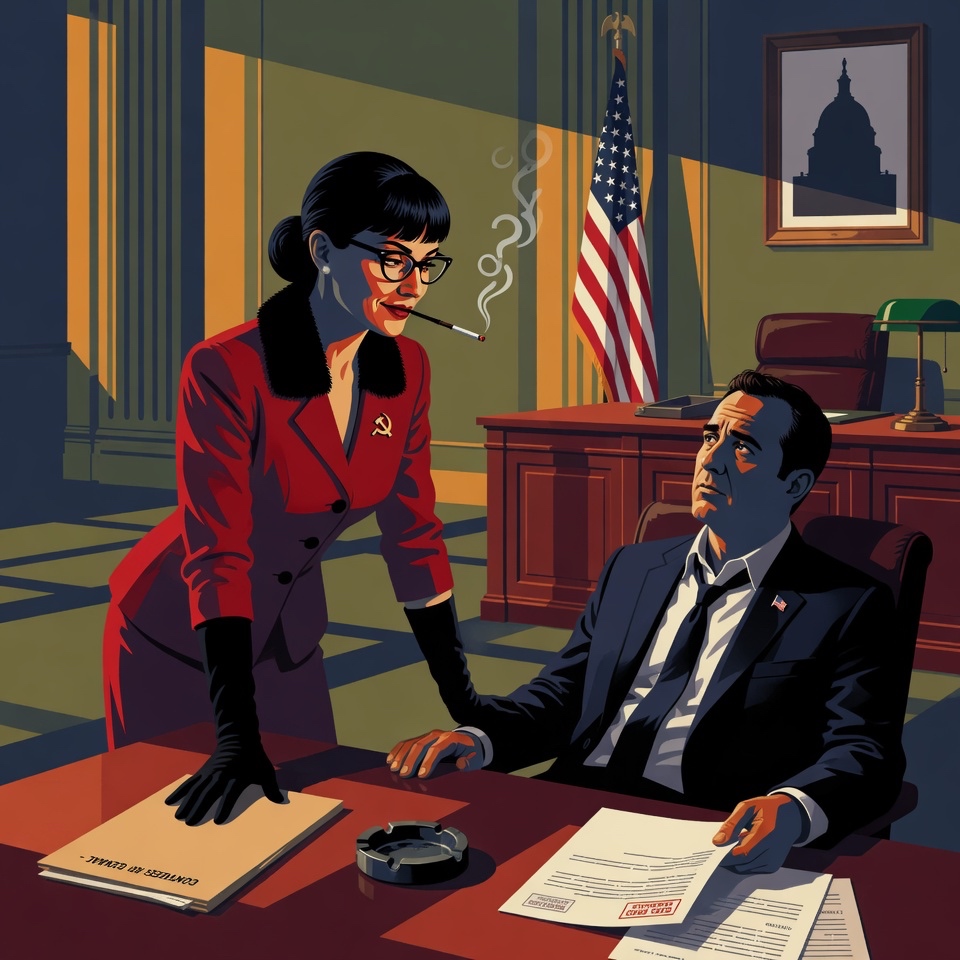
- The Honey Trap. A sexual or emotional entrapment operation. Not as common as fiction suggests, and generally considered in bad taste by professional officers. D5 has done them. The Ledger notes them without enthusiasm.
- The Cover Penetration. Placing a long-term officer inside an adversary service or corporate entity. The hardest operation type in the profession. Rarely attempted. Almost never successful.
The Long Dark’s Quiet Horror
There is an optional module called Anomalous Files in Chapter Nine: Cold War psychotronics, MKULTRA-adjacent programs, rumors that the KGB was running something called Department V that did things no field officer was cleared to know about.
This is an opt-in module. Division 5 is not a supernatural game. But the Long Dark is a period in which several services seriously investigated remote viewing, chemical interrogation, and programs that in hindsight read as horror fiction. A GM who wants a slightly stranger Long Dark can find the notes there.
Era III: Nightscreen (1990–Present)
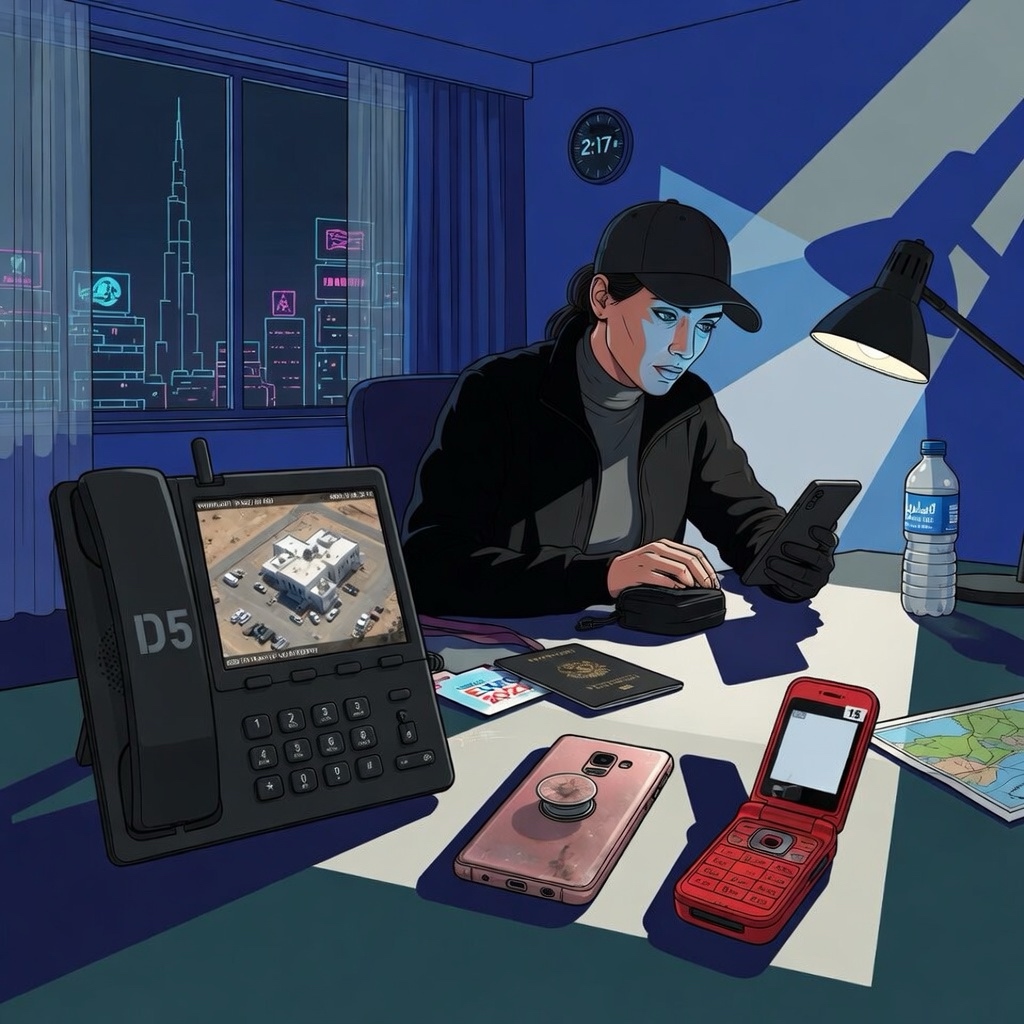
A hotel room in Dubai, March 2024. The operative has three phones on the desk, a work phone, a cover phone, and a burner. The work phone is a hardened unit issued by D5, encrypted end-to-end, on a network D5 leases through a shell in Luxembourg. The cover phone is the phone her legend carries, a Samsung, three years old, consumer software, cover-appropriate browsing history. The burner is a fifteen-dollar Nokia she will destroy tomorrow.
She is looking at a photograph on the work phone. Satellite imagery from six hours ago, over-flight of a compound three borders away. The compound belongs to a private intelligence firm headquartered in Virginia that is, in turn, a subsidiary of a private equity firm whose limited partners include two sovereign wealth funds and one Silicon Valley billionaire.
She is about to cross three borders to neutralize an asset the private intelligence firm is running: an asset who is, in turn, a former junior analyst from a service she used to work with, who has been selling his old agency’s methods to the highest bidder.
This is the war. It is not between nations anymore. The nations are customers.
Nightscreen is the name Division 5 uses for the era of the attribution war: the period, beginning roughly with the fall of the Soviet Union and accelerating after 2001, in which the question who did this? became operationally more important than the question what did they do? It is the era of SIGINT dominance, non-state actors, private intelligence, cyber operations, and the slow erasure of the distinction between state and commercial intelligence activity.
It is the era D5 was built for, although nobody at Gatwick in 1939 could have known it.
Nightscreen Technology Bands
Nightscreen covers more than three decades, and the technology pressure is not uniform. When an operation is set before the smartphone/cloud era, use the same core Nightscreen rules but scale the trace source to the date. (see table on bottom of page) If a rule says “Nightscreen” without qualification, assume Saturated Nightscreen. For earlier operations, preserve the same genre pressure but swap the mechanism: a 1997 hotel fax log can matter as much as a 2024 cloud login, but it moves through institutions more slowly.
Theaters
Nightscreen has no geographical theaters in the way the earlier eras had theaters. The boundaries are categorical, not spatial.
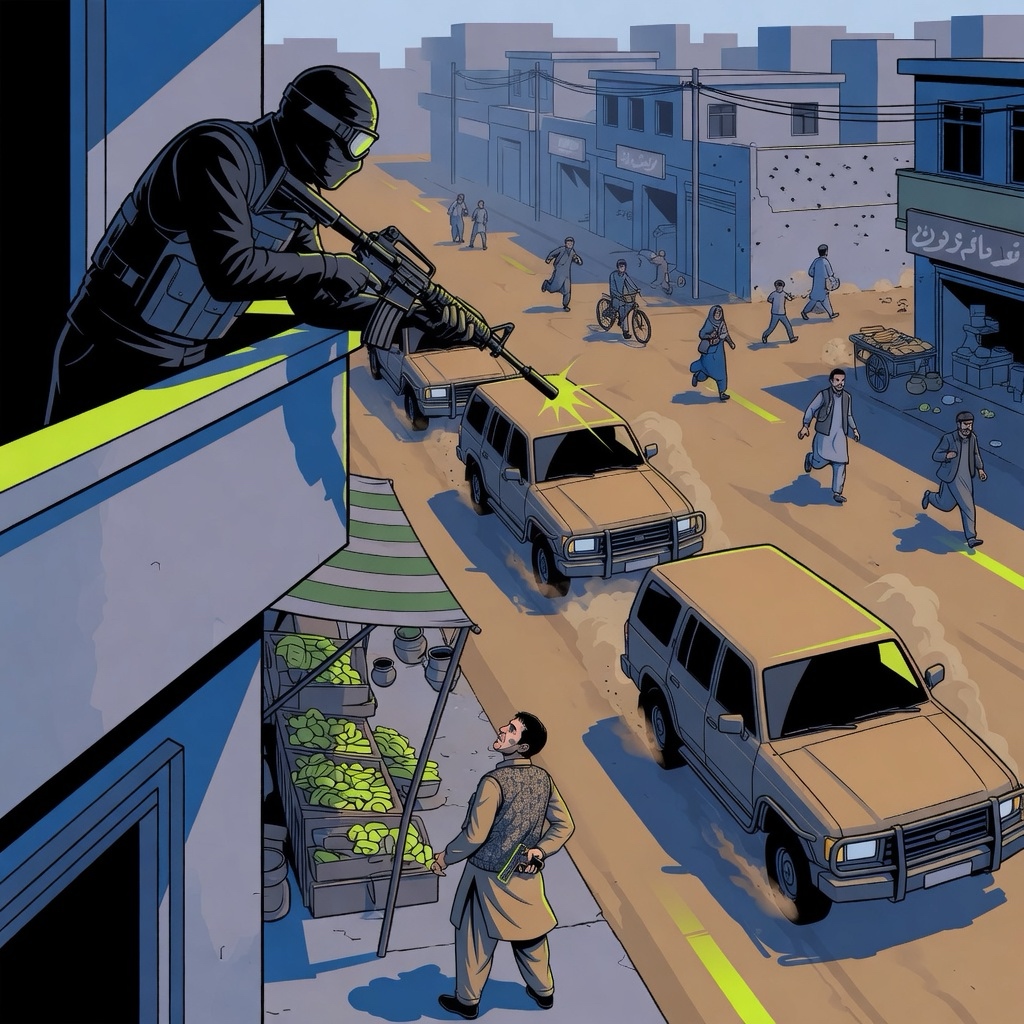
The proxy zones. The low-level shooting wars that continue across Syria, Yemen, the Sahel, eastern Ukraine, and a rotating list of others. Deniable operations, militia handling, hostage recovery, targeted strikes: these are the inheritors of the Shadow War’s unconventional-warfare tradition, in miniature and permanently.
| Band | Years | Dominant Pressure | Table Adjustment |
|---|---|---|---|
| Early Nightscreen | 1990-2001 | Fax, pagers, airline records, early mobile phones, bank wires, CCTV islands, intelligence databases. | Cyber exists as a specialist skill, not a default team requirement. Biometric pressure is rare; use records, informants, telecom logs, and border files instead. |
| Networked Nightscreen | 2001-2012 | Counterterror databases, expanding CCTV, mobile metadata, online forums, early social media, contractor analytics. | Digital signatures matter, but systems are fragmented. A good Cyber or Forgery cleanup can still isolate records before they correlate. |
| Saturated Nightscreen | 2013-present | Smartphones, cloud platforms, facial recognition, biometrics, platform logs, commercial data brokers, AI-assisted analysis. | Use the full Nightscreen pressure rules: biometric captures, phone/cloud crossings, platform correlation, and rapid passive Compromise. |
The gray-zone urban. The major capitals where every service operates but nobody fights: London, Dubai, Singapore, Hong Kong, Frankfurt. Neutral-ish ground. Everyone is there. Nobody is there openly.
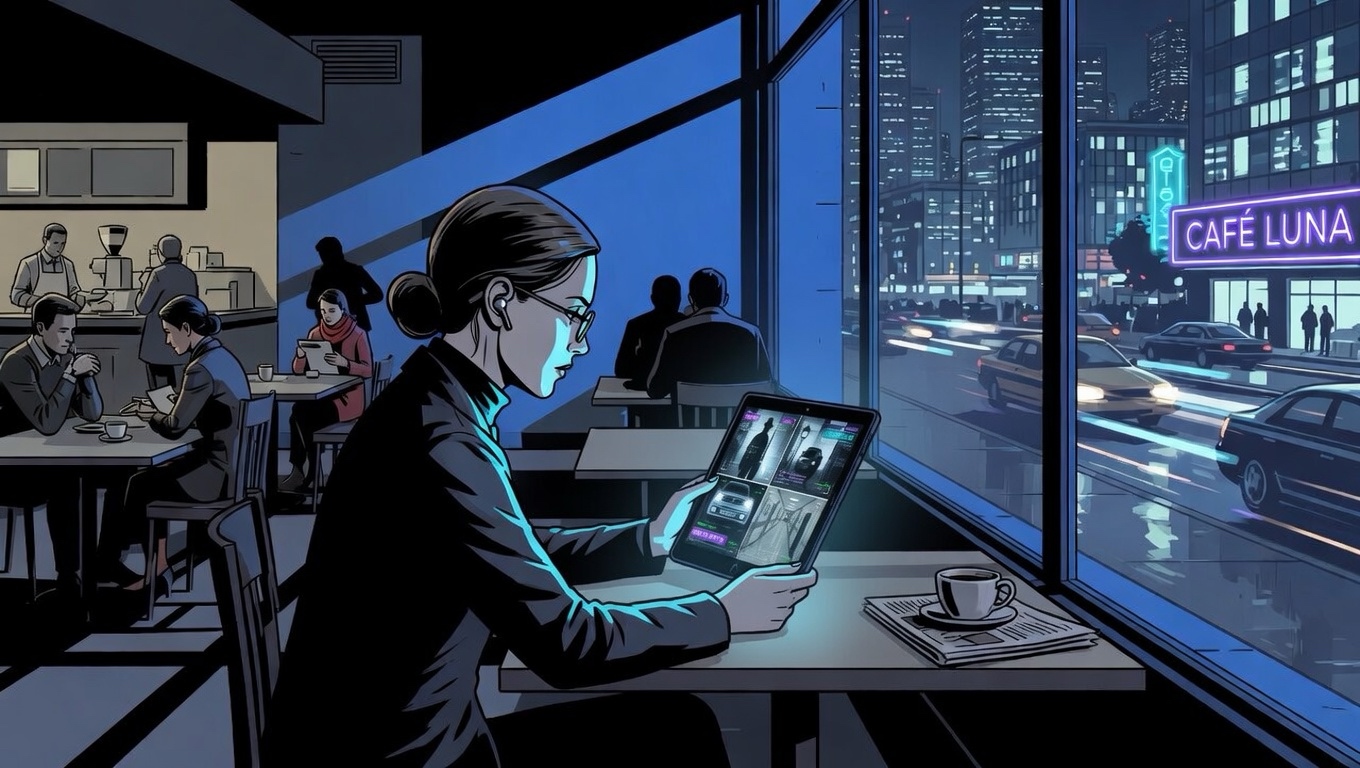
The cyber environment. Not a geography but a domain. Network intrusion, supply-chain compromise, ransomware-as-statecraft, cloud-service espionage, infrastructure probing. An operation in this domain has an origin, a target, and a payload, but no places in the sense the other eras would recognize. D5 established a Cyber cell in 1997; it was 30 people by 2010 and is larger now.
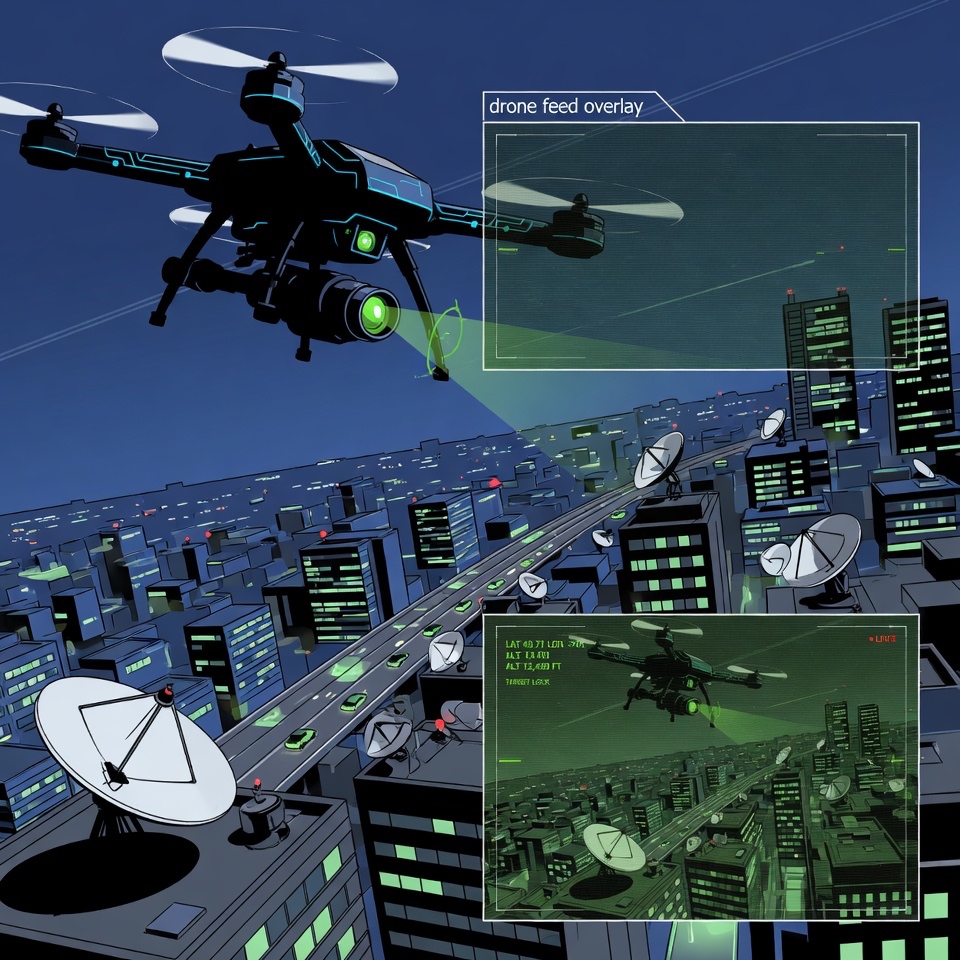
The data centers. Underappreciated as a theater. The physical places where bulk SIGINT is processed and bulk data is stored. Cables, server farms, long-haul fiber landing stations. A surprising amount of twenty-first century intelligence work consists of proximity to cables.
Agencies of Nightscreen
The named services of the Long Dark mostly still exist, with new names, new logos, and old institutional cultures. The KGB split into the SVR (foreign intelligence), FSB (internal), and GRU (military intelligence, now formally the GU). The CIA is the CIA. MI6 is MI6. The BND is the BND. The Stasi is gone but the HVA’s old networks did not all dissolve: some became private, some became Russian, some became whatever paid.
New state services. The MSS (Ministry of State Security: China) emerged from relative obscurity in the early 2000s to become, by some measures, the largest intelligence apparatus in the world. It combines foreign intelligence, counter-intelligence, and internal security in a way Western services generally separate. MOIS (Iran), ISI (Pakistan), RAW (India), NIS (South Korea), PSIA (Japan). A modern adversary list has thirty entries on it.
Non-state state-equivalents. The al-Qaeda intelligence arm of the 2000s. ISIS’s Amniyat Dawla. Hezbollah’s external security organization. Hamas’s military intelligence. These operated at levels that would have been recognized as “state intelligence” in any earlier era, and D5 had to develop tradecraft for treating them accordingly.
Private intelligence. Firms like Kroll, Stratfor, Palantir (as analytic infrastructure rather than operations), Black Cube (Israeli alumni), Meridian (a contract-driven, legally flexible private house D5 has both hired and hunted), the constellation of former-CIA boutique firms around Washington, the constellation of former-FSB firms around Moscow and London. Some are legitimate corporate-security operations. Others are deniable action arms for states and wealthy private clients. D5 has, at various points, contracted private intelligence firms on a task basis. It has also, more often, targeted them. The off-books. Services like D5, not in official existence, operating through deniable funding, answerable to a network rather than a flag. There are, by D5’s internal count, between five and eleven such services in 2026. The low estimate assumes only Western and Western-allied arrangements. The higher estimate includes suspected Chinese, Russian, and Gulf-state analogs. D5 treats all of them as peer competitors first, potential collaborators second.
Doctrine: The Attribution War
Operations in this era are planned backward from the attribution analysis. If we did this, and the other side’s analysts had to figure out who did it, what would they see? What would lead them to us? What would lead them to some other plausible actor? The best Nightscreen operations are not merely deniable: they are misdirective, leaving a trail that implicates a different party entirely.
Nightscreen attribution works through seven kinds of signature:
-
Technical signature. The malware, the tradecraft, the techniques-tactics-procedures (TTPs) that make a cyber operation identifiable as belonging to a specific actor.
-
Linguistic signature. The language used in the operation: by the operator, in the code comments, in the communications with assets.
-
Financial signature. How the operation was paid for, through what shells, from what ultimate source.
-
Temporal signature. When the operation was active: what timezone the operators worked, what national holidays they observed.
-
Kinetic signature. If violence was involved, what weapons, what techniques, what patterns.
-
Relationship signature. Who talked to whom, when, using what channels.
-
Cultural signature. The small uncategorizable details: the brand of cigarette left in the ashtray, the make of pen used to sign a document, the choice of restaurant for a meet.
Neglect any one of these and the operation can be attributed. Operators who think only about the first tend to have short careers.
Deep Legends
The central tradecraft challenge of Nightscreen is the digital trail. A cover identity in 1974 Vienna required: real documents, real addresses, real friends, real work. A cover identity in 2024 Dubai requires all of that plus ten years of social-media presence, a plausible digital residue (photos, location data, purchase history), a credit history, a tax history, and a network of digital “friends” who are also plausible.
A Deep Legend in Nightscreen takes five years or more to build. D5 has a dedicated unit, internally called the Garden, whose entire purpose is to build Legends slowly, from nothing, over periods that can exceed a decade. A Legend from the Garden is planted in 2014 and ready for operational use in 2022.
Players running Nightscreen will have Legends of varying depth. A Thin Legend is a burner identity with a week or less of preparation, disposable. A Standard Legend is three years deep, most field operations use these. A Deep Legend from the Garden is spent rarely, on operations that justify the cost.
What Daily Life Looks Like
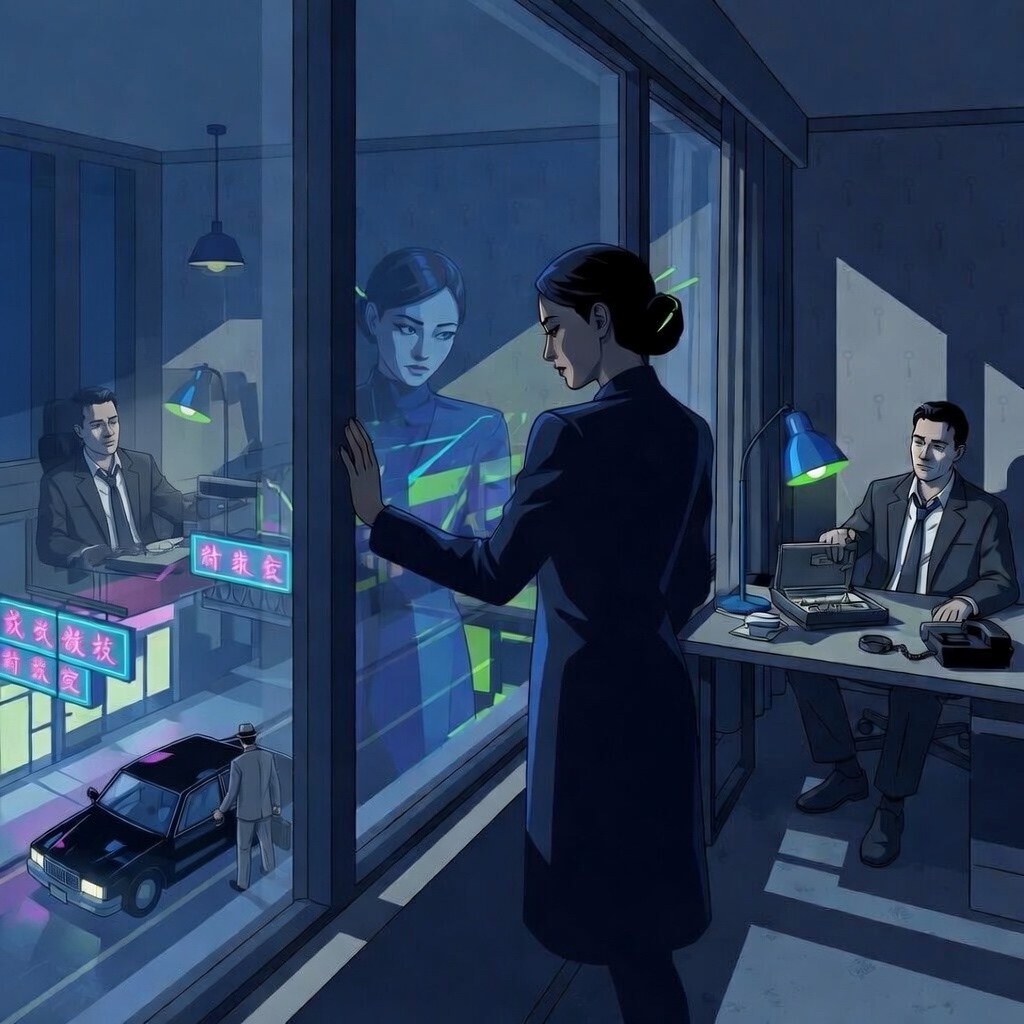
Dubai, 2024. The city is the modern Vienna: neutral, cosmopolitan, saturated with money and intelligence officers. Every major service has a presence. The emirate’s own security apparatus is professional and pragmatic; it tolerates foreign services operating in Dubai as long as the operations are not directed at Dubai itself and the diplomatic courtesies are observed.
A D5 operative in Dubai has a cover: regional risk analyst for a London-based commercial intelligence firm, say, or Ph.D. researcher on Gulf financial flows. The cover has a ten-year paper trail and a five-year digital trail. The operative’s flat is in a building that caters to Western expatriates, has a doorman who is on the payroll of four services, and has a view of the Burj that makes the weekly video calls with the cover employer look glamorous.
The day begins with the phone check. Each of the three phones gets a SIGINT sanity test: is the phone behaving the way it should, are there anomalies, is the battery draining faster than the usage pattern predicts? The phones are one of the most dangerous objects in the world, and managing them is the single most repetitive part of the daily routine.
Morning is cover-work: reports, client calls, research. What is new in Nightscreen is that the output must be searchable: the operative’s published research, podcast appearances, op-eds, social-media activity must constitute a coherent public profile. The operative is, in a real sense, building a brand as part of her tradecraft.
Afternoon, on operational days, is the operation. A meet in Nightscreen looks very different from a meet in 1974. A modern officer meeting an asset will typically:
-
Arrive at the meet with no electronic devices: phones left in a faraday bag in the car or at the flat, wristwatches checked, even the fitbit left at home.
-
Use a location that has been chosen for its absence of CCTV and facial-recognition coverage, a surprisingly difficult criterion in a modern city.
-
Assume that any phone the asset has on them is compromised, and plan accordingly.
-
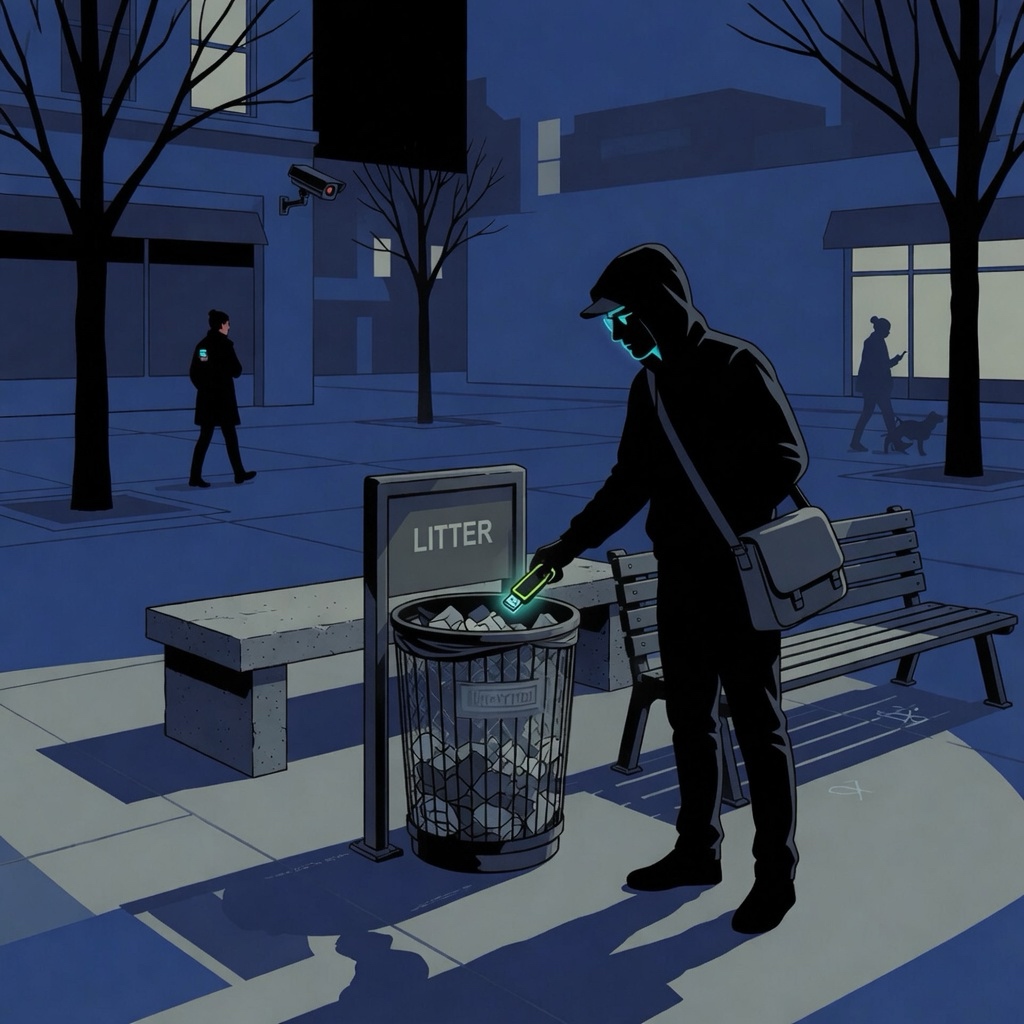
Limit the meet to the minimum exchange: the tradecraft of the “brush pass” has evolved into the tradecraft of the accidental-looking three-second physical handoff, which is harder than it sounds.
-
Execute a full surveillance-detection protocol on the way home. Evening is for data. A Nightscreen officer is also, in effect, an analyst: the data flow coming into the operation is orders of magnitude larger than in the Long Dark, and some of it must be processed in-house. Many officers work with an Analyst partner who sits at the next desk in the flat, running tools on data the officer brings back.
Signature Missions of the Era
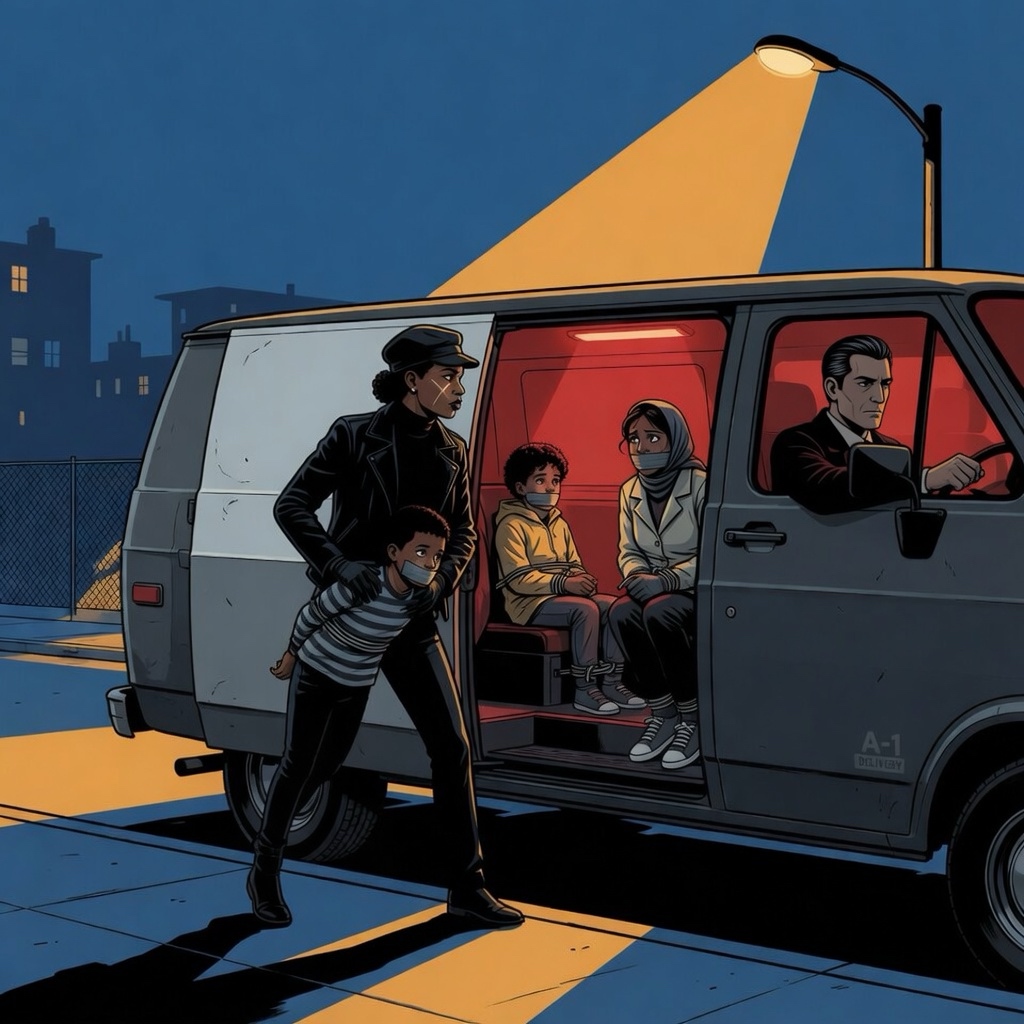
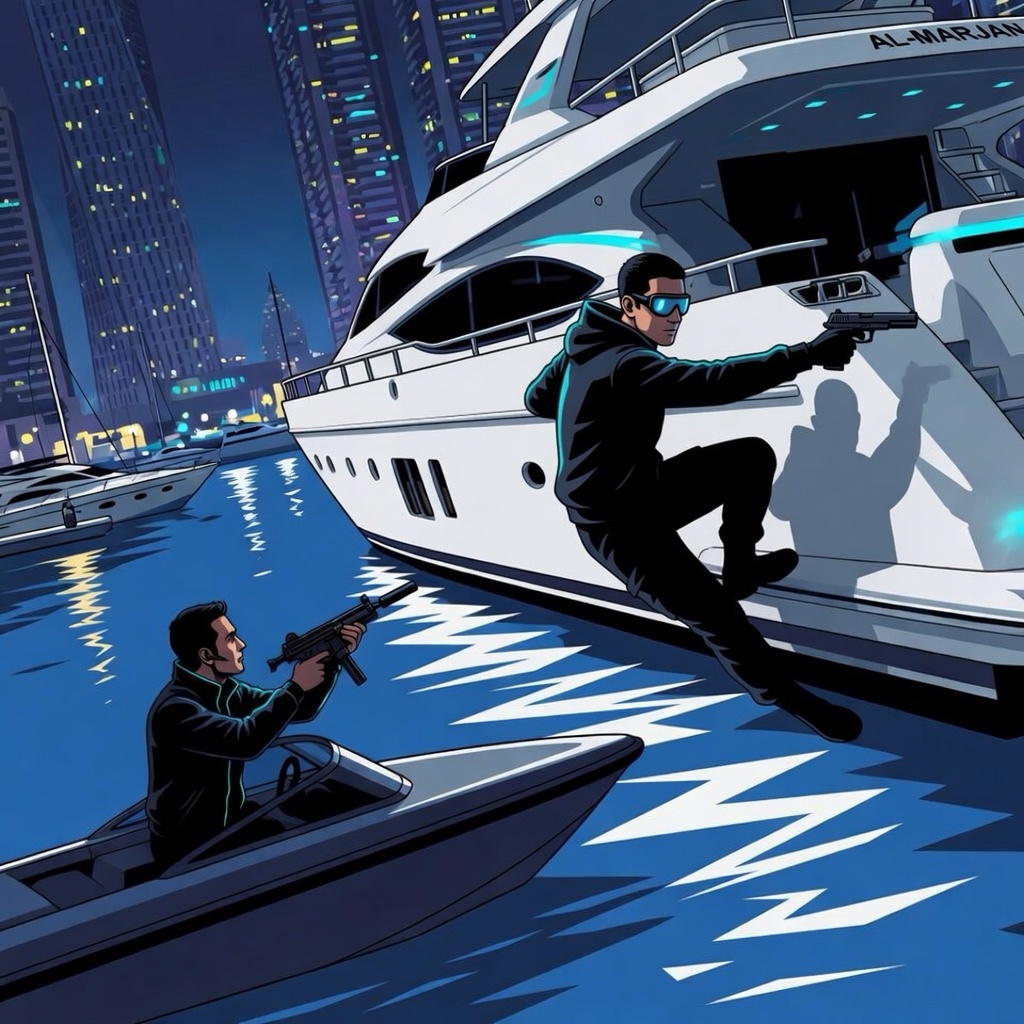
- The Asset Extraction in a Biometric World. Getting an asset out of a country whose border posts have facial recognition, whose airports have biometric kiosks, whose customs computers talk to every other customs computer in the region. The solution is almost always a combination of biometric spoofing, document depth, and timing: sometimes the solution is a Deep Legend burned on the day of extraction.
- The Cyber Op. A network intrusion with a physical-world objective. Disabling a specific piece of infrastructure, exfiltrating a specific dataset, planting a specific fingerprint on a specific adversary. Cyber operations in Nightscreen are rarely purely cyber: they are physical operations with cyber components, or cyber operations with physical reconnaissance support.
- The Attribution Reversal. Demonstrating that an operation the public attributes to Actor A was in fact performed by Actor B. Not a field operation so much as an analytical one, but D5’s Cyber cell runs these regularly. Publishing the results is a separate decision made at director level.
- The Corporate Penetration. Inserting an officer, usually on a Deep Legend, into a private intelligence firm, a defense contractor, a tech company of strategic interest. These are the Nightscreen equivalents of the Long Dark cover penetration, and they are the primary growth area of the D5 caseload in the 2020s.
- The Anomalous File. (Opt-in.) A category of operation the institution does not officially discuss in open documentation. A Nightscreen operation in which the target, the mechanism, or the effect cannot be explained by the current state of open technical knowledge. These are filed under Anomalous, routed to a sub-cell D5 does not confirm exists, and handled with unusual care. GMs who want an X-Files register can use this module; GMs who do not want it can pretend the file drawer is locked. See Chapter Nine.
The Private Sector as Primary
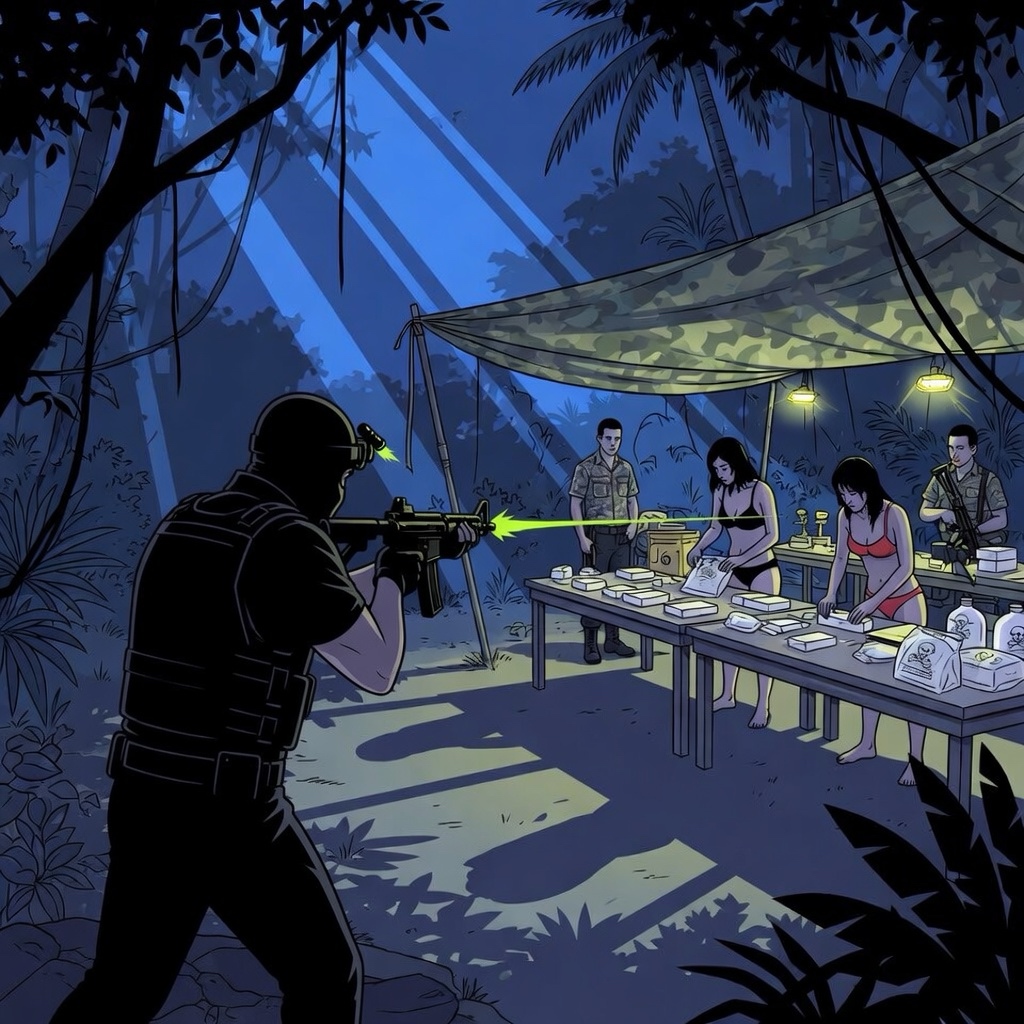
A modern Nightscreen campaign can plausibly be set entirely against private-intelligence antagonists: the rogue ex-CIA boutique, the Gulf-state-owned analytics firm, the billionaire’s personal Stasi. The Compromise Track, the Legends, the Tradecraft Pool, Assets, and Attribution all work unchanged. The only thing that changes is what the enemy looks like: a man in a suit in a glass tower in Virginia, rather than a man in a wool coat on a bench in the Volksgarten. The political picture of the private sector is in Major Factions & Powers, below.
The Texture of Nightscreen
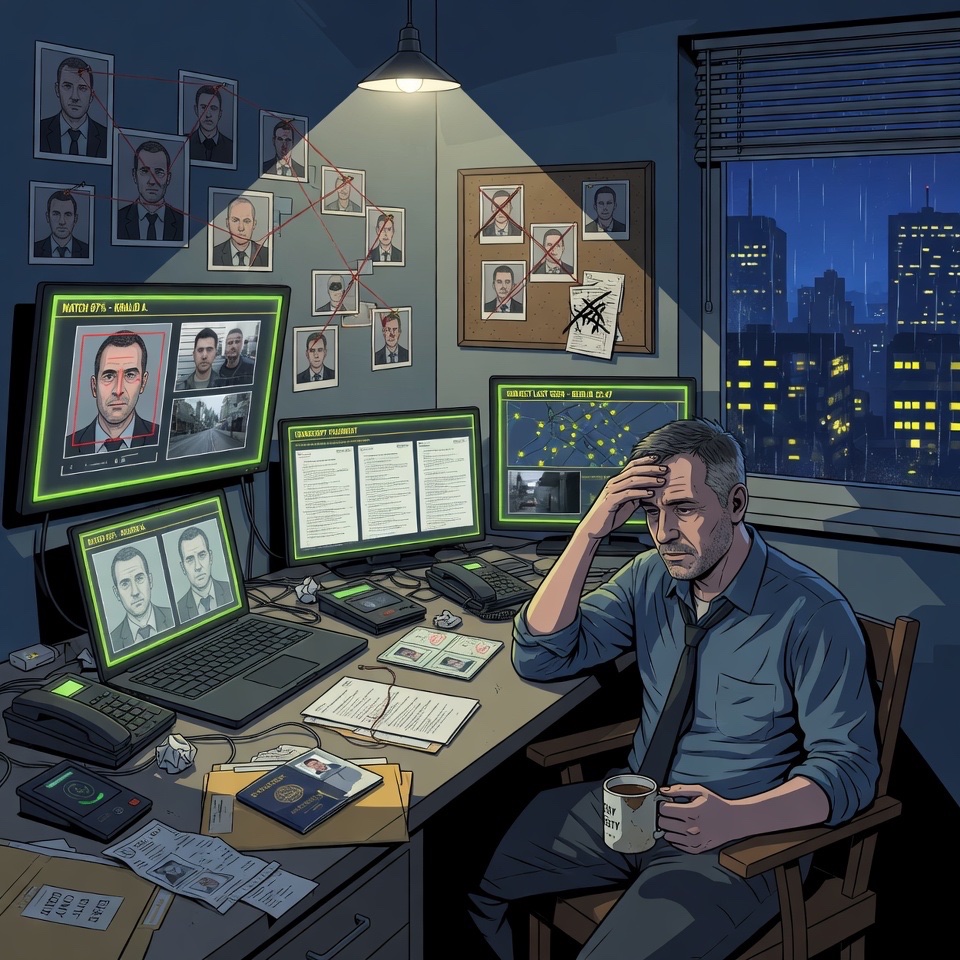
What makes the Nightscreen era feel different at the table, more than the doctrine or the theaters, is the ambient surveillance. In the Shadow War, an operative was watched when they were unlucky. In the Long Dark, an operative was watched when they were working. In Nightscreen, an operative is always watched, and the task is to be uninteresting to the watchers.
This inflects every scene. Leaving the flat is a surveilled act. Buying coffee is a surveilled act. Walking to a park is a surveilled act. Going unwatched stopped being an option years ago; what remains is appearing predictable, and it becomes a professional discipline.
Good Nightscreen tables will find themselves narrating a surprising amount of what does it look like to the camera? A character who ignores that question is asking to be flagged.
The Digital Compromise Rate
In Shadow War, an operation that went bad usually resulted in the operative being captured or killed. In Long Dark, an operation that went bad usually resulted in the operative being pulled from the field for six months. In Nightscreen, an operation that goes bad usually results in the operative’s entire identity package being burned, not just the Legend on this mission, but everything that Legend ever touched.
This is why the Compromise Track in Chapter Eight accumulates faster in Nightscreen than in the other eras. A single biometric capture at a border can be worth multiple ordinary mistakes. A single linked social-media post can undo a year of careful work.
Players who have not played the era before should be warned up front: Nightscreen does not punish you for being loud. It punishes you for being traceable.
How Division 5 Is Organized
Division 5 is a small service pretending, with considerable effort, not to be a service at all.
The institution keeps its structure intentionally plain. Titles are descriptive rather than ceremonial. A D5 officer should be able to say what someone does without exposing how much authority they hold.
| Role | Function at the Table |
|---|---|
| The Director | Strategic authority. Approves existential exposure, strategic wet work, and operations that could reveal D5 itself. |
| Directorate Desk | Era or theater leadership. Owns multi-operation arcs, major assets, rival-service relationships, and long-term consequences. |
| Station Chief | Local authority in a city or theater. Controls safe houses, liaison channels, emergency extraction, and station cover. |
| Control Officer / Handler | Owns a specific operation, asset network, or team relationship. Delivers briefs and receives debriefs. |
| Case Officer | Runs assets and field contact. A PC Handler is a case officer with table-facing authority. |
| Field Officer | Executes operations under cover. Most PCs are field officers regardless of Archetype. |
| Analyst | Builds the file, tests the pattern, and tells the team what the operation means. |
| Quartermaster / Technical Officer | Provides gear, documents, devices, cyber support, vehicles, and physical infrastructure. |
| Garden Officer | Builds and maintains Deep Legends. Usually encountered as an institutional specialist rather than a field teammate. |
| Grey / Retired Officer | Former D5 personnel outside regular tasking. Useful, dangerous, and never fully outside the Ledger. |
Stations and Cells
A station is a local D5 presence: one office, one cover business, one shared diplomatic back room, one safe-house chain, or one officer with three phones and a key to an apartment no lease mentions. Stations do not all look alike. Vienna in 1974 has an office and a social calendar. Dubai in 2024 has rotating hotel suites, contractor covers, and shell-company credentials. Occupied France in 1943 has a farmhouse, a radio, and three people who will die if the wrong car turns down the lane.
A cell is a functional team inside the institution. D5 keeps permanent cells for the Garden, Counterintelligence, Technical Services, Cyber, Finance, and Archives. A campaign can introduce others as needed, but these six explain most institutional support.
Training Pipeline
D5 does not recruit children of prophecy. It recruits people who can lie calmly, read carefully, and endure consequences.
The standard pipeline is: assessment, cover aptitude, tradecraft school, supervised station work, first operation, and debrief review. Assessment tests language, memory, moral flexibility, emotional discipline, and whether the candidate can take correction without becoming brittle. Tradecraft school teaches cover maintenance, SDRs, dead drops, basic surveillance, interrogation resistance, document handling, and the three eras’ doctrine. Supervised station work is where most candidates wash out. The first operation is deliberately modest. The review afterward decides whether the recruit becomes a field officer, a desk specialist, an asset handler, or a name in a file marked not suitable for cold work.
This structure is intentionally usable at the table. If a player wants a mentor, a rival, an old instructor, a Garden officer who built their first Legend, or a station chief who never liked them, this is where that NPC comes from.
| Cell | What It Provides |
|---|---|
| The Garden | Deep Legends, supporting cast, cover finances, social records, and identity rebuilds. |
| Counterintelligence | Mole hunts, controlled leaks, loyalty testing, friendly-service compromise analysis. |
| Technical Services | Devices, surveillance kit, bugs, countersurveillance sweeps, specialist vehicles. |
| Cyber | Intrusion, digital forensics, cloud access, attribution reversal, counter-intrusion. |
| Finance | Operational funds, shell accounts, asset payments, bribe packets, expense cleanup. |
| Archives / The Ledger | Institutional memory, prior operations, retired-officer files, old betrayals. |
Major Factions & Powers
Division 5 operates on a board crowded with other actors. This section is the short gallery: the factions a table will most often encounter, in brief. Chapter Nine goes deeper on the adversaries as mechanical opponents; this section is the political overview.
The Named Services
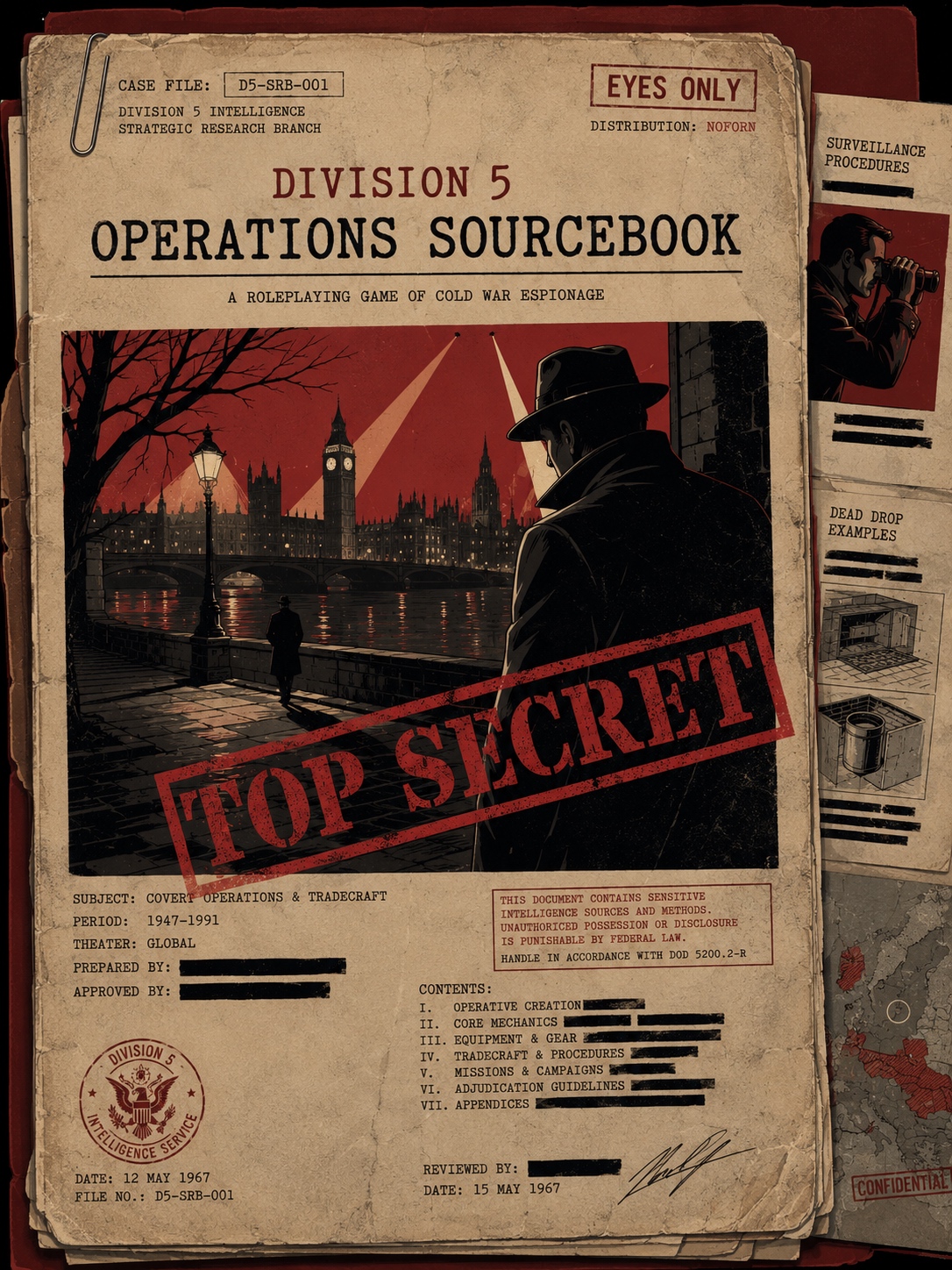
The public face of intelligence. CIA, SIS/MI6, KGB/SVR/FSB, Mossad, DGSE, BND, MSS, and a longer list. D5 operates alongside and around the named services; relationships are correct, not warm.
The phrase is load-bearing. A named service will cooperate with D5 when cooperation serves its purposes; it will not cover for D5 when cooperation does not; it will, under some circumstances, burn D5 to protect its own equities. Every D5 officer is briefed on this from the first day. Treat the named services as weather, Director III used to say. Plan around them. Do not expect gratitude. Some named services are warmer than others. The SIS has historically been the closest to D5, the institutional relationships are the oldest, but even the SIS has burned D5 operations on three occasions that the Ledger records. The CIA is variable by administration. The French services are variable by director. The Mossad is professional and transactional. The former Eastern Bloc services now operate in gray-zone arrangements with D5: active information-trading is rare, tacit noninterference in specific theaters is sometimes possible.
Officers should never rely on a named service for the endgame of an operation. The endgame is always D5 to D5.
The Rival Off-Books
D5 is not the only institution of its type. There are others. They are rarer than the named services and stranger. A representative gallery:
The Iota Committee
A multinational committee that operates off the books for three NATO successor states. Founded later than D5 (mid-1970s), smaller, more ideologically coherent, more willing to take action that D5 has declined. The Iota Committee and D5 have, at various points, cooperated, ignored each other, and actively worked at cross-purposes. They have never fought a full operation against each other, as far as the Ledger records.
Directorate Fourteen
A Russian successor arrangement. The open question, which D5 has not resolved, is whether Directorate Fourteen is a true off-books service continuing KGB traditions, or whether it is a deniable action arm of the FSB that pretends to be off-books for convenience. The distinction matters operationally. The institution’s current working assumption is ambiguous, dangerous, treat as hostile.
The Rook Group
A smaller Chinese arrangement, sometimes assumed to be a deniable arm of the MSS, sometimes assumed to be an independent outgrowth of older Chinese Communist Party security traditions. The Rook Group has been active since approximately 2003 and has become progressively more sophisticated. D5 has encountered the Rook Group in three theaters, Southeast Asia, East Africa, and once in Central Europe.
The Cleaners’ Guild
A network rather than a service: a loose association of forensic-grade fixers: people who clean up after intelligence operations, on commission, for whoever is paying. The Cleaners’ Guild has worked for every major service, D5 included. The Guild does not take sides; it is paid. The professional norm among its members is silence about every job they have ever done, and the norm has held for approximately forty years.
Encountering a member of the Cleaners’ Guild on an operation is an event. The operation is either about to end, or has already ended and the operative has not yet realized.
The Private Sector
The private sector’s relationship to the D5 universe has changed across the three eras.
In the Shadow War, the private sector was industrial: arms manufacturers, shipping companies, neutral banks. D5 worked with and against them pragmatically. A wartime industrialist could be an asset, an obstacle, or both.
In the Long Dark, the private sector expanded to include a meaningful intelligence dimension: former officers who had retired into consulting, arms dealers who sold into both blocs, shipping lines that moved things for whoever paid. Still a sidebar.
In Nightscreen, the private sector is a primary theater. Private intelligence firms now run operations of nation-state scope. A D5 operative in the 2020s will work against private-sector antagonists more often than against state services.
The D5 institutional position on the private sector is: they are neither allies nor enemies by default. They are contractors. Treat them the way a master carpenter treats a subcontractor: useful for some jobs, to be verified on every job, never to be trusted for the long run.
The Assets

The people who are not officers. The defectors, the walk-ins, the civilians who take a photograph they should not take and send it to the right address. The moral weight of the game lives here: an asset is the person the officer is lying to in the cause of a larger truth, the person whose life the officer is gambling with, and, very often, the person the officer likes most in the city.
Every long-running D5 campaign has assets at its center. Assets are fourth protagonists rather than ordinary NPCs, in the sense that the success or failure of an operation is usually measured in what happened to an asset, not in what happened to the officers. The common GM failure mode is to treat them as quest-givers or info-dispensers. Put the asset in the middle of the scene and let the players feel it.
A partial typology, for GMs:
The True Believer
The asset who is on your side because they share your values. The Soviet scientist who wants the West to win. The Saudi dissident who wants reform. The Russian officer who watched Navalny die. True believers are the most productive assets, the most emotionally draining for their handlers, and the most dangerous to work with: they take risks an officer would never take.
The Walk-In
The asset who arrives at an embassy or a safe-house address without being recruited. Walk-ins are statistically more likely than average to be provocations: agents of the opposing service attempting to dangle a false asset. Moscow Rules apply. A walk-in is vetted for eighteen months before being fully trusted, at minimum.
The Bought Asset
The asset who is working for money. Easier to recruit, easier to run, less reliable in a crisis. Bought assets become more expensive every year. The Ledger records many that were lost when a rival service paid more.
The Coerced Asset
The asset who is working because D5 has leverage. A photograph, a recording, a debt called in, a family member at risk. Ethically the most troubled category. The institution has moved away from coerced assets since the 1990s, but does not pretend it has stopped using them.
The Handle
The asset who was recruited by name and is now, over time, more of a friendship than an operation. The long-handled asset is a D5 specialty. Handlers who can sustain a relationship with a senior foreign officer for fifteen years are rare, and when they retire, the institution mourns them. The retiring handler usually introduces the asset to a successor, and if the succession is done well, the relationship continues without a seam.
The Dead Asset
Not technically a category. Included here because every veteran D5 officer carries at least one. The asset who didn’t make it. The one the officer thinks about when they cannot sleep. The one whose family the officer sometimes, against policy, checks in on. The dead asset is the character the officer will never be. Let them haunt the table.
The Signature Assets of Each Era
Shadow War. A radio operator in occupied France, a Polish officer with access to German communications, a Norwegian scientist who knew where the heavy water was stored, a French résistant who had crossed the Pyrenees nine times with packages D5 is not permitted to describe. The signature asset of the era is the local resistance member, usually a woman, usually under thirty, usually dead before forty-five.
Long Dark. A senior Warsaw Pact officer, a Soviet military scientist, a Cuban exile with access, a disillusioned East German intellectual. The signature asset of the era is the senior official with a conscience, usually a man in his fifties, usually at personal risk that would crush almost anyone.
Nightscreen. A junior analyst at a private intelligence firm, a cybersecurity researcher with a grudge, a corporate insider at a strategic firm, a former member of a non-state actor’s intelligence arm who defected for money and stayed for reasons. The signature asset of the era is the professional who has seen their own side do something unforgivable, usually younger than the Long Dark asset, usually technical.
The specifics rotate with the era; the relationship does not, and a good campaign honors both facts.
The Eight Core Conceits
The non-negotiable truths of the Division 5 universe. These are assumed by the fiction, baked into the mechanics, and non-optional at the table. GMs who want different truths should pick a different universe.
1. The Shadow War Is the Real War
The public history is the half the public was allowed to see. The Normandy landings, the Berlin Airlift, the fall of the Wall, the invasion of Iraq: these are the headlines. Underneath each headline, there was another half of the story, and in that other half, the outcome was often decided before the public half began.
This is a claim about what “intelligence work” is, not a conspiratorial one. Intelligence work is the work of preparing the ground, before the armies arrive, so that the armies arrive at the ground that has been prepared. In every war, in every crisis, in every election, there is a layer of preparation that the public is not told about. Division 5 is in that layer. So is every service like it. The layer is not a secret: it is simply not reported.
When a D5 officer reads the morning paper, they see the top half of every story. They know the bottom half exists. Most days, they do not know what it is. Some days, they know because they put it there.
2. Trust Is the Only Currency
Money matters. Ideology matters. Coercion matters. But all three convert, eventually, into trust: the belief that the person across the table will do what they said they would do. Trust is the substrate of every asset relationship, every inter-service arrangement, every operation that depends on anybody other than the officer doing what they said.
Losing trust is one of the costs an operation can least afford. A firefight that goes badly costs bullets, witnesses, heat, and sometimes lives. A meeting that goes badly costs credibility, and credibility, once lost, is not quickly rebuilt.
Mechanically, this conceit shows up in the Asset rules in Chapter Eight. Narratively, it shows up everywhere. An officer who treats trust as a renewable resource will not be in the field long.
3. Cover Is a Resource, Not a Fact
Every identity burns. How fast is up to the operative.
The Legend system in Chapter Eight makes this a mechanical truth: a Legend has a capacity, each operation fills it a little further, and when it is full the Legend is burned. The operative must then build another or go dark.
The conceit runs deeper than the mechanic. Every operative’s real self, the person they were before the service, the person they might have been if they had chosen otherwise, is itself a kind of cover. The self the operative presents to the Division is not the full self. The self the Division knows is not the self the Division documents. The self the Division documents is not the self the Ledger remembers.
An operative has no one identity and never will.
4. Deniability Is the Agency’s Oxygen
If a D5 operative is captured, Division 5 will say they were freelancing. This is the founding arrangement, not a betrayal. Every officer agreed to it on the first day.
The operational consequence: no operation produces paper that links back to the institution. Documents are generated, but they are generated under cover identities, routed through cover financial arrangements, and signed by cover hands. Leaving a true signature on a true document is a career-ending mistake.
The moral consequence: an operative who is taken is alone. There is no exchange that will rescue them. There is no back-channel that will unambiguously protect them. There is, at best, an eventual quiet extraction by another operative, under a new operation, years later, and only if the captive has held out long enough for the institution to have the opportunity.
This is why the L-pill existed in the Shadow War. It is why the Nightscreen equivalents, the dead-drop self-destruct protocols, the emergency identity burns, exist today. Deniability has a price, and the price is paid by the operative in the moment.
5. The Enemy Has Your Face
Doubles, defectors, moles, and sleepers mean that anyone at the table may already belong to the other side. Not usually. But sometimes. And the possibility is always live.
A D5 campaign that never stages a genuine betrayal arc has not fully inhabited the Universe. The betrayal does not have to be a PC. It can be a trusted NPC: a handler, a long-running asset, a colleague of many years. It can be a mole deep in D5’s own Ledger, whose revelation reframes operations going back decades. It should, however, happen at least once.
Players should be told at session zero that this conceit is in play. The betrayal is the genre, not a twist. When it comes, it should feel like weather: inevitable, not arbitrary.
6. Information Is the Only Weapon That Scales
A pistol solves one room. A file solves a decade.
The mechanical expression of this conceit is the Tradecraft Pool in Chapter Eight. Information gathered in the Intel Phase converts directly into dice in the field. An operation that skips the Intel Phase and goes straight to action has no Tradecraft Pool, and is almost guaranteed to fail.
The narrative expression of this conceit is deeper. A successful D5 career is not measured only in firefights survived. It is measured in files completed, assets recruited, networks built, foreign operations understood before they became crises, and violent moments survived without letting them consume the mission. Some excellent operatives rarely fire a shot. Others are kept alive because, when the shot becomes necessary, they know exactly what it will cost.
Tables that want the Bond register sometimes find this conceit the hardest to hold. A GM can dial up the pyrotechnics, gadgets, chases, and action set-pieces without violating the conceit. What they should not do is let firepower replace information. Violence can solve the current scene. Information decides whether the next scene is survivable.
7. Every Mission Leaves a Mark
The Compromise Track is not a bug of the Universe. It is the Universe.
Every operation, even a successful one, costs the operative something. A photograph they are now in. A voice sample that is now on file. A face glimpsed by a shopkeeper who will, years later, see it again in a different country. A small lie told to a handler who will, later, check.
These marks accumulate. They are the gradient that drives a D5 campaign forward. A character who starts fresh at Compromise 0 will, after five missions, be Compromised at 2 or 3 regardless of how well those missions went. At Compromise 5, the character is pulled from the field: a retirement protocol, not a punishment, and it should feel like the natural arc of a career rather than a death spiral.
The campaign does not end when a character is retired. The institution generates another. The Ledger remembers the retired officer. The new officer inherits the file. The continuity is institutional, not personal.
8. The Eras Rhyme, They Do Not Repeat
A 1943 dead drop and a 2024 encrypted drop are the same move in different clothes. The tradecraft is continuous; the technology rotates.
This conceit keeps the Universe coherent across its three eras. A table moving between eras, or a GM running a campaign that draws inspiration from multiple eras, should not feel that the genres have diverged.
The rhyme structure holds:
- 1943’s radio operator becomes 1974’s cipher clerk becomes 2024’s cryptographic engineer.
- 1943’s dead drop becomes 1974’s brush pass becomes 2024’s steganographic post.
- 1943’s burn room becomes 1974’s shredder becomes 2024’s secure delete protocol.
- 1943’s false papers becomes 1974’s work visa becomes 2024’s Deep Legend.
Every position in the Division 5 universe has a through-line across all three eras.
A table that wants to honor this conceit most fully can, once per campaign, run a short flashback scene in another era and watch the players recognize that of course it works the same way.
Why the Conceits Matter
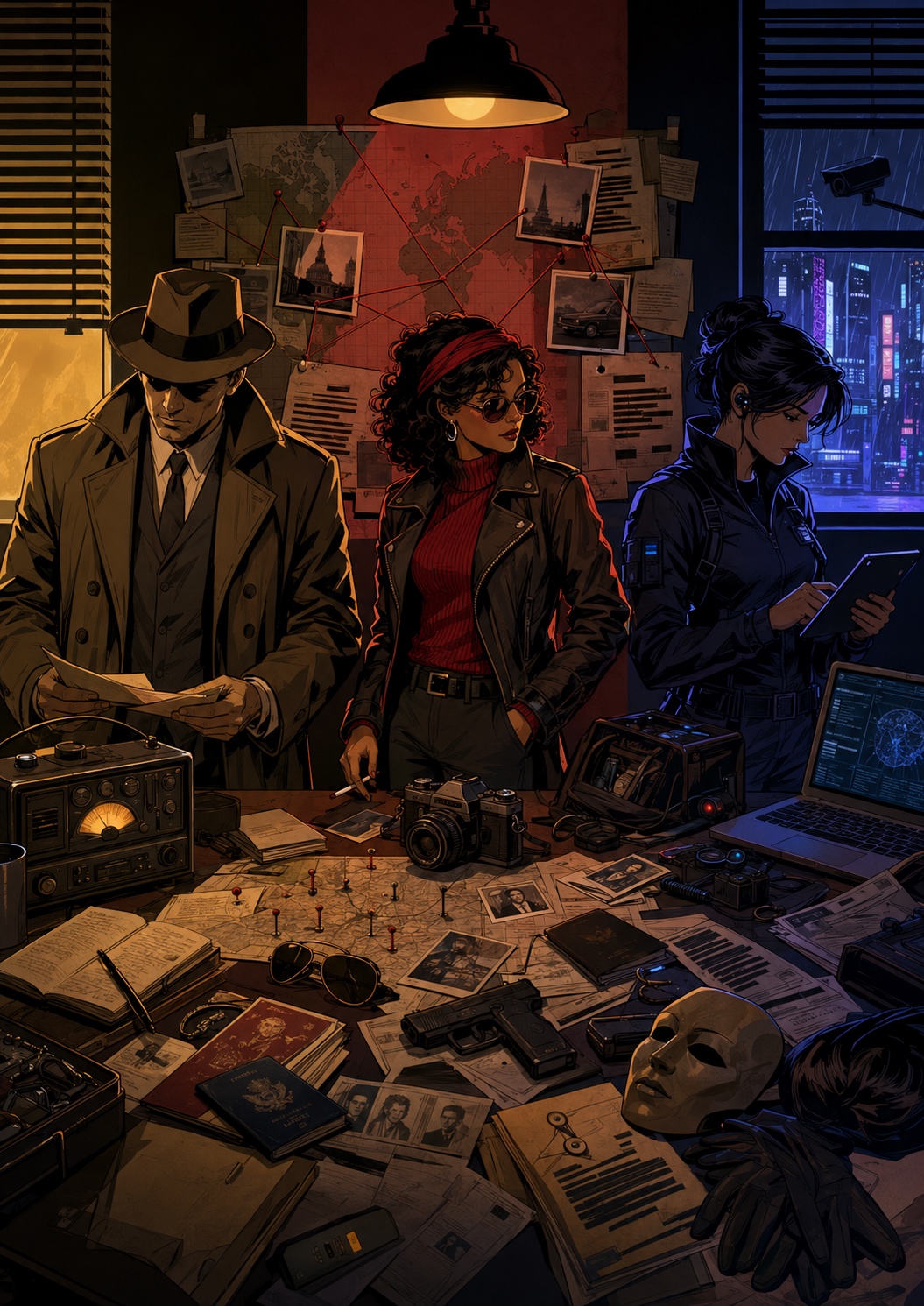
Every mechanical choice downstream, every archetype, every subsystem in Chapter Eight, every adversary, exists to serve these conceits. If a rule and a conceit ever conflict, the conceit wins.
If a table and a conceit conflict, a group of players who want to ignore a conceit, or who drift away from it over a few sessions, the fix is almost never rules and almost always a pause-and-talk at session zero plus one. The conceits are the genre contract. The mechanics assume the contract. If the contract is lifted, the mechanics drift out of calibration.
GMs who feel the campaign drifting should return here. Pick the conceit that is being violated. Reassert it gently through a scene, an NPC, a consequence. Do not lecture the table. Let the Universe correct itself.
In This Chapter
- The world of Division 5 as it stands, and the three layers of an operative’s daily life
- A full institutional biography of Division 5: six phases from Gatwick to the present
- The three Eras in depth: theaters, agencies, doctrine, and a vignette of daily life in each
- The practical structure of D5: stations, cells, field roles, and the training pipeline
- Major factions: the Named Services, the Rival Off-Books, the Private Sector, and the Assets
- The eight Core Conceits that define the universe and hold it together