The car is the cover. The plane is the extraction. The train is the meeting. A Lysander dropping out of cloud onto a moonlit field, a black Volga idling outside a Moscow hotel, a white Toyota Hilux crossing a desert border at dawn: each tells the watcher exactly who has just arrived and what they are willing to do next.
A vehicle in an intelligence operation is a document you drive. Pick it carefully.
How Vehicles Work in Division 5
Division 5 uses the standard Exodus NDS vehicle framework from the Core Rules and the vehicle template used in this book, Scale, Speed, Handling, Armor, Defense, Hull, System, Crew, and control skill, plus the vehicle-combat structure that governs chases, firefights, and collisions. This Universe adds three overlays that make vehicles behave specifically as intelligence-operation tools rather than generic conveyances.
First, every operational vehicle has an attribution signature. The seven-signature framework from Chapter Two applies as fully to vehicles as to gear. A black 2024 GMC Yukon with blackout windows and after-market armor narrows its occupants to one of roughly fifteen services on earth; a 1974 Lada Riva in Vienna narrows them to no one in particular, and that is the point.
Second, vehicles can be Cover Vehicles. A Cover Vehicle is part of a Legend: registered, serviced, insured, and photographed under that identity. Cover Vehicles deepen the Legend, provide mechanical benefits to social and movement scenes, and burn with the Legend when it burns (Overlay 1 covers the details).
Third, extended chases resolve under the Pursuit Clock. Long-form pursuit is not handled round-by-round in Division 5; it is a structured contest with specific escalation beats, resolved in one to three extended exchanges and paced so that a pursuit plays as the climax of an operation.
The Three Overlays in Detail
Overlay 1: Cover Vehicles
A Cover Vehicle is a vehicle that is part of a Legend. It is registered under a Legend identity, maintained by a mechanic who knows the Legend (not the operative), and used consistently enough that the Legend’s paper trail includes a credible vehicle history: registration renewals, service records, fuel-station visits, parking-ticket payments.
Acquiring a Cover Vehicle. At character creation, an operative with a Legend at Standard or Deep depth may designate one era-appropriate vehicle as a Cover Vehicle attached to that Legend. Acquiring a Cover Vehicle in play requires downtime and GM approval, typically one to two weeks of in-fiction time, plus the vehicle’s Requisition Cost, and the Legend must be at Standard depth or better to support the vehicle’s paper trail.
Benefits. When operating a Cover Vehicle under its matching Legend:
- The operative gains +1 Boon die on Tradecraft, Deception, and Charm checks that invoke the Legend’s professional context (arriving at a business meeting, being waved through a checkpoint, attending a social event).
- Surveillance checks against the operative by hostile services require +1 difficulty step to identify the operative rather than the Legend, because the vehicle’s paper trail reinforces the Legend.
- The Cover Vehicle counts as a Legend quality (see Chapter Eight); it occupies a quality slot but stacks well with other qualities.
Burning. A Cover Vehicle is vulnerable to the same attribution forces as any other Legend element. If the Legend is burned, the vehicle becomes a hostile-known vehicle: every service that was tracking the Legend now has the vehicle’s license plate, service history, and last-known location. Operating the vehicle after its Legend burns accumulates +1 Compromise per operation.
A Cover Vehicle can also be burned directly: used for an act that its Legend cannot sustain (a high-speed chase away from a crime scene, for example), which burns the vehicle’s contribution to the Legend even if the Legend itself survives. Characters may deliberately burn a Cover Vehicle for +2 Boon dice on a single critical check, the same one-time narrative benefit as burning a Legend.
Rebuilding. A burned Cover Vehicle cannot be rebuilt without rebuilding the Legend it was attached to (or rebuilding the vehicle under a different Legend, which counts as acquiring a new Cover Vehicle).
Overlay 2: The Pursuit Clock
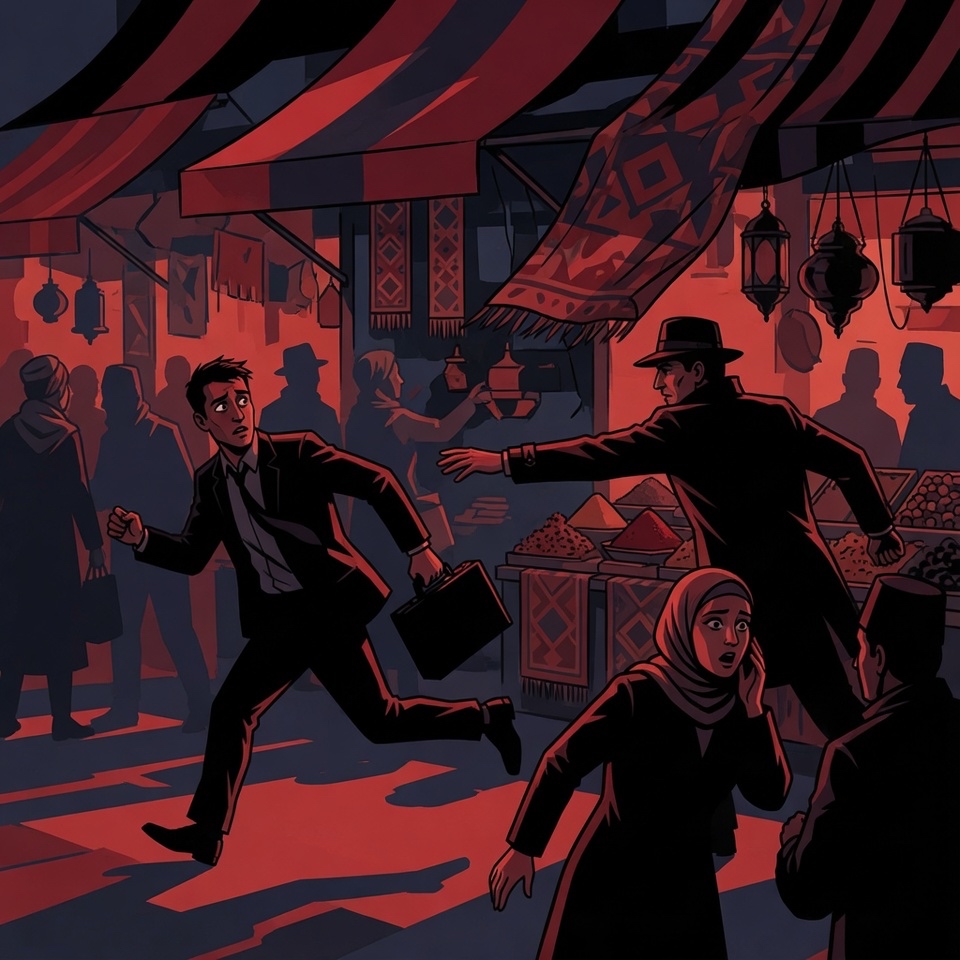
Extended vehicle pursuit, a car chase across three districts of Berlin, a motorboat run up a river with a helicopter closing, a foot-and-vehicle scramble across a crowded market, resolves under the Pursuit Clock rather than through round-by-round vehicle combat.
The Pursuit Clock is a five-segment track. Segment 1 frames the pursuit, Segments 2-4 are contested, and Segment 5 resolves the outcome. At the start of the pursuit, the GM determines whether either side begins with a clear fictional lead. If so, that side starts with 1 Clock Advantage. The clock advances through escalating stages:
| Segment | State | Narrative Beat |
|---|---|---|
| 1 | Contact | The pursuit has been established. Both sides are aware. |
| 2 | Pressure | The pursuer closes; the pursued must make a hard choice. |
| 3 | Crisis | Something breaks: a wall, a window, a bystander, a rule. |
| 4 | Terminus | The pursuit reaches its natural endpoint. |
| 5 | Outcome | The clock is resolved. |
Each contested segment resolves as one opposed check. The GM sets a difficulty appropriate to the segment; the pursued and pursuer make opposed checks using the vehicle skill appropriate to the pursuit (Drive for ground, Pilot for air, Athletics for foot). The winner of the segment marks one Clock Advantage for their side and shapes the narrative of that segment’s beat. Regardless of who wins, the clock then advances one segment.
Winning the clock. Resolve Segments 2, 3, and 4 as the decisive contests. At Segment 5, compare Clock Advantage. If the pursued has more Clock Advantage, they escape or force disengagement. If the pursuer has more Clock Advantage, they catch, identify, corner, or force the pursued into a final scene. If Clock Advantage is tied at Segment 5, resolve one final opposed check at Hard difficulty; the winner decides the Outcome. Narrative engineering still matters: a prepared bolt-hole, public incident, hidden vehicle switch, or burned Legend can justify Boon dice , an upgraded die, or a segment’s fictional result, but it does not skip the Clock Advantage comparison unless the GM has already framed that resource as the operation’s explicit escape condition.
Burn for advantage. Any side in a Pursuit Clock scene may burn an operational resource for an edge on a contested segment: a Legend or Cover Vehicle burn for a critical segment (the one-time +2 Boon dice described under Overlay 1), a Tradecraft Pool expenditure, a Fortune or Peril Point, a Quartermaster’s pre-stashed gear. The GM adjudicates the narrative weight of the burn; it does not automatically mark Clock Advantage unless the resource wins the contested segment or the mission brief already established it as the escape condition.
Collateral and attribution. Each segment of the Pursuit Clock generates attribution signatures. A Crisis-segment beat that involves ramming through a market stand, discharging a firearm in public, or causing a traffic collision generates multiple signature events: CCTV footage, witness reports, police reports, insurance claims. The Compromise Track of any operative visible in the pursuit accumulates one Compromise mark per segment where significant collateral occurred.
Why the Pursuit Clock Exists
Round-by-round vehicle chases are tactically interesting for one or two chases per campaign, then they become tedious. The Pursuit Clock produces dramatic pursuit: the beat-by-beat escalation that John Frankenheimer cut the Ronin chase sequences out of, or the Bourne-series pursuits, or the Tinker Tailor train-station sequence. The clock forces the pursuit to be either three or four decisive moments, and then it is over.
Tables that prefer round-by-round vehicle chases for specific scenes are welcome to fall back to the Core Rules framework. The Pursuit Clock is the default because it produces the pacing the genre rewards.
Overlay 3: Attribution Signatures on Vehicles
Every vehicle carries an attribution signature, the same way every piece of gear does. The Core Rules do not account for this; Division 5 adds the following:
Vehicle Signature Classes.
-
Invisible. The vehicle is indistinguishable in the local environment. A gray Toyota Corolla in most of the developed world. An older Lada Riva in Eastern Europe. A non-descript sedan of the appropriate decade. No signature beyond “there was a car.”
-
Contextual. The vehicle is noticeable but its attribution is broad: it signals a type rather than a specific operator. A black SUV with blackout windows in 2024 signals “professional security of some kind”; it does not identify the specific service.
-
Institutional. The vehicle’s signature attributes to a specific organization or class of organizations. A diplomatic-plate Mercedes in 1974 Vienna attributes to a specific embassy. A military-pattern Hilux in 2020s Africa attributes to a range of paramilitary and security organizations.
-
Narrow. The vehicle attributes to a specific service or even a specific team. A 1943 Lysander landing in occupied France attributes to SOE beyond doubt (see the Era I entry). A specific make-and-model of armored sedan in 1974 Moscow attributes to KGB or CIA depending on which variant.
Mechanical effect. When post-operation attribution analysis runs (Chapter Eight), the vehicle’s signature class adds directly to the attribution pool:
- Invisible vehicles add no attribution dice.
- Contextual vehicles add +1 Ability die to hostile attribution checks.
- Institutional vehicles add +1 Ability die and +1 Boon die .
- Narrow vehicles add +2 Ability dice and +1 Boon die to hostile attribution checks and typically produce immediate identification of the responsible service.
A team that drives a Narrow-signature vehicle to a meet has effectively signed the operation in the service’s name.
The Trabant Problem
A classic attribution-signature problem: in 1974 East Berlin, a Trabant is an Invisible vehicle (one of hundreds of thousands on the streets) but a Mercedes W123 is Narrow (Western diplomatic or business, and both are closely watched). The operative who crosses into East Berlin in a W123 has signaled their arrival to four services before they reach their hotel.
The counter-problem: the operative who crosses into West Berlin in a Trabant is also signaling: the signal is “my cover story for this vehicle had better be very good,” and every Western service will be checking it.
The lesson: a vehicle’s signature depends on where it is, not just what it is. The Trabant problem reappears in every era: a white Toyota Hilux in central London is as attribution-strange as a vintage Daimler in central Mogadishu.
Vehicle Stat Block Reference
Use these profiles when a vehicle enters a chase, firefight, collision, forced-entry scene, or extraction under pressure. The catalog entries below provide the fiction and attribution; these blocks provide the Core Rules fields.
Catalog entries sometimes use descriptive shorthand such as Slow, Moderate, or Fast for readability. When dice are involved, use the numeric Speed, Handling, Armor, Defense, Hull, System, crew, and control-skill values in this reference.
Civilian Sedan / Cover Car
- Applies To: Citroën Traction Avant, Mercedes W123, Ford Granada, Opel Senator, Citroën CX, Peugeot 505, Volga GAZ-24, Tatra 613, Chaika, Toyota Corolla, Honda Civic, most rental cars, ride-share cars.
- Consumables: One tank of fuel, basic toolkit, ordinary spare tire.
- Price/Rarity: Req Cost 2-4 by era and cover depth.
Special Abilities
- Cover-Plausible - If the vehicle matches the Legend and local environment, it may be treated as Invisible for vehicle attribution.
Compact Civilian Car
- Applies To: VW Golf, Ford Escort, Lada Riva, Trabant 601, small city rentals, compact EVs.
- Consumables: One tank or battery charge, basic emergency kit.
- Price/Rarity: Req Cost 1-3.
Special Abilities
- Local Noise - In the right city or country, add +1 Boon to checks to blend into traffic.
Military Light Utility
- Applies To: Willys Jeep, Kübelwagen, Horch field car, Toyota Land Cruiser, Toyota Hilux, military-pattern utility trucks.
- Consumables: Field fuel load, tow cable, basic repair kit.
- Price/Rarity: Req Cost 3-5; Military or Restricted.
Special Abilities
- Rough Ground - Ignore the first setback imposed by mud, broken road, field track, or desert hardpan.
Motorcycle / Courier Bike
- Applies To: BMW R75, Ural, Dnepr, courier motorcycles, fast civilian bikes.
- Consumables: Small fuel load, field repair roll.
- Price/Rarity: Req Cost 2-4.
Special Abilities
- Thread Traffic - Add +1 Boon to pursuit checks in dense streets, alleys, or checkpoints where a car cannot maneuver.
Bicycle / Foot Courier Vehicle
- Applies To: Mountain bicycle, resistance courier bicycle, folding courier bike.
- Consumables: Repair kit, pump, concealed pouch.
- Price/Rarity: Req Cost 1.
Special Abilities
- No Engine Signature - The vehicle adds no engine, fuel, or license-plate signature unless witnesses identify the rider.
Van / Light Commercial
- Applies To: Delivery truck, Ford Transit, Mercedes Sprinter, tradesman’s van, panel van.
- Consumables: Fuel load, cargo tie-downs, tool chest.
- Price/Rarity: Req Cost 2-4.
Special Abilities
- Working Cover - If the vehicle carries plausible tools or cargo, add +1 Boon to checks to justify presence in service corridors, alleys, loading bays, or industrial sites.
Armored Civilian Vehicle
- Applies To: Armored GMC Yukon/Suburban, armored Mercedes S-Class, armored BMW 7-Series, armored Land Cruiser, hardened diplomatic sedan.
- Consumables: Hardened tires, emergency beacon, first-aid kit.
- Price/Rarity: Req Cost 6-8; Restricted or Institutional.
Special Abilities
- Ballistic Shell - Reduce incoming small-arms damage by Armor before applying Hull damage. Public use automatically creates at least a Contextual vehicle signature.
Tactical Armored Vehicle
- Applies To: Hotchkiss light armor, modern armored tactical vehicle, riot-control armored vehicle.
- Consumables: Military fuel load, heavy tools, recovery gear.
- Price/Rarity: Req Cost 8+; Military.
Weapons
- Mounted weapon by era (Damage 8-10; Crit 3; Range [Medium-Long]; Auto-Fire, Loud, Military).
Special Abilities
- Not Deniable - The vehicle is never Invisible. Even under false flags, it begins at Institutional signature.
Light Aircraft / Covert Insertion Plane
- Applies To: Westland Lysander, small private charter, light prop aircraft.
- Consumables: Fuel for theater-range flight, radio, survival kit.
- Price/Rarity: Req Cost 6-9; Restricted.
Special Abilities
- Short Field - Add +1 Boon to landing or takeoff checks from improvised strips, fields, or remote roads.
Transport Aircraft
- Applies To: C-47 Dakota/DC-3, commercial airliner in abstracted form, large private jet.
- Consumables: Long-range fuel, cargo manifest, flight-plan paperwork.
- Price/Rarity: Req Cost 9+ or scenario asset.
Special Abilities
- Manifest Trail - Unless the operation has forged aviation cover, use adds at least one attribution signature from manifests, radar, filed plans, or passenger records.
Helicopter
- Applies To: Utility helicopter, private helicopter, tactical insertion helicopter.
- Consumables: Aviation fuel, headsets, emergency kit.
- Price/Rarity: Req Cost 8+; Restricted.
Special Abilities
- Vertical Access - Ignore ground approach barriers when an LZ exists, but every use creates a strong audio and witness signature.
Small Boat / Covert Watercraft
- Applies To: Fishing boat, folboat canoe, RHIB, cabin cruiser used quietly, river taxi.
- Consumables: Fuel or paddles, flotation gear, waterproof bags.
- Price/Rarity: Req Cost 2-5.
Special Abilities
- Shoreline Approach - Add +1 Boon to insertion or exfiltration checks that avoid roads and border posts.
Fast Attack Boat
- Applies To: MGB/MTB, Soviet attack boat, modern fast-attack combatant.
- Consumables: Military fuel load, radio, flares, damage-control kit.
- Price/Rarity: Req Cost 8+; Military.
Weapons
- Deck gun or heavy weapon (Damage 10; Crit 3; Range [Long]; Blast 10, Loud, Military).
Special Abilities
- Military Wake - In any observed waterway, this is at least an Institutional signature.
Submarine / Strategic Insertion Platform
- Applies To: Submarine covert insertion, naval special-operations platform.
- Consumables: Strategic endurance, dive systems, launch gear.
- Price/Rarity: Scenario asset only.
Special Abilities
- Below the Line - The platform cannot be requisitioned by PCs as ordinary gear. It appears only when a service-level operation commits naval resources.
Operational Drone
- Applies To: Commercial quadcopter, relay drone, modified observation drone, small kinetic drone.
- Consumables: Battery set, controller, payload if any.
- Price/Rarity: Req Cost 3-6.
Weapons
- Kinetic payload if fitted (Damage 7; Crit 3; Range [Short-Medium]; Remote, Digital Trace).
Special Abilities
- Digital Wake - Every drone use creates an electronic signature unless the operator succeeds on a Cyber check to scrub or misdirect it.
Era I: The Shadow War (1939–1945)
Ground Vehicles
Willys MB Jeep
Req Cost: 4 · Speed: Fast · Handling: +1 · Armor: None · Signature: Institutional (Allied military)
The workhorse four-wheel-drive of the Allied war effort. Reliable, rugged, go-anywhere capability, and produced in numbers that made it the default light vehicle of any Western Allied unit. SOE used Jeeps in the field; so did OSS; so did regular military units of every kind. Its signature is Allied military presence: it does not identify a specific service, but its presence in a theater clearly identifies which side of the war the operator is on.
Citroën Traction Avant
Req Cost: 3 · Speed: Moderate · Handling: +1 · Armor: None · Signature: Contextual (civilian European)
The quintessential civilian car of 1930s–1940s France. Front-wheel-drive, well-engineered, widely available. The Traction Avant was used by the French Resistance (who stole many), by the Gestapo (who requisitioned others), and by civilians who could still afford a car. Its signature is ambiguous: a Traction Avant in occupied Paris attributes to anyone, which is useful for D5 operatives running French cover.
BMW R75 Motorcycle
Req Cost: 3 · Speed: Fast · Handling: +2 · Armor: None · Signature: Institutional (Wehrmacht)
The German military’s standard motorcycle, frequently paired with a sidecar. Used by reconnaissance units, dispatch riders, and military police. A BMW R75 with sidecar in occupied Europe signals German military unambiguously; an operative using one has either captured it or is running a German cover.
Horch 901 / Kübelwagen
Req Cost: 3 · Speed: Moderate · Handling: +0 · Armor: None · Signature: Institutional (German military)
German military light cars of the era: utility vehicles for officers, staff, and field use. The Kübelwagen (literally “bucket car”) was the Volkswagen-derived open-topped utility vehicle; the Horch 901 was a heavier staff car. Both read unmistakably as German military.
Delivery Truck (Commercial)
Req Cost: 2 · Speed: Slow · Handling: +0 · Armor: None · Signature: Contextual (commercial)
Generic wartime commercial trucks: breweries’ drays, bakery vans, coal trucks. Resistance logistics ran on them; a baker’s truck with the Resistance in the back and the bread on top is a cliché of the era for a reason. Signature is neutral; the truck belongs wherever it is registered to deliver.
Hotchkiss H39 / Light Armor
Req Cost: 7 · Speed: Slow · Handling: -1 · Armor: Heavy · Signature: Institutional (military)
Light tanks and armored cars of the era: primarily for military operations, occasionally used in specific direct-action scenarios. A D5 Shadow War operative rarely requisitions armor; it appears when the operation requires assaulting a fixed position, and it comes through military channels as a special acquisition (see Requisition for Vehicles).
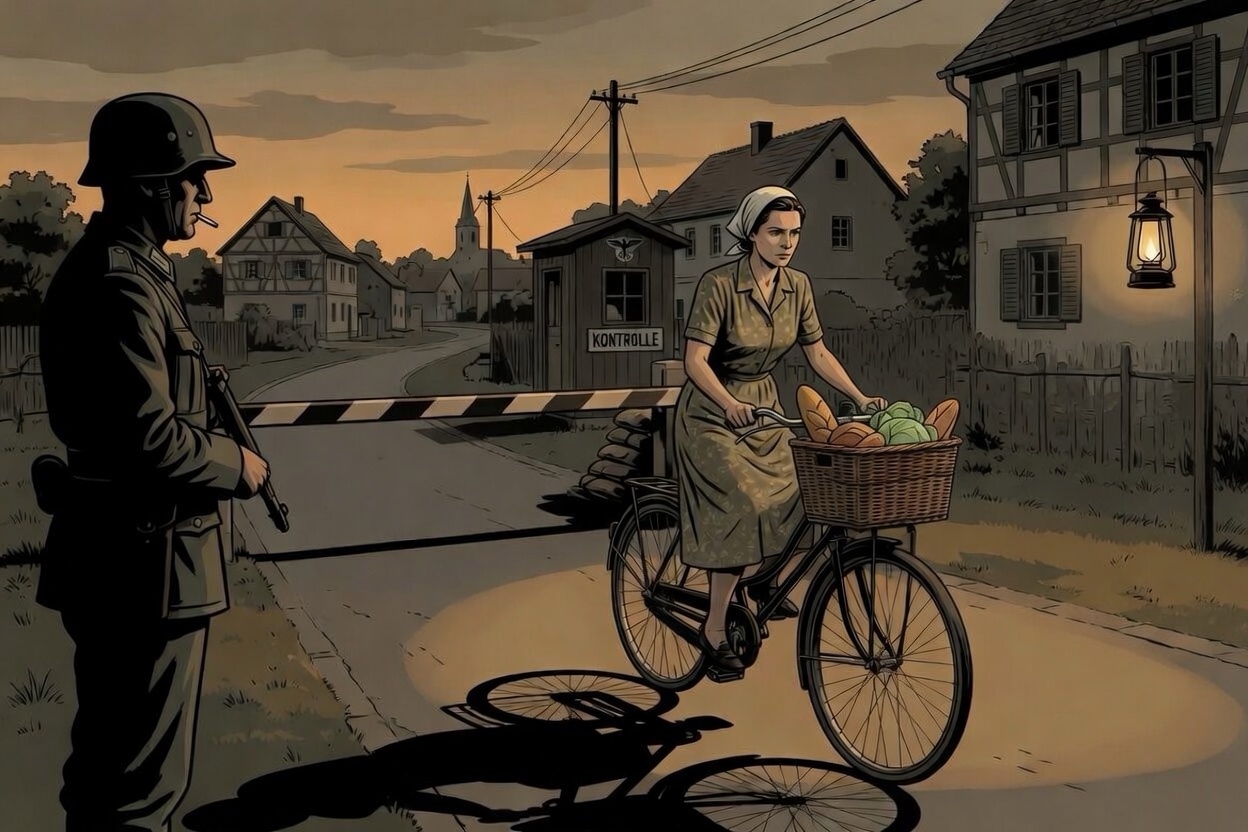
Mountain Bicycle
Req Cost: 1 · Speed: Slow · Handling: +2 · Armor: None · Signature: Invisible
The covert vehicle of the era. In 1943 Europe, the bicycle is the default civilian transport: fuel rationing has emptied the roads of private cars, and no checkpoint guard looks twice at a bicyclist. Bicycles are cheap, silent, unobtrusive, and capable of reaching places a car cannot. Every resistance cell in Europe moved couriers by bicycle.
Aircraft
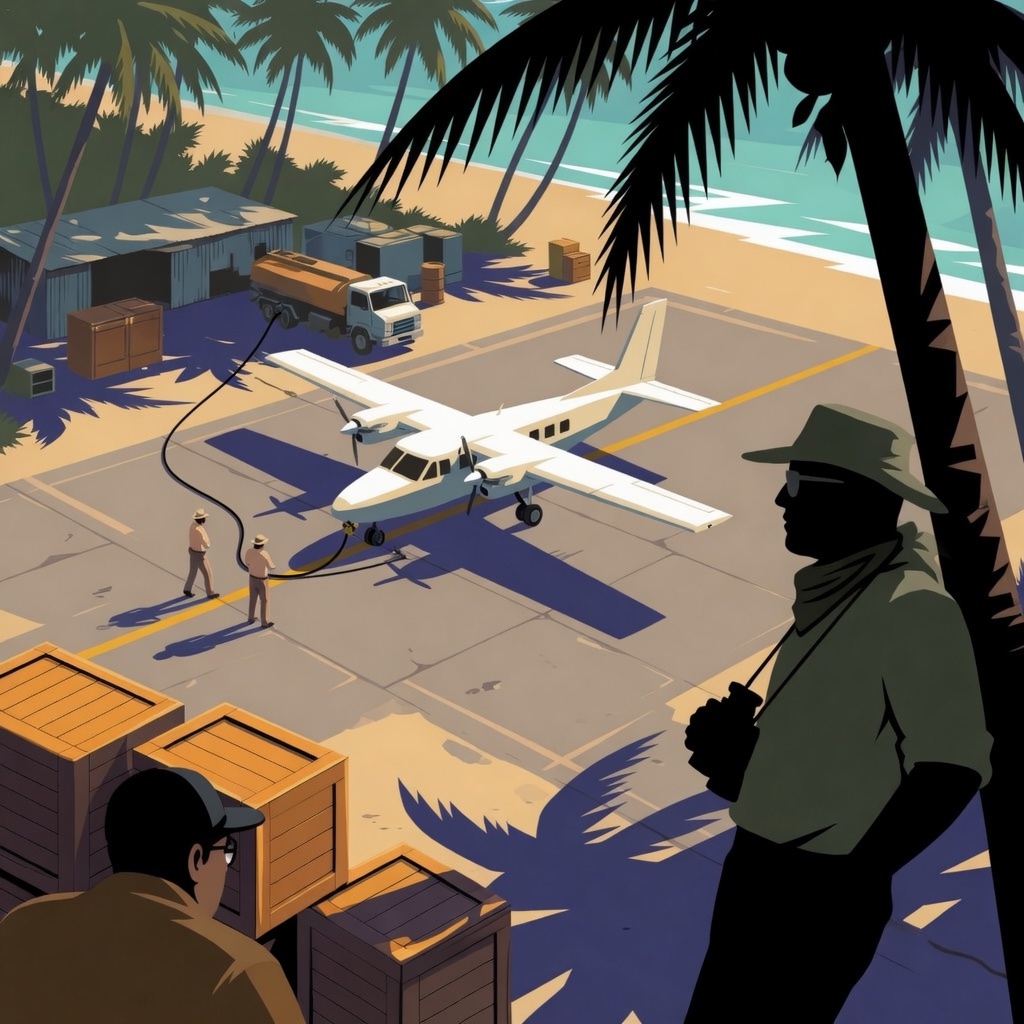
Westland Lysander
Req Cost: 12 · Speed: Moderate · Handling: +2 · Armor: None · Crew: 1 + 2 · Signature: Narrow (SOE)
The SOE operations aircraft: a short-take-off-and-landing liaison plane adapted for nighttime clandestine work, dropping agents into occupied Europe and, critically, picking them up again. More than 300 agent landings were conducted by Lysanders in occupied France alone; the plane’s silhouette against moonlight is, for the era, the iconic image of clandestine operations.
Mechanical Effect. Enables clandestine insertion and extraction in occupied territory. Requires a moonlit night (or GM adjudication of conditions).
Operational note. The Lysander’s STOL capability allowed it to land in 300-meter strips on French farmland. An operation required a ground team to mark the strip with three handheld flashlights (the “L-pattern”), a pilot trained to read that pattern in low light on approach, and an exfiltration window typically under five minutes on the ground; agents being exfiltrated had approximately 90 seconds to board.
Attribution. The silhouette is known to every Abwehr officer in occupied Europe, and no other organization runs Lysander exfils in the theater. A sighting is unambiguously a British clandestine operation, typically attributed to SOE within twenty-four hours of execution. Division 5 operations using Lysanders either operate under joint SOE-D5 cover (common) or accept the SOE attribution as operational cover (also common).
C-47 Dakota / Douglas DC-3
Req Cost: 10 · Speed: Moderate · Handling: +0 · Armor: None · Crew: 2 + 28 · Signature: Institutional (Allied aircraft)
The general-purpose transport of the Allied air effort. Used for paradrop operations, supply drops to resistance cells, and large-scale agent insertions. Less covert than a Lysander, a Dakota makes a lot of noise, but capable of carrying many times the payload.
Submarine (Covert Insertion)
Req Cost: 15 · Speed: Slow · Signature: Institutional (Allied Navy)
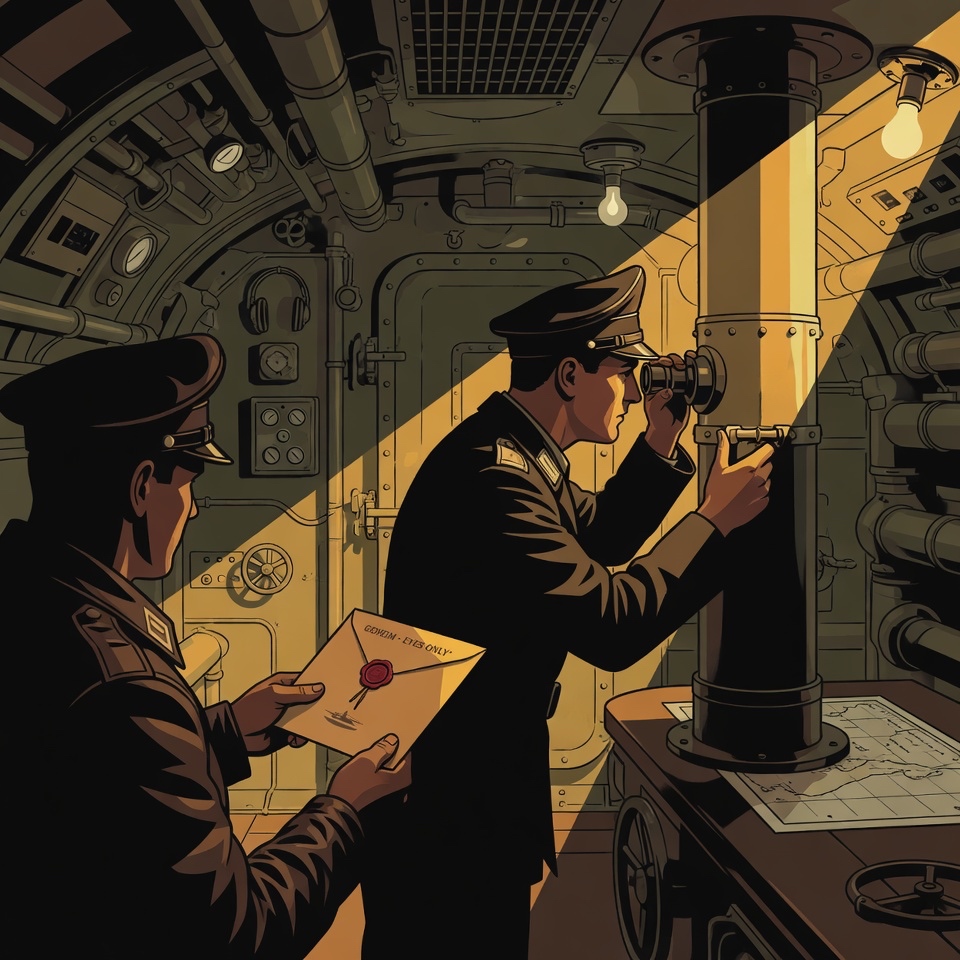
SOE and OSS both used submarines extensively for covert insertions in coastal theaters: the Mediterranean, Norway, the Balkans. Availability follows the stat block reference: a submarine is a scenario asset committed by naval command, not an ordinary requisition.
Watercraft
Motor Gun Boat (MGB) / Motor Torpedo Boat (MTB)
Req Cost: 10 · Speed: Fast · Handling: +1 · Armor: Light · Crew: 6+ · Signature: Institutional (Allied Navy)
Royal Navy fast attack craft used extensively for coastal operations, agent insertion into occupied France, and small-scale raids. A MGB or MTB crossing the English Channel at night, agents aboard for a French beach, recurs throughout the era’s coastal operations.
Fishing Boat (Requisitioned)
Req Cost: 4 · Speed: Slow · Handling: +0 · Armor: None · Crew: 2–4 · Signature: Contextual
A genuine fishing boat operating under cover: either a local fisherman sympathetic to the Resistance, or a boat operated by a D5 Legend as a cover for coastal transport. Crucial for cross-channel and cross-Mediterranean small-scale operations.
Canoe (Folboat)
Req Cost: 3 · Speed: Slow · Handling: +1 · Armor: None · Crew: 2 · Signature: Narrow (SOE / SBS)
The collapsible canoes used by the Special Boat Section (and by SOE) for covert shore insertion. The Cockleshell Heroes raid on Bordeaux in 1942 was conducted entirely in folboats. Highly specialized, signature-attributable to British special operations.
Shadow War Signature Vehicles
The Jedburgh Team Insertion
A recurring Shadow War operational pattern involving multiple vehicle types: a Jedburgh team (typically three operatives: one American, one British, one French national) dropped by parachute from a Dakota, linking up with a resistance cell on the ground, traveling by bicycle and foot, exfiltrating by Lysander or by overland route to a neutral country. The operation spans four vehicle categories and as many agencies; its attribution is joint Allied special operations, which was deliberately non-specific even in the era.
Shadow War Vehicles at the Table
The Shadow War era produces the most romantic vehicle imagery in Division 5: the Lysander silhouette, the MGB running across the Channel at night, the Traction Avant speeding through occupied Paris. Tables running this era should lean into the imagery; it is genre-defining.
That said, most operational vehicle use in the era was bicycles and trains. An operative in 1943 Paris did not drive to a meet; they took the Metro. An operative in rural Vichy did not have a car; they had a bicycle and a set of walking shoes. The Requisition Cost of more elaborate vehicles reflects this.
Era II: The Long Dark (1946–1989)
Ground Vehicles: The West
Mercedes-Benz W123 Sedan
Req Cost: 5 · Speed: Moderate · Handling: +1 · Armor: None (Standard); Heavy (Armored) · Signature: Institutional (Western European)
The Western European sedan of the late 1970s through mid-1980s. Used by diplomats, business executives, intelligence officers working commercial cover, and the occasional honest citizen. Built to last; many remain on the road in developing countries in the 2020s. The W123 is the sedan that says this occupant is a European professional of some means.
An armored W123 is a Narrow-signature item: a factory-armored W123 is rare and visible to any observer trained to notice its distinctive sit.
Ford Granada / Opel Senator
Req Cost: 4 · Speed: Moderate · Handling: +0 · Armor: None · Signature: Contextual (Western Europe)
Mid-size European sedans of the era. Less signature-heavy than a Mercedes; a Granada or Senator is a perfectly ordinary vehicle for a mid-level business traveler, insurance adjuster, or civil servant. Excellent cover vehicles for Western-European Legends.
Citroën CX / Peugeot 505
Req Cost: 4 · Speed: Moderate · Handling: +1 · Armor: None · Signature: Contextual (French / Western European)
French sedans of the era, with strong signature in France itself (where they are the default mid-range car) and ambiguous signature elsewhere. Used extensively by DGSE and SDECE officers in home-country operations.
VW Golf / Ford Escort
Req Cost: 3 · Speed: Moderate · Handling: +1 · Armor: None · Signature: Invisible
The everyday compact cars of 1980s Europe. Cheap, common, invisible. Ideal for operatives running a low-profile Legend as a working-class European or student.
Ground Vehicles: The East
Volga GAZ-24
Req Cost: 4 · Speed: Moderate · Handling: +0 · Armor: None (Standard); Heavy (Armored, rare) · Signature: Institutional (Soviet officialdom)
The Soviet official-use sedan. Black Volgas carried Soviet functionaries, KGB officers, senior officials, and the diplomatic service; one in 1974 Moscow signals official business, which meant, depending on the driver, anything from Politburo-connected to KGB to diplomatic courier. Specific license-plate prefixes marked KGB unmistakably, and a black Volga without those plates still pattern-matched to KGB in the minds of most Soviet citizens. The car was an attribution signal and an intimidation tool in the same frame: parked outside a dissident’s apartment, it was a message the dissident received immediately. In the West, a Volga is almost unavoidably a diplomatic or intelligence vehicle.
Lada Riva (VAZ-2105 series)
Req Cost: 2 · Speed: Slow · Handling: +0 · Armor: None · Signature: Invisible (East) / Contextual (West)
The ubiquitous Soviet compact car of the late Long Dark. In the Eastern Bloc, a Lada is as invisible a vehicle as exists: everyone owns one. In the West, a Lada signals “recent Eastern-bloc emigrant” or “Warsaw Pact diplomatic family,” giving it a narrow but readable signature.
Trabant 601
Req Cost: 1 · Speed: Slow · Handling: -1 · Armor: None · Signature: Invisible (East Germany) / Narrow (West)
The East German two-stroke people’s car. Fiberglass-reinforced plastic body, 26 horsepower, legendary unreliability. In East Germany, the Trabant is invisible: everyone drives one or wants one. In West Germany, it is a specific signature of recent East German origin; a Trabant crossing to the West all but announces a defection in progress.
Tatra 613 / Chaika GAZ-13
Req Cost: 6 · Speed: Fast · Handling: +0 · Armor: Light · Signature: Narrow (Warsaw Pact officialdom)
Warsaw Pact executive-level vehicles: the Tatra 613 in Czechoslovakia, the Chaika GAZ-13 in the USSR itself. Reserved for senior officials and specific operational use. A Chaika in East Berlin is a clear signature of senior-level travel.
Ural / Dnepr Motorcycle
Req Cost: 3 · Speed: Fast · Handling: +1 · Armor: None · Signature: Contextual (Warsaw Pact)
Soviet-bloc military and civilian motorcycles, often with sidecars. Used for paramilitary and rural-area operations; a reliable platform for operations in environments where a car is impractical.
Ground Vehicles: Cross-Bloc
Taxi (Local)
Req Cost: 1 per day · Speed: Moderate · Handling: +0 · Armor: None · Signature: Invisible
The most-used and least-recorded vehicle in intelligence work. The driver witnesses nothing the operative does not choose to show, the license plate leaves no operational trail, and the car disappears into ordinary traffic. Handlers and Faces run meetings by taxi more often than by any other vehicle.
Sleeper Train (Compartment)
Req Cost: 3 · Signature: Invisible (typically) / Contextual (specific routes)
Not a vehicle in the conventional sense, but a Long Dark operational environment in its own right. The overnight sleeper train is the classic setting for meetings, brush passes, surveillance, and occasional violence: the Orient Express (its late iterations), the East-West Berlin inter-zone trains, the overnight Vienna-to-Moscow routes. An operative meeting an asset in a sleeper-compartment is using the train as an operational vehicle as much as a transport.
Operational Note. Long Dark trains were surveilled extensively by both blocs. The Interflug and Aeroflot ticket offices were covers for intelligence operations; so were many railway personnel positions. An operation conducted on a train should assume hostile surveillance throughout.
Rental Car (West) / Shared Car (East)
Req Cost: 2 per day · Signature: Invisible / Contextual
The operational rental. In the West, standard rental-car agencies were used extensively; each rental generated a paper trail that could be used for or against the Legend depending on planning. In the East, the equivalent was the state-operated shared-car system, which generated paper trails of a different kind but served the same operational role.
Aircraft
Commercial Airliner (Various)
Req Cost: 3 per flight · Signature: Invisible / Contextual
The backbone of Long Dark international operational movement. Pan Am, Lufthansa, Aeroflot, Air France, British Airways: each with its own operational profile, its own likelihood of being a cover for intelligence activity, and its own security procedures. By the late 1970s, air travel was routine for operatives crossing borders; every intelligence service maintained profiles of airline crew and routes.
Private Charter (Executive)
Req Cost: 10+ · Signature: Narrow (wealth)
A chartered business jet. Useful for moving multiple operatives across borders with minimal scrutiny, provided the cover story (international business) holds. Attribution is wealth-signature: whoever is on this plane is either rich, representing someone rich, or running a cover as such.
Helicopter (Civilian / Commercial)
Req Cost: 8 · Speed: Fast · Handling: +1 · Armor: None · Crew: 1 + 4–8 · Signature: Institutional (commercial aviation)
Long Dark era helicopters: typically commercial models used for specific operational needs (medical evacuation cover, resource-exploration cover, corporate executive transport). A helicopter operation in the era is notable; helicopters are noisy, expensive, and tracked by every local aviation authority.
Watercraft
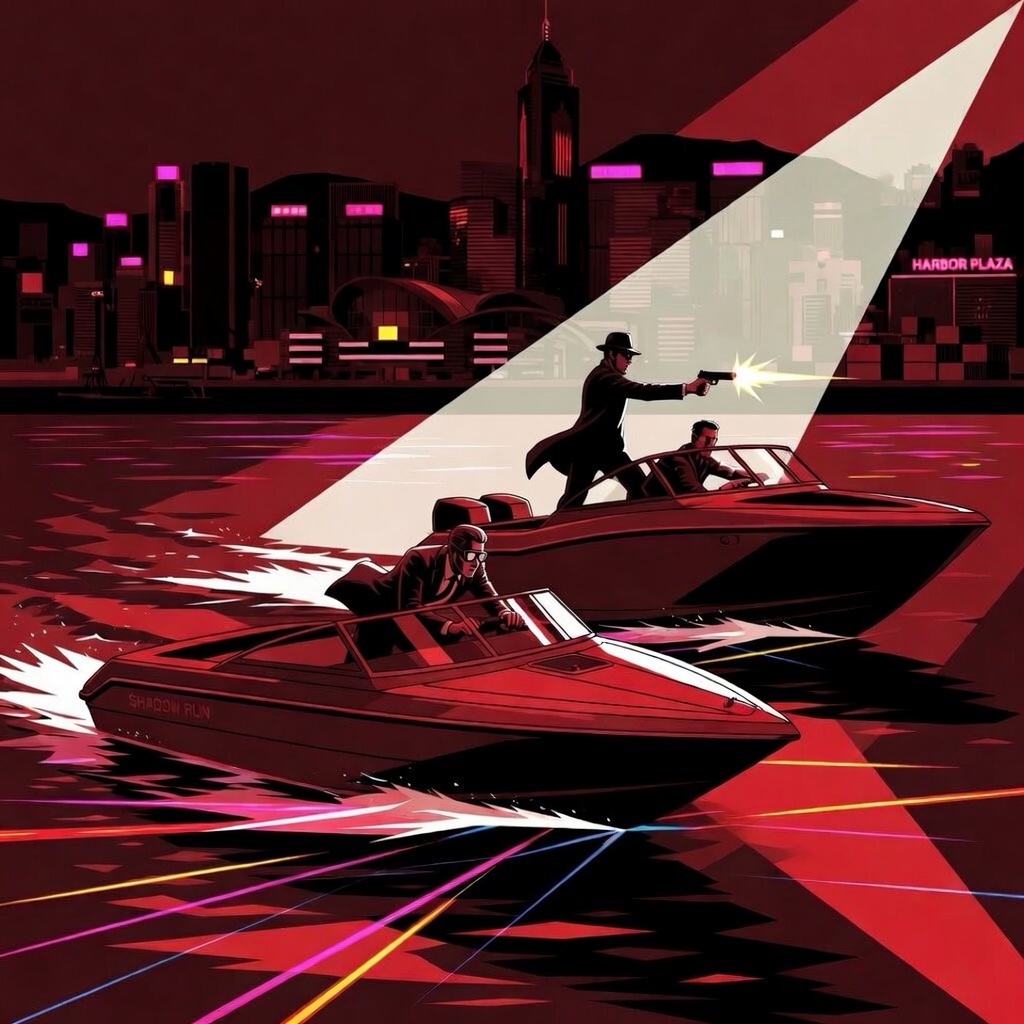
Rigid-Hull Inflatable Boat (RHIB)
Req Cost: 5 · Speed: Fast · Handling: +1 · Armor: None · Crew: 4–8 · Signature: Institutional (Western special operations)
The RHIB matures through the Long Dark into the definitive Western special-operations shore-insertion craft. Used by US Navy SEALs, British Royal Marines, and D5 operatives working joint-military cover. Not stealthy in absolute terms, a RHIB at speed is visible and audible, but fast enough to complete insertions before hostile response can intercept.
Soviet Attack Boats (Shershen, Stenka-class)
Req Cost: 10+ · Signature: Narrow (Soviet military)
Soviet-bloc fast attack craft used for specific operational purposes: primarily in the Baltic and Black Sea theaters. Used rarely in direct D5 operations; more frequently appear as opposition vehicles in scenarios involving coastal infiltration of Warsaw Pact territory.
Cabin Cruiser (Civilian)
Req Cost: 6 · Speed: Moderate · Handling: +0 · Armor: None · Crew: 2–6 · Signature: Contextual (civilian boating)
A standard civilian cabin cruiser, used as cover for Mediterranean, Baltic, or Black Sea operations. The boat’s cover story (a businessman’s pleasure cruiser, a rented charter, a returning expatriate’s yacht) provides the attribution cover for the operation.
Long Dark Signature Vehicles
The Trabant Versus the W123
A checkpoint crossing at Friedrichstrasse in 1978 was a stage on which every vehicle made a statement, heavily surveilled and fully paperworked in both directions (the Trabant Problem, in its home era). D5 operatives working cross-bloc operations therefore often maintained a vehicle on each side, a Lada for the East, a Granada for the West, and crossed the checkpoint on foot or by train, picking up the bloc-appropriate vehicle on the other side. This was not paranoia; it was routine tradecraft.
The Long Dark Vehicle Texture
Long Dark vehicle operations are slower, more deliberate, and more paper-trailed than either the Shadow War or Nightscreen equivalents. Border crossings take hours. Rental cars require carbon-copy paperwork. The sleeper train is a twelve-hour scene, not a jump cut. GMs running this era should let the vehicle scenes take time: the tempo is part of the genre, and a brush pass on the Vienna-to-Moscow sleeper is not a minute-long beat but an evening-long arc.
Era III: Nightscreen (1990–Present)
Ground Vehicles: The Institutional
GMC Yukon / Chevrolet Suburban (Armored)
Req Cost: 7 · Speed: Moderate · Handling: +0 · Armor: Heavy · Crew: 1 + 6 · Signature: Narrow (Western government / private security)
The Western protective-detail vehicle of the 2000s–2020s. Factory-armored, run-flat tires, frame hardening, ballistic glass, sometimes lights-and-sirens in a motorcade configuration. Used by State Department protective details, CIA ground-branch elements, private military contractors, and D5 operatives working direct-action cover. Attribution is absolute: a blacked-out armored Yukon is identifiable as Western government or Western security within seconds of appearance in any city in the world. Its signature is not a secret: it is a statement, and a D5 operation using one is either running a protective detail, with the visibility as cover for the role, or making a deliberate attribution choice. A subtle operation does not arrive in a black Yukon.
Mercedes S-Class / BMW 7-Series (Armored)
Req Cost: 8 · Speed: Fast · Handling: +1 · Armor: Heavy · Signature: Narrow (European government / wealthy)
The European counterpart to the armored SUV. Used by European heads of state, ambassadors, senior executives, and the occasional intelligence officer working high-end diplomatic or corporate cover. Attribution signals wealth, government, or institutional presence.
Toyota Land Cruiser (Armored)
Req Cost: 7 · Speed: Moderate · Handling: +1 · Armor: Heavy · Crew: 1 + 6 · Signature: Contextual (global institutional)
The global vehicle of institutional presence outside the West. UN agencies, aid organizations, oil-sector executives, journalists, and intelligence officers working in the developing world all drive armored Land Cruisers. The vehicle is widely distributed enough that it does not uniquely attribute to any single service; its signature is institutional presence, not specific service identification.
Toyota Hilux (Pickup)
Req Cost: 3 · Speed: Moderate · Handling: +1 · Armor: None · Signature: Contextual (global paramilitary / rural)
The white Hilux pickup is the most widely-distributed operational vehicle in the 21st century developing world. Used by aid organizations, security contractors, local militaries, paramilitary groups, and the full range of state and non-state actors operating in rural and conflict zones. Signature is so ubiquitous that attribution is near-zero: the Hilux belongs in the landscape almost anywhere there is landscape to belong in.
Ground Vehicles: The Anonymous
Toyota Corolla / Honda Civic
Req Cost: 2 · Speed: Moderate · Handling: +0 · Armor: None · Signature: Invisible
The default invisible car of the modern world. A gray Corolla of any recent year is mechanical to the point of being furniture. For operatives running modern low-profile Legends, the Corolla is the vehicle of no signature: the correct answer to the question “what car does not draw attention to its occupants?”
Ford Transit / Mercedes Sprinter (Commercial Van)
Req Cost: 3 · Speed: Moderate · Handling: +0 · Armor: None (Standard); Light (Hardened) · Signature: Invisible / Contextual
The modern operational van: used as surveillance post, equipment transport, and occasional tactical-entry vehicle. A white commercial van is so ordinary in a European or North American city that it barely registers. A van parked in a neighborhood is noticed, but rarely in a way that identifies its occupants.
Electric Vehicle (Tesla / EV)
Req Cost: 4 · Speed: Fast · Handling: +1 · Armor: None · Signature: Contextual (tech-affluent)
A modern EV has a specific operational profile: it is quiet (significantly quieter than an ICE vehicle at low speeds), traceable (most modern EVs connect to manufacturer systems by default), and a signature of tech-affluent professional class. The signature matters more than operatives typically expect: a Tesla in a 2024 surveillance scenario generates data that an ICE Corolla does not.
Ride-Share Vehicle
Req Cost: 1 per trip · Speed: Moderate · Handling: +0 · Armor: None · Signature: Invisible
The modern operational taxi. Uber, Lyft, regional equivalents. Leaves a specific kind of paper trail: the ride is recorded, the driver is a witness, the payment is tied to a specific account. Operatives using ride-share for operational movement use burner accounts, pre-arranged pickup points, and awareness of the trace the ride generates.
Ground Vehicles: The Direct Action
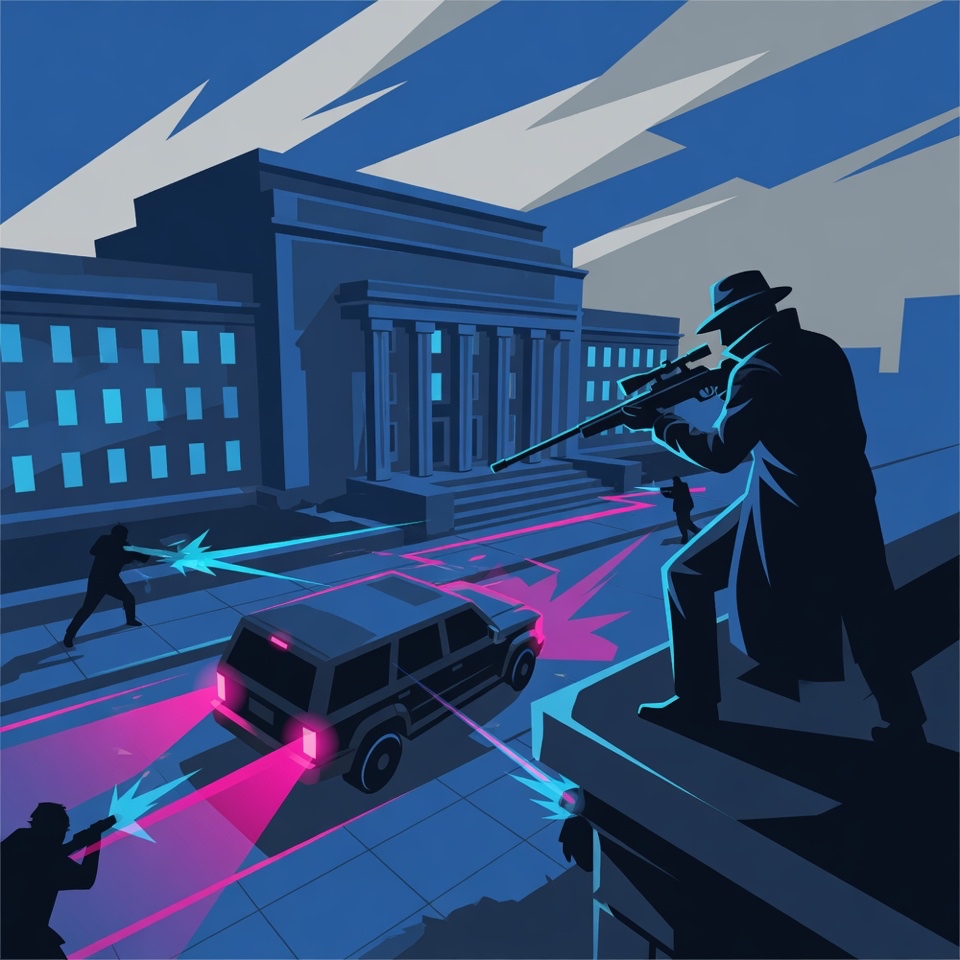
Armored Tactical Vehicle (MRAP-class)
Req Cost: 12 · Speed: Slow · Handling: -1 · Armor: Heavy (vehicle-scale) · Crew: 2 + 8 · Signature: Narrow (military)
MRAPs and similar mine-resistant vehicles, used primarily by military and paramilitary units in high-threat environments. Not an intelligence-operational vehicle in most contexts; appears in Nightscreen campaigns when the operation has crossed into military-adjacent territory. Attribution is unmistakable.
Specialized Fast Vehicle (Motorcycle, Sport Car)
Req Cost: 5 · Speed: Fast · Handling: +2 · Armor: None · Signature: Varies
Motorcycles (KTM, BMW GS, Yamaha) and sport cars for operations requiring high speed. A motorcycle’s operational value in Nightscreen is specifically the ability to split traffic and lose pursuit in crowded urban environments. Signature depends on the specific vehicle: a sport-touring BMW is contextual, a custom race motorcycle is narrow.
Aircraft
Commercial Airliner
Req Cost: 3 per flight · Signature: Invisible / Contextual
Modern commercial air travel as an operational medium. Between biometric screening and machine-readable passports, an operative traveling commercially in 2024 is traveling on the record: the operational cover is the paper trail itself.
Private Jet (Charter)
Req Cost: 12 · Signature: Narrow (wealth)
The modern equivalent of the Long Dark’s chartered business jet. Attribution is strong: private-jet movements are visible to any observer with the relevant commercial flight-tracking tools, and the cover has to match the wealth signature.
Helicopter (Civilian / Corporate)
Req Cost: 10 · Speed: Fast · Handling: +1 · Crew: 1 + 4–8 · Signature: Contextual (corporate / institutional)
Corporate and civilian helicopters used for specific operational movements. A New York corporate helicopter running an executive from Manhattan to a Hamptons estate is a routine flight; an extra passenger on such a flight is a clean operational insertion if the cover holds.
Drone (Operational-Scale)
Req Cost: 8 (Surveillance) / 12+ (Kinetic) · Signature: Narrow (military)
Larger operational drones, distinct from the briefcase-scale commercial drones in Chapter Six. Used for wide-area surveillance, signal relay, and occasionally for kinetic operations. Attribution varies; commercial-modified drones produce different signatures from military-grade hardware.
Watercraft
RHIB / Zodiac (Continuing Service)
Req Cost: 5 · Speed: Fast · Handling: +1 · Crew: 4–8 · Signature: Institutional (special operations)
The RHIB continues its Long Dark role into Nightscreen, with improved quiet-running outboards and better nighttime equipment. Still the Western special-operations insertion craft of choice.
Cabin Cruiser / Yacht (Civilian)
Req Cost: 8 · Speed: Moderate · Handling: +0 · Crew: 2–6 · Signature: Contextual (wealth) / Narrow (for named yachts)
Modern yacht-cover operations. A charter yacht on a Mediterranean cruise makes a plausible cover for operational movement between jurisdictions; the signature is wealth rather than service, which is often preferable.
Fast-Attack Combatant (State-Grade)
Req Cost: 15+ · Signature: Narrow (naval service)
State-grade naval attack craft. Rare in operational use; appears in Nightscreen scenarios involving specific maritime interdiction or escape scenarios.
Nightscreen Signature Vehicles
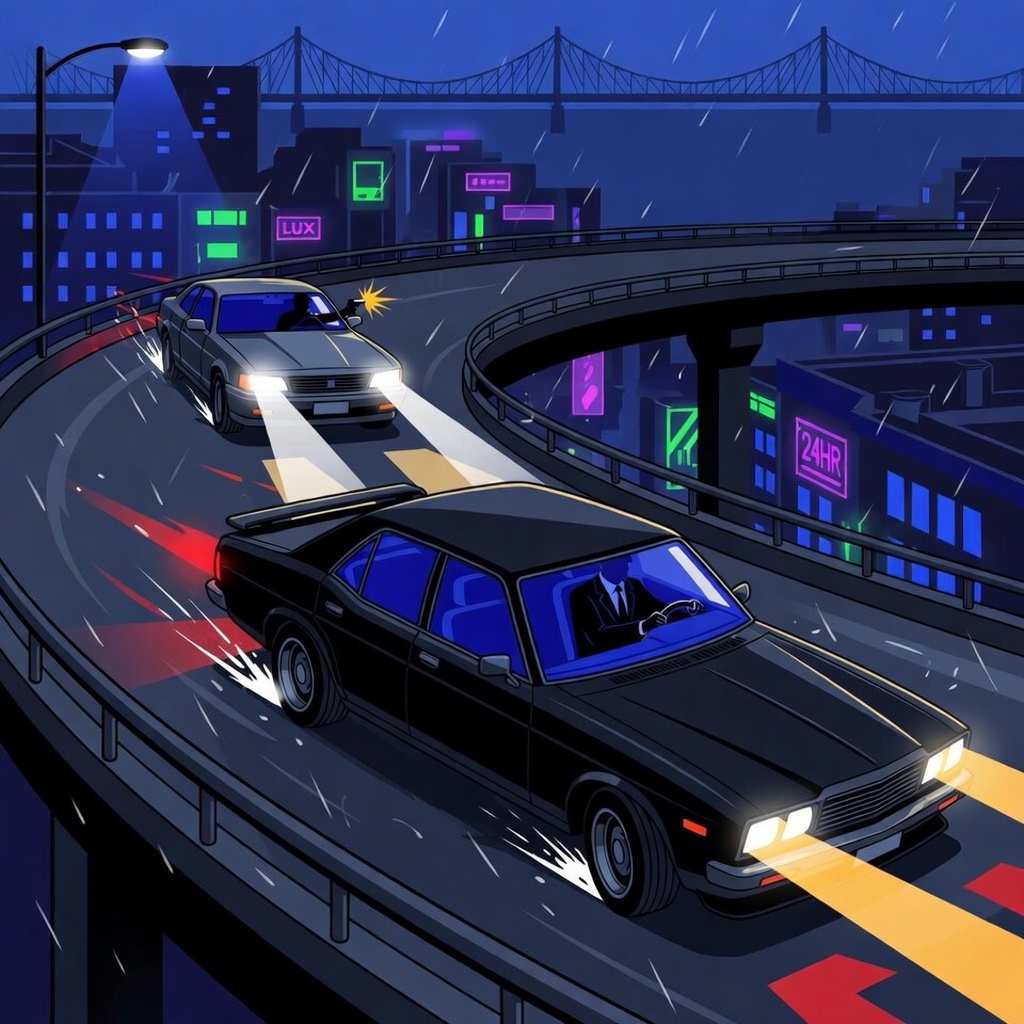
The Nightscreen Vehicle Texture
Nightscreen vehicle operations are faster and more paperwork-light than the Long Dark equivalent: a rental car in most European countries can be collected in fifteen minutes from an airport counter, a ride-share can be summoned in ninety seconds, a drone can be in the air in a minute. The cost is trace. Every Nightscreen operational movement generates data: rental records, mobile-payment transactions, cell-tower handoffs, CCTV captures at tolls and gas stations, license-plate readers on highway systems.
The operational doctrine has shifted correspondingly. An operative in 1974 Vienna operated largely by foot, train, and pre-arranged vehicle, because vehicles generated the most paperwork. An operative in 2024 Vienna operates by ride-share, rental, and occasional pre-arranged vehicle, because the paperwork is now everywhere and the trick is to bury the operational movement in the noise of ordinary civilian activity rather than avoid the paperwork altogether.
A Nightscreen operation’s movement pattern should be indistinguishable from a regional business traveler’s movement pattern. The business traveler has a rental-car agency preference, a hotel chain, a standard arrival airport. The operative has the same. The tradecraft is that one of the business traveler’s trips is not what it appears to be.
Vehicle Qualities: Reference Table
A quick reference for the qualities used throughout the vehicle catalog.
| Quality | Mechanical Effect |
|---|---|
| Concealable (briefcase form) | Vehicle or vehicle-adjacent equipment can be packed into concealed form. |
| Armored (Light) | Use the vehicle’s listed Armor. If no stat block is in use, treat as Armor 1 against small arms; rifle rounds ignore it. |
| Armored (Heavy) | Use the vehicle’s listed Armor. If no stat block is in use, treat as Armor 3 against small arms and Armor 1 against rifle-caliber fire. |
| Run-Flat Tires | Can operate after tire damage; maintains mobility for escape. |
| Quiet Running | Reduces acoustic signature; +1 Boon die on Stealth checks in approach. |
| Cover Vehicle | Attached to a Legend; provides Legend-specific benefits (see overlay). |
| Diplomatic Plates | Legal and attribution protections in specific jurisdictions; signature narrow. |
| Commercial | Blends into commercial traffic; signature typically Invisible or Contextual. |
Vehicle Damage and Repair
Vehicle damage is handled per the Core Rules vehicle combat framework: Hull damage accumulates under fire, critical hits produce specific effects, and disabled vehicles cease to be operational until repaired. When the Core Rules call for Craft to repair a vehicle, Division 5 uses Engineering & Repair instead.
Division 5 adds one note of its own: operational vehicles rarely survive operations cleanly. A Pursuit Clock scene that reaches Crisis segment has almost certainly damaged the vehicle; a ramming collision or gunfire exchange will have produced forensically-visible effects. Most vehicles used in direct-action scenes end the scene burned in the Overlay 1 sense, unrecoverable under their Legend, and are typically abandoned or deliberately destroyed to deny forensic evidence to hostile services.
This is why Cover Vehicles, as a mechanical category, are expensive: they are Legend-attached vehicles that provide ongoing benefit, not burners. A burner vehicle for a single-operation use is a Requisition item at normal cost, used once, discarded.
The Abandonment Protocol
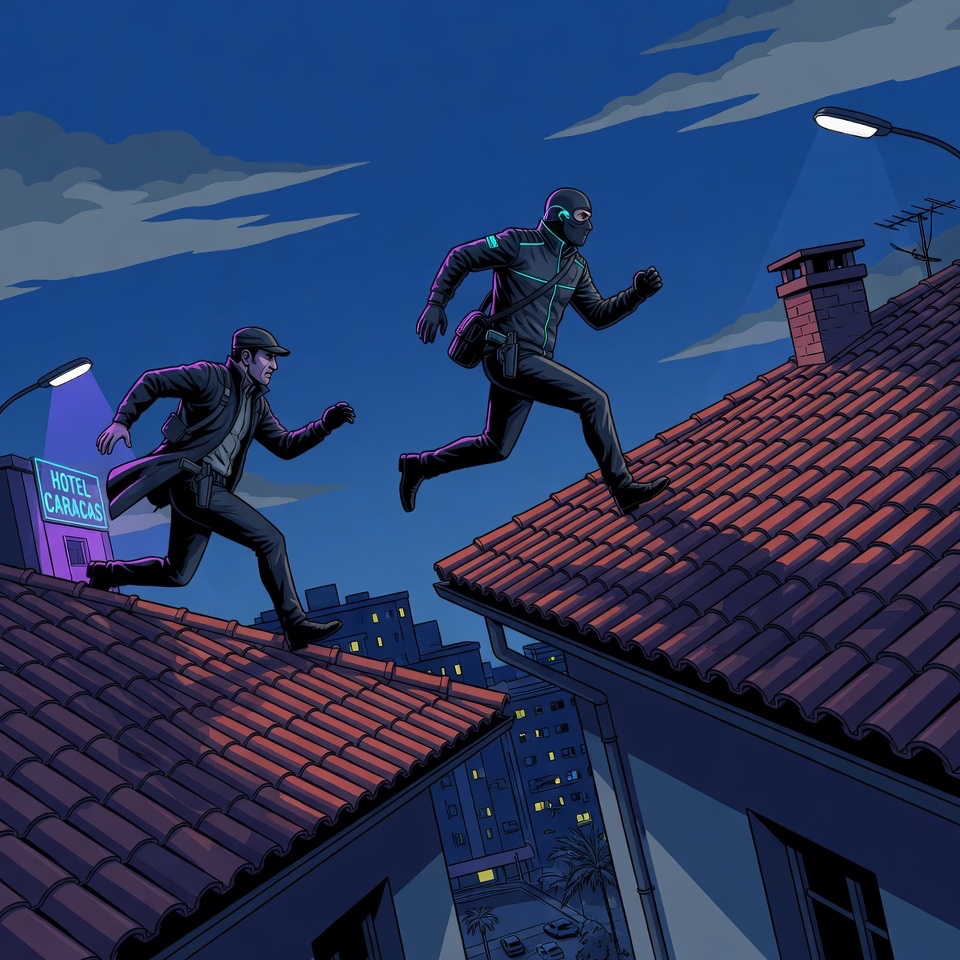
When an operation requires abandoning a vehicle, after a pursuit, after a violent encounter, after any scene where the vehicle has generated attribution signatures, the operational protocol for leaving the vehicle is itself a tradecraft skill.
Standard abandonment: park the vehicle, wipe surfaces for prints and DNA, remove any operational equipment, and walk away. The vehicle will be discovered and forensically processed; the operative’s goal is to minimize the evidence the forensics will yield.
Deliberate destruction: the vehicle is destroyed, typically by fire, rarely by explosive, to eliminate forensic evidence completely. Generates Loud and Signature attribution, but eliminates the forensic-trace attribution entirely. A common trade.
Leave as found: the vehicle is left exactly as it was during the operation, sometimes with deliberate false evidence (a different license plate, a planted personal item belonging to another identity). Used for attribution misdirection operations.
GMs should offer the team the abandonment protocol choice explicitly at the end of any operation where a vehicle has been compromised. The choice is small in the moment and large in its consequences for the next operation.
Mounts & Beasts
Not applicable to this Universe.
This section is retained in the framework for Exodus NDS structural consistency. Division 5 is a modern-era Universe in which horses, camels, and similar animals are not default operational transport.
Specific historical operations used animals, the Long Range Desert Group’s use of camels in North Africa, occasional mountain-operation use of pack animals, cavalry use in some Shadow War Eastern European theaters, but these are edge cases handled narratively at the GM’s discretion rather than supported by systemic rules.
Tables running a specific theater (a Shadow War operation with SOE’s Italian partisan networks using mule trains; a Long Dark operation with paramilitaries in the Afghan highlands) may invoke animal transport per the Core Rules mount framework. The Universe does not customize or override the Core Rules for this category.
A Note on Aircraft-Intensive Campaigns
Division 5 is not primarily an aviation-themed Universe, but some operations are aircraft-dependent: Shadow War agent drops, Long Dark border overflights, Nightscreen drone operations. Tables that want to run aviation-intensive campaigns should supplement this chapter with the Core Rules vehicle framework, using Division 5’s Pilot skill for aircraft, and may want to expand the aircraft roster with period-specific types not listed here.
The chapter’s aircraft list is deliberately small; it covers the emblematic operational aircraft of each era without attempting to provide a full military or commercial aviation roster.
Worked Example: The Vienna Pursuit, 1978
A Handler and an Analyst are meeting an asset at a specific café in Vienna’s Innere Stadt. During the meeting, the asset makes a small mistake: a specific phrase that the Handler recognizes as a pre-arranged duress signal. The Handler and Analyst exfiltrate the café.
Approaching the street, they see a black Volga idling at the corner with two men inside. Opposition surveillance has either made the meeting or made the team. The Handler has a Cover Vehicle: a 1974 Mercedes W123 parked two streets over, registered to their Legend as an Austrian import-export businessman. The plan is to walk to the W123, drive to the airport, fly out.
The plan does not survive contact. As they reach the W123, the Volga comes around the corner. The Analyst takes the wheel; the Handler takes shotgun. They are now in a Pursuit Clock scene.
Segment 1: Contact. The GM frames the pursuit. The team reaches the W123 before the Volga can block the street, and the W123 is smaller and better suited to the Innere Stadt’s narrow lanes than the heavier Soviet car. The GM rules that the pursued side begins with 1 Clock Advantage. No opposed roll happens yet; Segment 1 establishes who has the initial edge and what the chase is about.
Segment 2: Pressure. The chase moves into the Ring. Broader streets favor the Volga. The GM sets the opposed Drive check at Hard; the Volga pulls close. The Analyst wins narrowly, using one Tradecraft Pool die from the Intel Phase (the team had identified specific escape routes during prep). The pursued side marks a second Clock Advantage. The W123 has not yet been damaged.
Segment 3: Crisis. The Volga closes and one of the opposition officers fires a Makarov out the window. The GM rules that the pursuit segment has now generated significant collateral, gunfire in the Ringstrasse. The Analyst and Handler both accumulate one Compromise mark. The W123 has taken light damage (its Hull is down to 8 of 10). The Volga driver wins the opposed Drive check and marks 1 Clock Advantage for the pursuers; the W123 is damaged, but still moving.
Segment 4: Terminus. The GM asks the Handler how they want to buy the last decisive edge. The Handler elects to burn the W123’s Cover Vehicle status, the W123 is now hostile-known, and will be abandoned at the airport long-term parking rather than driven to the hangar. The burn adds +2 Boon dice to the Analyst’s opposed Drive check for this segment. The Analyst wins and marks a third Clock Advantage for the pursued side.
Segment 5: Outcome. The GM compares Clock Advantage: pursued 3, pursuers 1. The W123 reaches the airport. The team abandons it in long-term parking, wiped of prints, registration papers in the glove compartment indicating a late-returning business trip. They board a pre-booked flight to Zurich under secondary Legends. The primary Legend (the Austrian import-export businessman) is compromised by the W123’s hostile-known status; the Handler will need to burn or deep-rest that Legend before next using it.
Post-operation attribution analysis. The opposition analyst (KGB Vienna Rezident) reviews what they know:
- A W123 registered to an Austrian business identity
- A driver and passenger matching general descriptions of two Western Europeans
- A firefight in the Ring (KGB loses attribution advantage here: the public incident is visible to every service in Vienna)
- Flight manifest review (secondary Legends, different names, different destinations)
The attribution converges on one of three possible services but does not land cleanly on D5. The operation has been compromised but not burned: attribution is contestable, the primary Legend is burned but the secondary Legends hold, and the team is extracted. The W123 is lost (Cover Vehicle burn, full Legend burn, Requisition Cost is not refunded and the Legend will take weeks to rebuild).
What worked. The Handler’s Cover Vehicle provided significant advantage in the opening segments and absorbed the pursuit’s forensic consequences. The Intel Phase’s Tradecraft Pool dice bought a critical segment. The secondary Legends allowed clean exfiltration.
What went wrong. The opposition’s presence at the meeting indicated the meet had been blown before the team arrived: either the asset had been under duress for longer than the Handler realized, or the café had been compromised. The next operation’s Intel Phase will spend significant effort back-tracing which surveillance caught the meeting, because that answer shapes whether the Handler can rebuild the primary Legend at all.
What the Worked Example Is Demonstrating
Each contested segment resolved with one opposed check, one or two burn opportunities, and a narrative beat; the full scene plays in ten to fifteen minutes at the table.
The W123’s Cover Vehicle status added mechanical weight to the Handler’s decision-making, and burning it was a real cost, not a throwaway. The abandonment protocol at the airport was a deliberate narrative beat rather than a hand-wave. And the attribution consequences of the chase fed directly into the Compromise Track and the Legend system: the chase did not happen in a vacuum; it cost the team a Legend.
Requisition for Vehicles
Vehicles are requisitioned through the standard Requisition Budget with the following refinements:
Per-Operation Vehicles. A standard operational vehicle, a rental car, a local taxi on retainer, a burner vehicle for a single-operation use, is requisitioned at its catalog cost from the operation’s Requisition Budget. If abandoned or destroyed during the operation, the standard cost-of-loss penalty (50% of original cost deducted from next operation’s budget) applies.
Cover Vehicles. A Cover Vehicle is requisitioned at creation or during downtime (not during an active operation’s Requisition stage). The cost is the catalog price plus the time and Legend-attachment investment. Cover Vehicles do not deduct from the per-operation Requisition Budget during operations in which they are used; they are already in place.
Special-Acquisition Vehicles. Vehicles above normal catalog availability, a specific historical Lysander for a Shadow War operation, a commercial airliner bought under a shell company for a Nightscreen campaign, require specific GM approval and may involve extended narrative sequences to acquire. These are operation-defining investments, not routine requisitions.
Pool Vehicles. A team may maintain a small pool of pre-positioned operational vehicles in specific cities, a Toyota Hilux in Nairobi, a Transit van in London, a Lada in Moscow, supported by the Handler Tradecraft Tree’s Safe House talent (Chapter Five) or its Quartermaster-tree equivalents. Pre-positioning is a standard Handler or Quartermaster downtime activity: it consumes Requisition budget, in-fiction time, and Legend attachment if the vehicle is to carry a paper trail, and it pays off when the team needs the vehicle now rather than when a rental counter opens. Every era has its version, from the Resistance’s bicycle cache behind the barn to the keys in a magnetic box under a rental’s rear bumper. Pool vehicles are available for any team member to use on operations in the relevant city, subject to the usual availability and compromise logic.
Team Vehicle Composition
A well-prepared operation typically has a composed vehicle loadout rather than a single vehicle:
- Primary Movement: the vehicle the team uses for the operation’s main movement. Often a Cover Vehicle.
- Backup Movement: a second vehicle available for split-team scenarios or fallback. Often a rental or pool vehicle.
- Exfiltration Vehicle: a third vehicle, pre-positioned for emergency extraction. Often a deliberately anonymous vehicle with a pre-stashed go-bag.
A team that goes into an operation with only one vehicle has chosen to economize on a key operational layer. The team that goes in with three has planned for the pursuit, the split, and the exfil. Quartermasters and Handlers at the table should be watching for this composition during the Intel Phase.
In This Chapter
- The three vehicle overlays: Cover Vehicles, the Pursuit Clock, attribution signatures.
- Vehicle stat block reference.
- Era I: The Shadow War vehicle catalog.
- Era II: The Long Dark vehicle catalog.
- Era III: Nightscreen vehicle catalog.
- Vehicle qualities reference table.
- Vehicle damage, repair, and the abandonment protocol.
- Mounts & Beasts (not applicable in this Universe).
- Worked example: the Vienna Pursuit, 1978.
- Requisition for vehicles and team vehicle composition.