The gear on the table tonight is the gear the Quartermaster signed out in your name. It comes back when the mission does. If the mission does not come back, neither does the gear, and the Quartermaster will have something to say about it.
A weapon is the least interesting thing in your kit. The microdot camera, the one-time pad, the silk map sewn into the lining of your coat: those are the tools that keep you alive long enough to use the pistol. Remember which is which.
How Equipment Works in Division 5
Division 5 uses a streamlined version of the Exodus NDS rarity framework, adapted to the specific needs of a spy-thriller campaign. This section summarizes the Universe-specific overlays; the Core Rules still govern day-to-day mechanical behavior (damage steps, range bands, encumbrance).
Three rules shape every gear decision in this Universe.
First, Requisition replaces shopping. Operatives do not walk into stores and buy kit between operations. They requisition what they need from Division 5’s Quartermaster equivalent, the armory behind the Baker Street flat in 1943, the workshop above the Vienna optician’s in 1974, the industrial-estate unit in a European capital in 2024. Every requisition is tracked, approved, and reviewed if the mission goes sideways.
Second, every item has attribution signatures. A Sykes-Fairbairn knife was commando issue; a body bearing its wound in occupied France told the Abwehr exactly what kind of operation had just happened. A PSS silent pistol in 2024 is an even narrower signature: only three or four services in the world issue them. Choosing gear is choosing which story the attribution analyst tells afterward. Chapter Two’s seven-signature framework applies to every piece of operational equipment.
Third, era rotates the catalog, not the mechanics. The Welrod, the High Standard HDM, and the PSS do the same job across three eras, quiet kinetic work at close range, and use similar mechanical blocks. The difference is the fiction and the attribution signature. Tables running a single era use only their own catalog; tables running multi-era campaigns may draw from all three, with the caveat that an operative carrying 1974 gear in 2024 has a very specific problem (see Anachronism sidebar later in this chapter).
The Requisition System
At the start of every operation, each character receives a Requisition Budget expressed in points. This budget is spent against the era catalog to outfit the operative for the mission.
Base Requisition Budget is determined by Archetype and tier of operation:
| Archetype | Standard Op | Major Op | Capstone Op |
|---|---|---|---|
| Operative | 8 | 12 | 16 |
| Handler | 6 | 10 | 14 |
| Analyst | 6 | 10 | 14 |
| Face | 7 | 11 | 15 |
| Wetworker | 10 | 14 | 18 |
| Quartermaster | 12 | 16 | 20 |
The Quartermaster Archetype receives a higher Requisition Budget by default; outfitting the team is their defining role. Their signature ability and talent tree can add prepared gear, modifications, and workshop items.
Items are rated by Requisition Cost in the catalog: typically 1 for common gear, 2–3 for specialist kit, 4–6 for signature or highly restricted items, and 7+ for prototype or one-of-a-kind gear requiring GM approval. Items requested above the standard catalog require a successful Streetwise or Tradecraft check to source in-era and may not always be available.
Unspent Requisition does not roll over, for any Archetype, unless a specific campaign rule says otherwise. A light operation that returns the operative to D5 with budget unspent does not bank that budget for later. Division 5 quietly closes the ledger.
Gear that is not returned, weapons discarded mid-op, kit burned to prevent capture, vehicles abandoned, is deducted from the operative’s next Requisition Budget at 50% of original cost (rounded up). The next mission starts leaner.
Requisition vs. Personal Gear
An operative’s personal gear, the watch, the ring, the knife in the boot, is not tracked under Requisition. Operatives carry a handful of small personal items without mechanical cost. The Signature Weapon talent (Chapter Five) is an example of a personal item rather than a Requisition item.
The distinction matters. Personal gear is harder for the opposition to trace to Division 5 and persists across operations automatically. Requisition gear is sourced through the service and leaves a paper trail inside D5’s own archive.
Availability and Rarity
Availability tells the GM whether an item can be requisitioned cleanly, must be justified by the Legend, or creates immediate attribution pressure.
| Availability | Meaning | Table Use |
|---|---|---|
| Civilian / Common | Ordinary item in the era and location. | Usually available if the Legend supports possession. Low attribution unless misused. |
| Street | Criminal, gray-market, stolen, improvised, or locally sourced. | Easy to deny institutionally; creates criminal links, bad quality, or local witnesses. |
| Restricted | Legal only with permit, profession, official cover, or controlled access. | Requires a plausible Legend, Requisition approval, or social/legal workaround. |
| Military | Standard military or paramilitary issue. | Plausible in war zones or military covers; conspicuous in civilian spaces. |
| Institutional | Tied to a government, service, corporation, embassy, or protected facility. | Requires explicit brief authority or strong cover; adds attribution if exposed. |
| Black | No lawful route for PCs without D5, hostile-service, or criminal access. | GM approval; every use is an attribution and audit question. |
| Scenario Asset | Too large, rare, strategic, or political for normal Requisition. | Appears only because the operation is built around it or command assigns it. |
Operational Funds and Personal Stashes
Requisition answers what gear D5 signs out. It does not answer who pays the hotel clerk, how much the asset receives, whether the team can buy a car in cash, or what happens when an operative quietly keeps something back. Division 5 tracks those separately.
Every operation has two money layers:
Operational Funds are Division money: bribe packets, asset payments, per diem, cash for cutouts, emergency travel, rental deposits, shell-company spending, and currency exchange. They are mission resources, audited afterward.
Personal Stash is the operative’s private money: skimmed cash, old favors, undeclared valuables, foreign currency, gold coins in a dead drop, a numbered account, or money inherited through a Legend. Because it is not on the Division ledger, it is both useful and dangerous.
| Operation Tier | Operational Funds Pool | Typical Uses |
|---|---|---|
| Standard | 3 | Local bribes, one asset payment, emergency lodging, small cash purchase. |
| Major | 5 | Multiple payments, vehicle purchase, safe-house month, forged commercial transaction. |
| Capstone | 7 | Shell-company move, major payoff, emergency extraction fund, multi-country cash route. |
The pool is shared by the team. Spending 1 Funds handles one meaningful cash problem at the current operation’s scale. The GM may require 2 Funds for a large bribe, a dangerous asset payment, a cash vehicle, or a last-minute cross-border move. Minor expenses are color unless the operation is explicitly about scarcity.
Spending Operational Funds
When the team spends Operational Funds, choose the cleanest applicable method:
| Spend Type | Typical Skill | Trace |
|---|---|---|
| Bribe | Negotiation, Streetwise, or Charm | Witness, resentment, future demand. |
| Asset Payment | Negotiation or Handler-facing roleplay | Trust may rise; Exposure may rise if payment is visible. |
| Cash Procurement | Streetwise or Tradecraft | Criminal link, local rumor, marked bills. |
| Shell Payment | Forgery, Knowledge, or Cyber | Bank record, invoice, compliance flag. |
| Currency Exchange | Streetwise or Knowledge | Black-market broker, serial-number trail, counterfeit risk. |
| Emergency Expense | Tradecraft | Audit question during Exfiltration. |
If a spend is routine and covered by the brief, no roll is required. If it is illegal, urgent, unusually large, or outside the brief, roll the listed skill. On failure, the spend still works if the team accepts one complication: +1 Public Heat, +1 Asset Exposure, one Attribution Soft Signal, or one future debt to the broker or official who made it possible.
Unspent Operational Funds return to the ledger at operation’s end unless someone skims them.
Skimming and Personal Stashes
At the end of Exfiltration, any operative may attempt to skim from unused Operational Funds, a cash-heavy target, a hostile safe, a seized account, or an asset payment. This is a Personal Stash action.
Roll Streetwise, Tradecraft, Forgery, or Cyber depending on how the money is being hidden.
| Result | Outcome |
|---|---|
| Success | Gain +1 Personal Stash. No immediate trace. |
| Success with 2+ Boons | Gain +1 Personal Stash and define where it is kept. |
| Failure | No Stash gained, or gain +1 Stash and accept an audit mark. |
| Failure with Bane | Gain +1 Stash, but add one Soft Signal to Finance or the station audit. |
| Calamity | The skim is noticed. Mark +1 Compromise or create an internal investigation hook. |
Personal Stash is a 0-5 rating on the character sheet. New operatives begin at Personal Stash 0 unless the GM grants 1 from a backstory hook such as inherited money, criminal history, a long-running Legend, or a prior skim that someone may eventually notice.
| Stash | Meaning | Use |
|---|---|---|
| 0 | Clean or broke. | No private reserve. |
| 1 | Pocket reserve. | One small bribe, taxi, cheap room, local favor. |
| 2 | Useful reserve. | Emergency travel, solid bribe, weapon from the street. |
| 3 | Serious private money. | Safe-house deposit, paid extraction help, asset retention payment. |
| 4 | Hidden fortune. | Multi-country exit, private fixer, buy a hostile witness. |
| 5 | Life outside D5. | Retire grey, fund a rogue operation, disappear for a season. |
Spend Personal Stash one-for-one like Operational Funds, but it never requires approval and never clears at operation end. When Personal Stash solves a mission problem, the GM may ask where the money came from. If the answer would matter to an audit, a spouse, a handler, a rival service, or an asset, it becomes a future hook.
Money Is Not Accounting
Do not track rent, electric bills, credit cards, or the price of dinner unless the table wants that level of play. Money in Division 5 is operational pressure: who was paid, who noticed, who was shorted, who skimmed, and what the ledger proves later.
Weapon Profile Reference
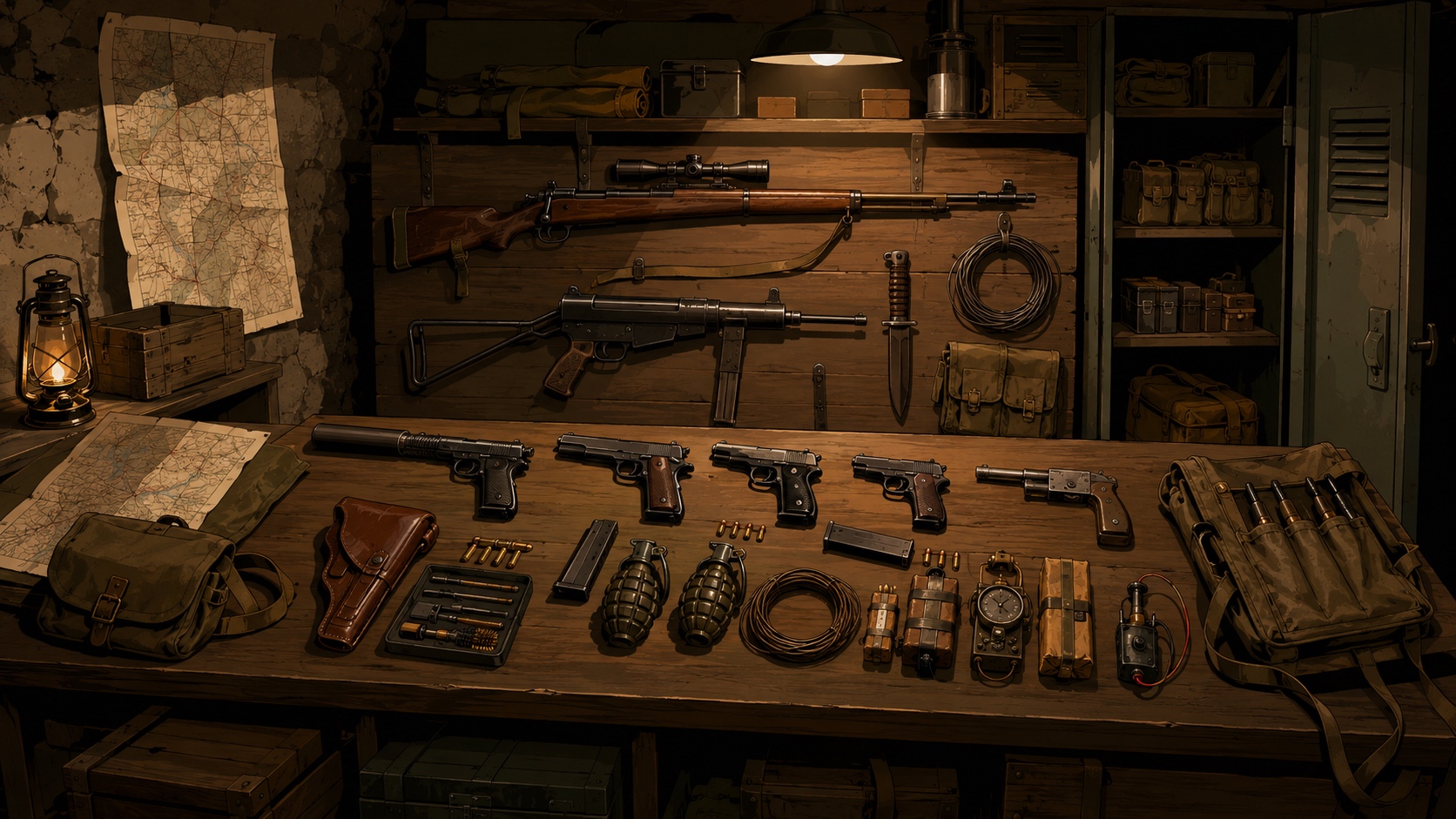
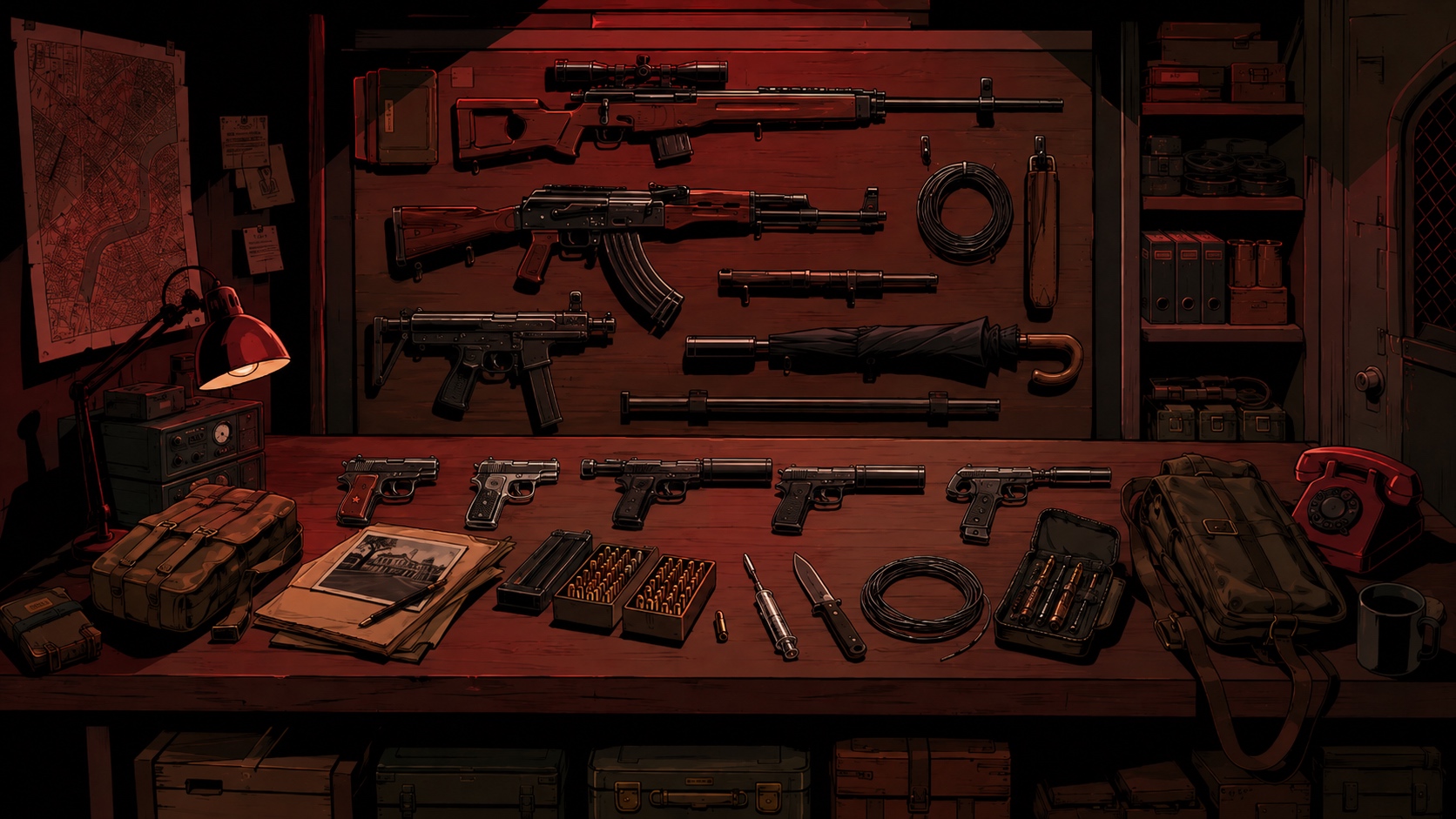
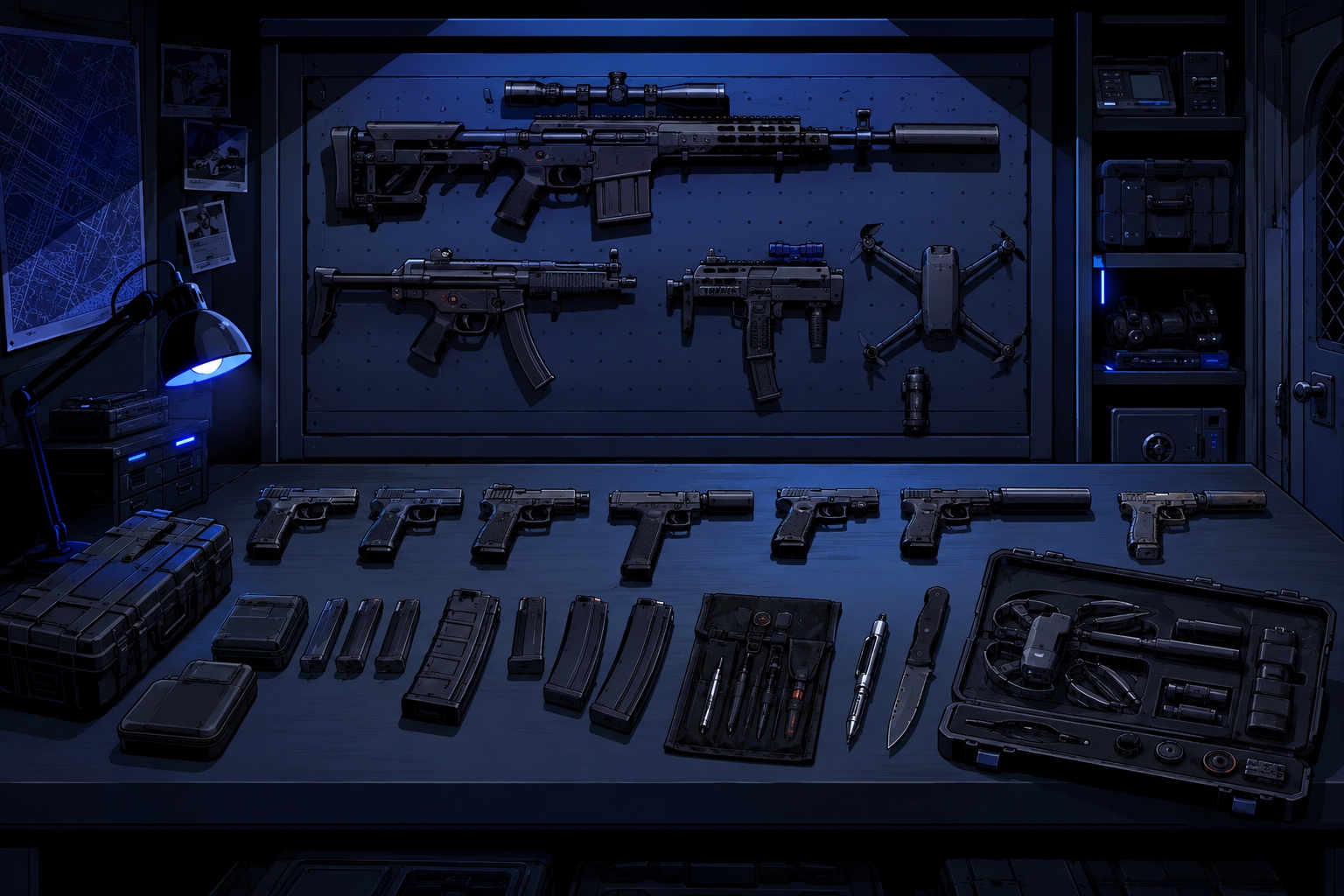
Weapon entries below use the Core Rules’ required profile fields: Skill, Damage, Critical, Range, Qualities, Requisition Cost, Availability, and Attribution. Damage is listed as the weapon’s base damage; melee weapons add the user’s Might where noted. The Qualities column lists rules-active weapon qualities only. Service origin, cover plausibility, and forensic tell are handled by the Attribution column and by the catalog description later in the chapter. A weapon’s descriptive entry explains fictional handling, but this table is the rules reference.
| Shadow War Weapon | Skill | Damage | Crit | Range | Qualities | Req | Availability | Attribution |
|---|---|---|---|---|---|---|---|---|
| Welrod Mk II Silent Pistol | Ranged | 5 | 3 | Short | Silent, Concealable, Slow-Firing 1 | 4 | Restricted | Very high if recovered; SOE signature |
| Sten Mk II / Mk IIS | Ranged | 6 | 3 | Medium | Auto-Fire, Unreliable | 3 | Restricted | High in occupied territory; wartime resistance signature |
| M1911 Pistol | Ranged | 6 | 3 | Short | Loud | 2 | Military | Moderate; American supply signature in occupied Europe |
| Walther PPK | Ranged | 5 | 3 | Short | Concealable | 2 | Restricted | Low to moderate; common European service pistol |
| Liberator FP-45 | Ranged | 4 | 4 | Short | Concealable, Single-Shot, Disposable, Unreliable | 1 | Restricted | High if recognized |
| Suppressed .22 Pistol | Ranged | 4 | 4 | Short | Silent, Concealable, Low-Power | 4 | Restricted | Moderate |
| Scoped Service Rifle | Sniping | 8 | 3 | Long | Accurate 1, Loud | 4 | Military | High if recovered; military signature |
| Sykes-Fairbairn Knife | Melee | Might + 2 | 3 | Engaged | Silent, Concealable | 2 | Restricted | High if identified; commando signature |
| Garrote Wire | Melee | Might + 1 | 4 | Engaged | Silent, Grapple, Concealable, Slow Method | 2 | Restricted | Low unless tradecraft is recognized |
| Mills Bomb / Fragmentation Grenade | Ranged | 8 | 3 | Short | Blast 8, Loud | 3 | Military | High; military ordnance signature |
| Explosive Charge | Demolitions | 10 | 2 | Placed | Blast 10, Breach, Timed | 4 | Restricted | Very high; demolitions signature |
| Long Dark Weapon | Skill | Damage | Crit | Range | Qualities | Req | Availability | Attribution |
|---|---|---|---|---|---|---|---|---|
| Makarov PM | Ranged | 5 | 3 | Short | None | 2 | Restricted | High outside Bloc channels; Bloc supply signature |
| Walther PPK / PPK-S | Ranged | 5 | 3 | Short | Concealable | 2 | Restricted | Low; common European service pistol |
| High Standard HDM | Ranged | 4 | 4 | Short | Silent, Concealable | 4 | Restricted | High if recovered; American intelligence signature |
| Beretta 70 Suppressed | Ranged | 5 | 3 | Short | Silent, Concealable | 4 | Restricted | Moderate; clean professional profile |
| PSS Silent Pistol | Ranged | 5 | 3 | Short | Silent, Concealable, Limited Ammo 6 | 5 | Black | Very high; Soviet special-issue signature |
| Walther MPK/MPL | Ranged | 6 | 3 | Medium | Auto-Fire, Compact | 4 | Restricted | Moderate; security-service signature |
| AKM / AK-74 | Ranged | 8 | 3 | Long | Auto-Fire, Rugged, Loud | 4 | Military | Context-dependent; military or paramilitary signature |
| Suppressed .22 Rifle | Sniping | 5 | 4 | Medium | Silent, Accurate 1, Low-Power | 4 | Restricted | Moderate |
| Dragunov SVD / M21 | Sniping | 8 | 3 | Long | Accurate 1 | 5 | Military | High to very high; military/intelligence signature |
| Bulgarian Umbrella Gun | Ranged | 4 | 4 | Engaged | Concealed, Poison, Single-Shot | 5 | Black | Extreme; Bulgarian DS / KGB signature |
| Pressure-Syringe Pen | Melee | 3 | 4 | Engaged | Concealed, Poison, Single-Use | 4 | Black | Extreme if forensics catch it |
| Sykes-Fairbairn / Fairbairn Pattern Knife | Melee | Might + 2 | 3 | Engaged | Silent, Concealable | 2 | Restricted | Moderate; legacy commando signature |
| Garrote Wire | Melee | Might + 1 | 4 | Engaged | Silent, Grapple, Concealable, Slow Method | 2 | Restricted | Low unless patterned |
| Nightscreen Weapon | Skill | Damage | Crit | Range | Qualities | Req | Availability | Attribution |
|---|---|---|---|---|---|---|---|---|
| Glock 17 / Glock 19 | Ranged | 6 | 3 | Short | Loud | 2 | Civilian/Restricted | Low unless serialized; globally common |
| SIG P226 / P320 | Ranged | 6 | 3 | Short | None | 3 | Restricted | Moderate; service-pistol signature |
| H&K MP5 / MP5SD | Ranged | 6 | 3 | Medium | Auto-Fire, Accurate 1; SD adds Silent | 5 | Restricted | High |
| H&K MP7 | Ranged | 6 | 3 | Medium | Auto-Fire, Pierce 1, Compact | 5 | Restricted | High; special-operations signature |
| SR-25 / M110 | Sniping | 9 | 3 | Long | Accurate 1, Pierce 1 | 6 | Military | Very high; military signature |
| Suppressed .22 Pistol | Ranged | 4 | 4 | Short | Silent, Concealable, Low-Power | 4 | Restricted | Moderate |
| PSS Silent Pistol | Ranged | 5 | 3 | Short | Silent, Concealable, Limited Ammo 6 | 5 | Black | Extreme; Russian special-issue signature |
| Modern Welrod / B&T VP9 Style Pistol | Ranged | 5 | 3 | Short | Silent, Concealable, Slow-Firing 1 | 5 | Black | Very high; black-program or historical signature |
| Lethal-Injection Pen | Melee | 3 | 4 | Engaged | Concealed, Poison, Single-Use | 5 | Black | Extreme |
| Ceramic / Polymer Knife | Melee | Might + 1 | 4 | Engaged | Silent, Concealable, Scanner-Evasive | 3 | Restricted | Moderate |
| Improvised Acquired Pistol | Ranged | 5 | 4 | Short | Disposable, Unreliable | 1 | Street | Low for D5, high for local crime; dirty local chain |
| Drone Kinetic Payload | Pilot or Cyber | 7 | 3 | Medium | Remote, Loud or Silent by payload, Digital Trace | 6 | Black | Extreme in Nightscreen |
Era I: The Shadow War (1939–1945)
Era Feel
Gear in the Shadow War is analog, mechanical, and breakable. The radio fails in the rain. The pistol jams when it is cold. The knife is always in the boot because the knife is the only thing that does not fail. An SOE Quartermaster’s armory in 1943 London is a workshop: hand-tooled prototypes on a bench, an engineer smoking over a silenced Welrod he has test-fired three hundred times, a stack of unmarked boxes bound for drops into occupied Europe that will never be acknowledged.
The aesthetic is prototype-brutal. Items are made in small numbers, often by hand, often by engineers whose names appear on no document. They are designed for specific missions and frequently fail. The loss rate on SOE-supplied wireless operators in France in 1943 was roughly 50% over eighteen months. The gear is part of the reason; the rest is the nature of the work.
Shadow War Weapons
Welrod Mk II Silent Pistol
Req Cost: 4 · Qualities: Silent, Concealable
SOE’s own silent pistol. Manually-cycled .32 ACP with an integral suppressor roughly the size of a pistol’s own frame; the “report” of a Welrod at close range is described by contemporaries as the sound of a clothespin closing. Range is contact-to-ten-meters, effective. Rate of fire is one round, then the bolt must be manually cycled.
Mechanical Effect. When used in a scene that has not yet produced a firefight, the Welrod adds +2 Boon dice to Ranged or Stealth checks for the first shot. After the first shot, the weapon’s mechanical cycling imposes a one-action delay between attacks.
Doctrine for a fired Welrod is immediate recovery or staged disposal; the attribution rating in the table assumes the weapon or its distinctive ballistics are found.
Sten Mk II Submachine Gun
Req Cost: 3 · Qualities: Concealable (broken down), Unreliable
The workhorse open-bolt submachine gun of SOE-supplied Resistance cells. 9mm Parabellum, thirty-two round magazine, effective range roughly 40 meters. Renowned for reliability problems: the Sten famously jams at inconvenient moments. Cheap to manufacture, cheap to distribute, cheap to lose.
Mechanical Effect. Standard SMG rules. On any Ranged check using a Sten, a rolled Calamity is interpreted as a jam (weapon inoperable until cleared; one full action to clear).
M1911 Pistol
Req Cost: 2
The standard US sidearm. .45 ACP, seven-round magazine, heavy, reliable, unsubtle. Issued to OSS operatives and to D5 operatives working American cover.
Scoped Service Rifle
Req Cost: 4 · Qualities: Accurate 1, Loud
A scoped Lee-Enfield, Springfield, Mosin-Nagant, Mauser, or other service rifle adapted for precision work. Shadow War sniping is less about exotic equipment than patience, fieldcraft, range judgment, and the ability to leave before the patrols understand where the shot came from. The rifle is long, hard to conceal, and unmistakably military if recovered.
Mechanical Effect. Uses Sniping. A scoped service rifle may build Shot Advantage normally, but cannot be made Silent without rare specialist modification.
Walther PPK
Req Cost: 2 · Qualities: Concealable
The classic European pocket pistol. .32 ACP or .380 ACP, seven-round magazine. Small, reliable, carryable in a coat pocket without visible outline. Half the services in Europe issue one, which is exactly why D5 operatives in the field often carry it.
Sykes-Fairbairn Fighting Knife
Req Cost: 2 · Qualities: Silent, Concealable
The definitive fighting knife of the SOE. Double-edged, seven-inch blade, designed specifically for the thrust rather than the slash. Issued to commandos, SOE operatives, and D5 personnel. The Sykes-Fairbairn was taught with a specific close-combat curriculum: operatives trained to use it were taught to kill in seconds, not duel.
Mechanical Effect. On Melee checks by a character trained in the SOE close-combat curriculum (a Wetworker or any operative with a Melee talent), the knife grants +1 Boon die and treats a rolled Breakthrough as a silent, one-shot takedown at the GM’s discretion.
Mills Bomb (Grenade)
Req Cost: 3 · Qualities: Loud, Hardened
Standard British fragmentation grenade. Four-to-seven second fuse, lethal within a ten-meter radius. Heavy for its size and inclined to cook off if held too long after the pin is pulled.
Liberator Pistol (FP-45)
Req Cost: 1 · Qualities: Disposable
The OSS-issued assassination pistol dropped into occupied Europe for distribution to resistance cells. Single-shot .45 ACP, effective range five meters at absolute best. The Liberator was designed to be used once at contact range to take an opposition officer’s sidearm; its only tactical purpose was to upgrade the holder to a real pistol. Over a million were manufactured.
Mechanical Effect. Single-shot weapon. On a Success, the shot functions normally; on a Failure, the weapon has discharged ineffectively and cannot be fired again until reloaded (slow, under fire: one full scene).
Shadow War Specialist Kit
Paraset Wireless (Radio)
Req Cost: 5 · Qualities: Hardened
The iconic wartime agent radio. Valve-based, three kilogram case (small suitcase form), approximately 400 kilometer operational range to Home Station under good conditions. Takes roughly four minutes to set up, four minutes to strike. Transmits in Morse only.
A Paraset in operation is the loudest signature event in Shadow War play. The German Funkabwehr (radio counter-intelligence) operated direction-finding vans that could localize a transmitter to a city block in 15–20 minutes and to a specific building in 30 minutes. Every transmission is a test of nerve.
Mechanical Effect. Transmission requires a Tradecraft or Cryptography check depending on context. Each transmission adds +1 Compromise to the operator’s track if conducted from a city environment with Abwehr presence. The radio’s form factor makes concealment a full-time concern.
One-Time Pad
Req Cost: 2 · Qualities: Concealable, Cryptographic
The gold standard of wartime field cryptography. A pad of random letter sequences used once each and then destroyed; provided the pad has not been compromised and is used correctly, a one-time pad is mathematically unbreakable. SOE issued silk pads: the pad burns cleanly in seconds, destroying the key material.
Mechanical Effect. A message encrypted with a properly-used one-time pad cannot be broken by hostile cryptography. The weak points are physical: capture of the pad, reuse of a page (catastrophic), or failure to destroy a used page.
Silk Escape Map
Req Cost: 1 · Qualities: Concealable
A detailed map of an occupied region printed on silk: water-resistant, foldable to the size of a matchbox, sewable into coat linings. Every SOE operative crossing the channel carried one, and D5 maintained its own series covering Europe, the Balkans, and parts of North Africa.
Mechanical Effect. Grants +1 Boon die on Survival & E&E checks involving navigation in the mapped region. Undetectable in casual search; a determined search of clothing finds it.
Compass Button
Req Cost: 1 · Qualities: Concealable
A shirt or trouser button with a concealed magnetic compass inside: unscrew the button, the compass is revealed. One of dozens of concealment devices SOE’s Station IX produced for agents who expected to be searched.
L-Pill (Suicide Pill)
Req Cost: 2 · Qualities: Concealable
Potassium cyanide in a glass capsule, designed to be carried in a hollow tooth, a coat button, or a wedding ring. Onset is seconds; death is fast and, for its time, clean. Issued to SOE operatives going into occupied Europe specifically to deny the Abwehr a live prisoner.
The L-Pill is a piece of equipment that some tables will choose not to engage with; handle at the session-zero level. Mechanically, it is an option the player may elect for their character in extremis. Narratively, it is an artifact of the genre. Its presence in this catalog is historical; its use at the table is the table’s choice.
Minox I Camera
Req Cost: 4 · Qualities: Concealable
The subminiature camera that dominated wartime and early Cold War espionage photography. Matchbox-sized, fifty frames per cartridge, capable of photographing documents at 25–30 cm range with astonishing clarity. Carried on any operation where document theft was primary.
Mechanical Effect. Photography of documents requires a Coordination check; the Minox grants +1 Boon die and eliminates the “missed the page” failure mode on a Success.
Forged Papers (Basic / Good / Excellent)
Req Cost: 2 / 4 / 6
A set of forged documents supporting a specific cover identity: identity papers, ration coupons, travel permits, work authorizations. The three quality tiers determine difficulty of detection:
- Basic. Survives a cursory glance at a checkpoint. A detailed examination by a trained officer will reveal the forgery.
- Good. Survives a checkpoint examination and casual document review by a trained officer. Specialist forensic examination will find the forgery.
- Excellent. Survives all but laboratory-grade forensic examination.
Mechanical Effect. Forgery quality sets the difficulty for the opposition’s document-inspection check. Excellent papers are typically only available from Deep Legend preparation (see Chapter Eight) or as a specific Quartermaster-issued item.
Microdot Equipment
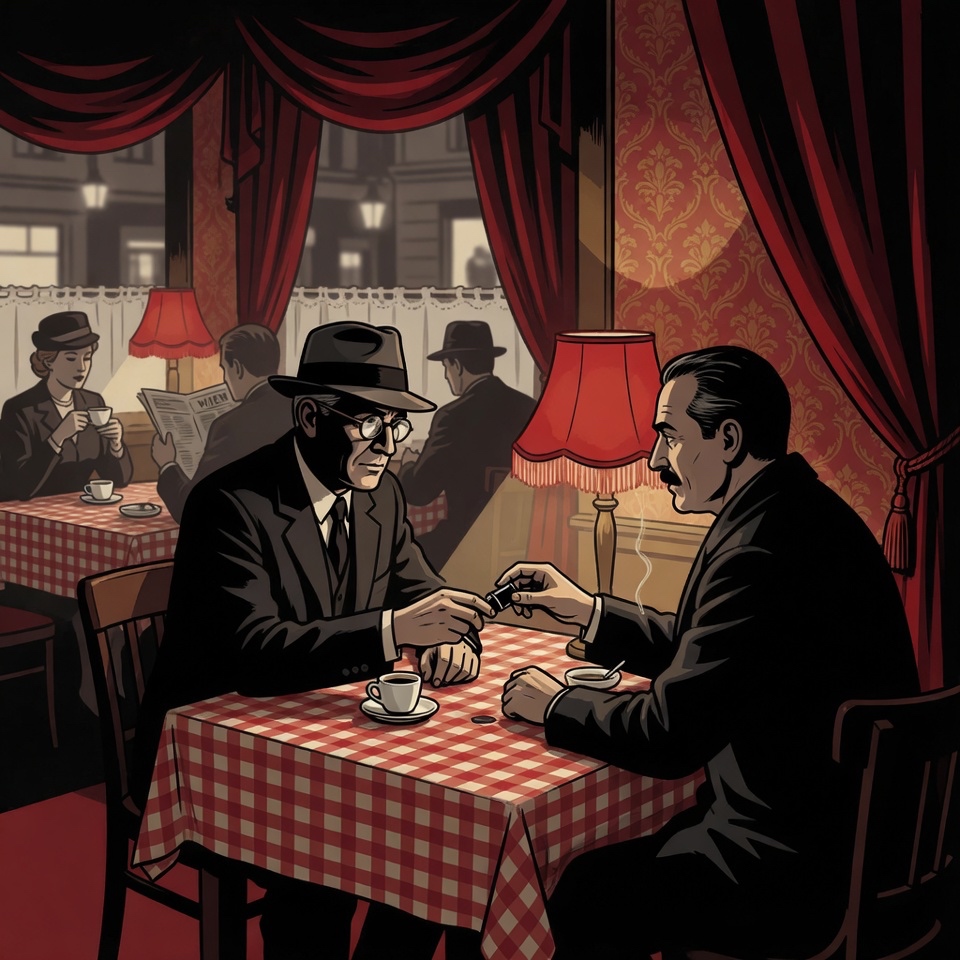
Req Cost: 6 · Qualities: Concealable, Cryptographic
The apparatus for producing microdots: photographs reduced to roughly the size of a typed period and embedded in innocent-seeming documents, postcards, or even jewelry. Microdot production equipment was rare in the field and typically maintained at station level rather than carried by individual operatives.
Poison Kit (Various)
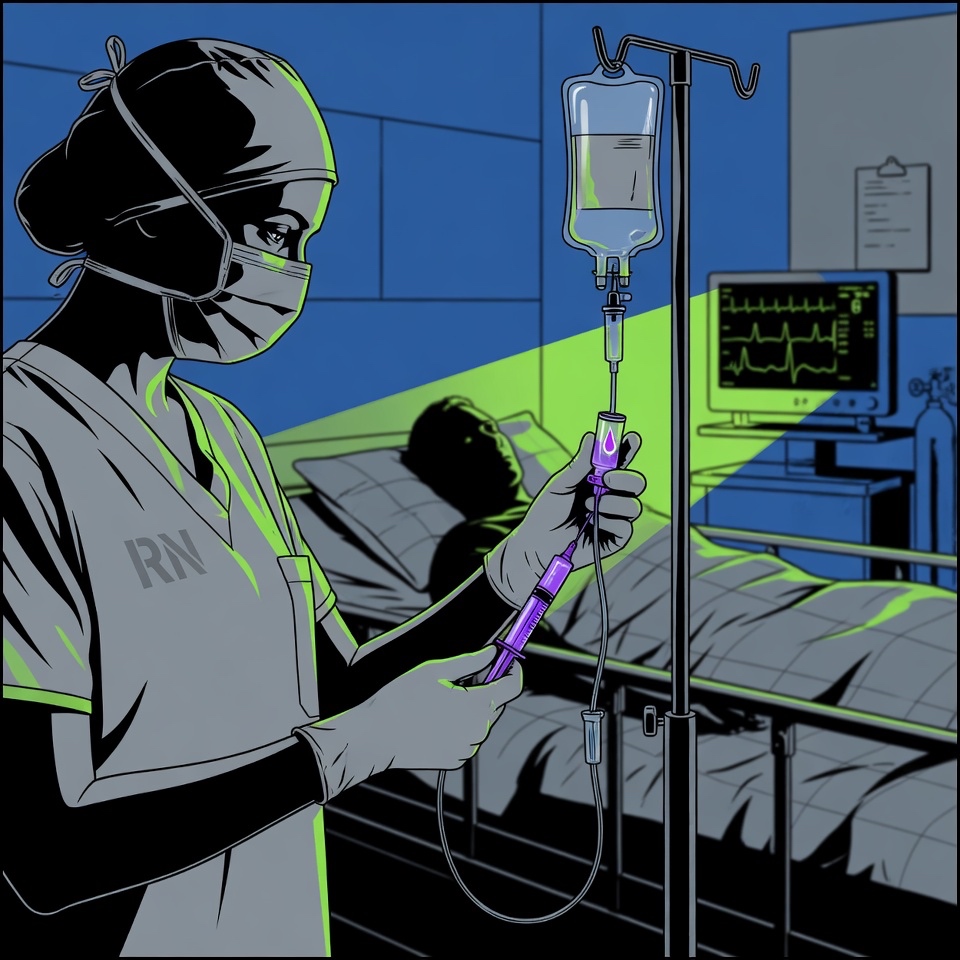
Req Cost: 5 · Qualities: Silent, Deniable
The wartime assassination toolkit: ricin pellets, cyanide injections, barbiturate overdoses, various untraceables. SOE’s Station XII produced a specialized catalog; OSS maintained its own. Reserved for specific sanctioned operations.
Incendiary Pencil
Req Cost: 3 · Qualities: Silent, Concealable
A time-delayed incendiary device in the form of a fountain pen or pencil. Delay ranged from minutes to hours, depending on the variant. Used for sabotage: setting fires in document archives, communication centers, industrial facilities.
Lockpick Set (SOE)
Req Cost: 2 · Qualities: Concealable
A standard field lockpick set in a slim case: tensioners, rakes, hooks, a few specialty picks for the common European lock patterns of the 1940s. The SOE set included small pick-gun attachments for certain high-priority lock types.
Mechanical Effect. Required for standard Coordination (Lockpick) checks against era-appropriate mechanical locks. The SOE set grants +1 Boon die to such checks.
Explosive Charge (Plastic Explosive)
Req Cost: 4 per charge · Qualities: Loud, Hardened
Nobel 808 or similar plastic explosive, shaped for specific sabotage tasks. SOE produced a range of pre-shaped charges for bridge demolition, locomotive disabling, power-pole destruction, and similar targets. Each charge represents a single major demolition action.
Mechanical Effect. Demolitions check at difficulty appropriate to the target. On Success, the charge accomplishes its intended effect; on Failure, the charge misfires, causes collateral damage, or is discovered prior to detonation.
Shadow War Armor & Protection
Body armor was effectively non-existent in the field in 1943. What armor existed was heavy, uncomfortable, and of limited utility against rifle fire. Operatives relied on concealment, misdirection, and speed rather than armor.
Bomber Jacket (Aircrew Issue)
Req Cost: 2 · Qualities: Hardened (cold)
Heavy leather flying jacket with wool or shearling lining. Provides significant protection against cold and minimal protection against knife attacks; against firearms it is decorative. Issued to aircrew and, by distribution, to some SOE operatives.
Civilian Overcoat (Heavy)
Req Cost: 1 · Qualities: Concealable (firearm)
A period-appropriate heavy wool overcoat. Conceals a shoulder-holstered pistol under casual observation. Does not provide ballistic protection. The most common outer garment anywhere in the Shadow War.
Shadow War Signature Items
The Tuxedo Tracker (Cover-Specific Kit)
Req Cost: 3 · Qualities: Concealable
A “social infiltration kit” built around a specific cover identity: tailored cover clothing, period-appropriate accessories, supporting documents. Built for Face operatives and for any operation requiring sustained presence in high-society environments.
Example. A 1943 Casablanca cover as a Swiss businessman requires a specific suit, a specific brand of cigarettes, a specific fountain pen matching the period, a pocket watch with an appropriate engraving. The cost is the production effort, not the items themselves.
Radio Crystal Set
Req Cost: 3 · Qualities: Concealable
A replacement crystal for a field radio, matching a specific agreed-upon operational frequency. Small (thumbnail-sized), concealable in any number of ways, but useless without a matching wireless set. A common drop item: a crystal pushed to a courier to pass to a radio operator represents a re-keying of the entire field circuit.
Cigarette Lighter (Signal)
Req Cost: 2 · Qualities: Concealable
A standard lighter with a concealed signal function: often a precisely-timed flash pattern for signaling an aircraft from the ground, or a tiny mirror for heliograph work. SOE produced several versions for agent use during night landings.
Sabotage Oil Can
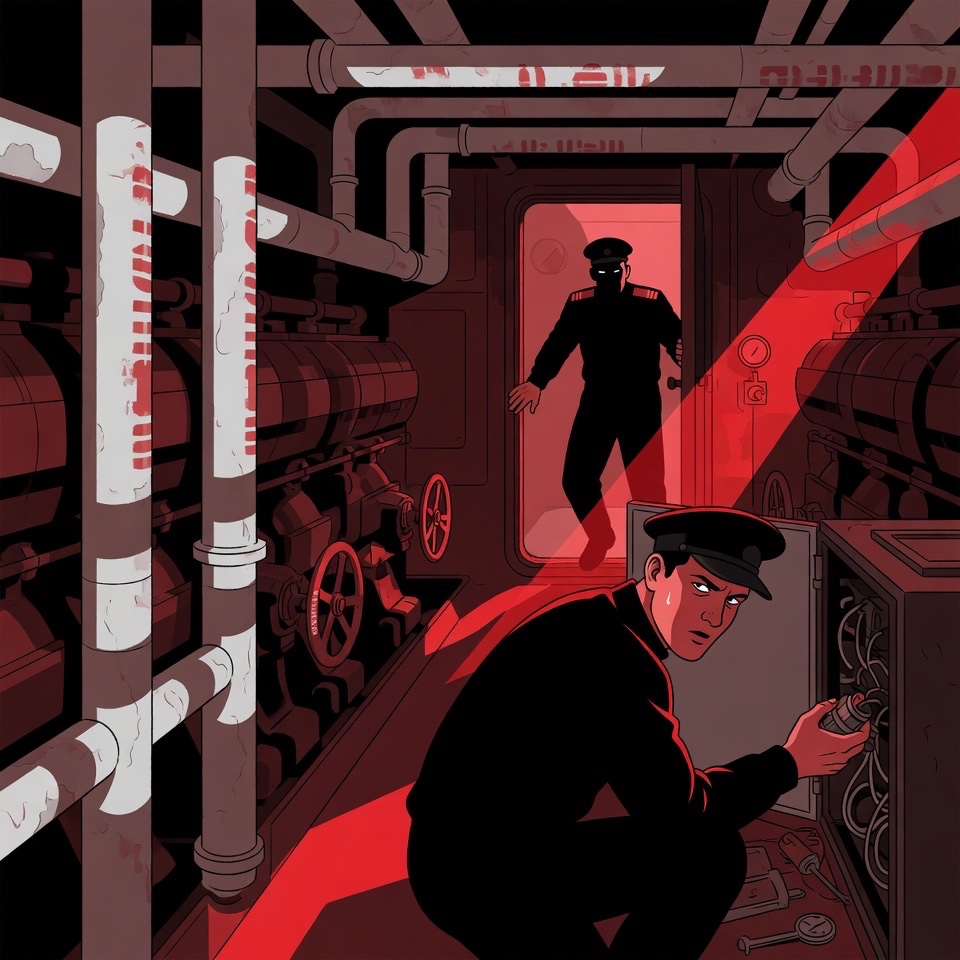
Req Cost: 3 · Qualities: Silent
A machine-shop oil can whose contents are not lubricant but an abrasive grinding compound: poured into bearings, machine tools, or vehicle engines, the compound grinds moving parts into catastrophic failure over the course of hours of operation. A classic SOE industrial-sabotage device, difficult to detect and difficult to attribute after the fact.
The Shadow War Requisition Ledger
In the Shadow War era, Division 5’s Requisition operates through the SOE or OSS supply chain, not as fully-branded D5 kit. Operatives requisitioning a Paraset in 1943 are borrowing it from SOE’s catalog; the item is marked out in the SOE log, and the log may eventually be read by the wrong reader.
This gives the era a very specific texture: every item you draw is an entry in somebody else’s archive. A Quartermaster who signs out a signature SOE item for a D5 operation is generating a future attribution risk. The post-war files that historians have spent decades reading were, in many cases, exactly these supply logs.
Division 5’s operational doctrine in this era is to prefer ambiguous-attribution gear, a Walther PPK rather than a silenced SOE prototype, a standard Mills Bomb rather than an SOE-pattern incendiary pencil, whenever the mission allows. The specialist kit comes out when the mission specifically requires it, not because it is cool.
The flip side: a D5 operative using only ambiguous gear looks, at the post-war reading, like an enemy agent rather than an Allied one. The tradecraft is to balance the attribution envelope, not to zero it.
Historical Verisimilitude and GM Discretion
The Shadow War catalog leans into period authenticity: real weapons, real kit, real agencies. Tables that prefer a more cinematic register may draw on Fleming-style gadgetry (a gold-plated cigarette case concealing a Minox, say) without strain; the Requisition system handles both registers.
GMs running historical-authentic campaigns should feel free to rule that specific items (particularly the L-Pill, the poison kit, and the lethal incendiary devices) require specific sanction from Division 5 leadership before they can be drawn. A Quartermaster cannot hand out an L-Pill on casual request; it is dispensed with solemnity, on the briefing officer’s signature, to operatives going into specific named theaters.
Era II: The Long Dark (1946–1989)
Era Feel
Gear in the Long Dark is purpose-built, beautiful, and catastrophic if found. The Cold War’s industrial design aesthetic applies to intelligence equipment: a 1963 Soviet concealment device is a small sculpture, hand-machined, engraved, designed to be an object of craft as well as a functional tool. An East German hollow-coin microdot carrier is a piece of art. A Western microdot camera is a precision instrument.
The aesthetic is artisan-brutal. Where Shadow War kit was improvised under wartime pressure, Long Dark equipment is refined: machined tolerances, finished surfaces, devices that reward close study. The cost of capture is not life-or-death in the Shadow War sense (that era is past), but it is career-defining: an operative found with signature kit in the wrong country is extradited, expelled, or quietly buried in a Warsaw Pact prison. The gear is less likely to kill you than the Shadow War equivalent; it is more likely to end your career.
This is also the era where Division 5’s gear catalog begins to include items whose concealment is the point (see Concealment Devices, below). The Quartermasters of this period are the heirs of SOE’s Station IX, pushed harder by the technology race and the operational sophistication of the KGB’s technical department.
Long Dark Weapons
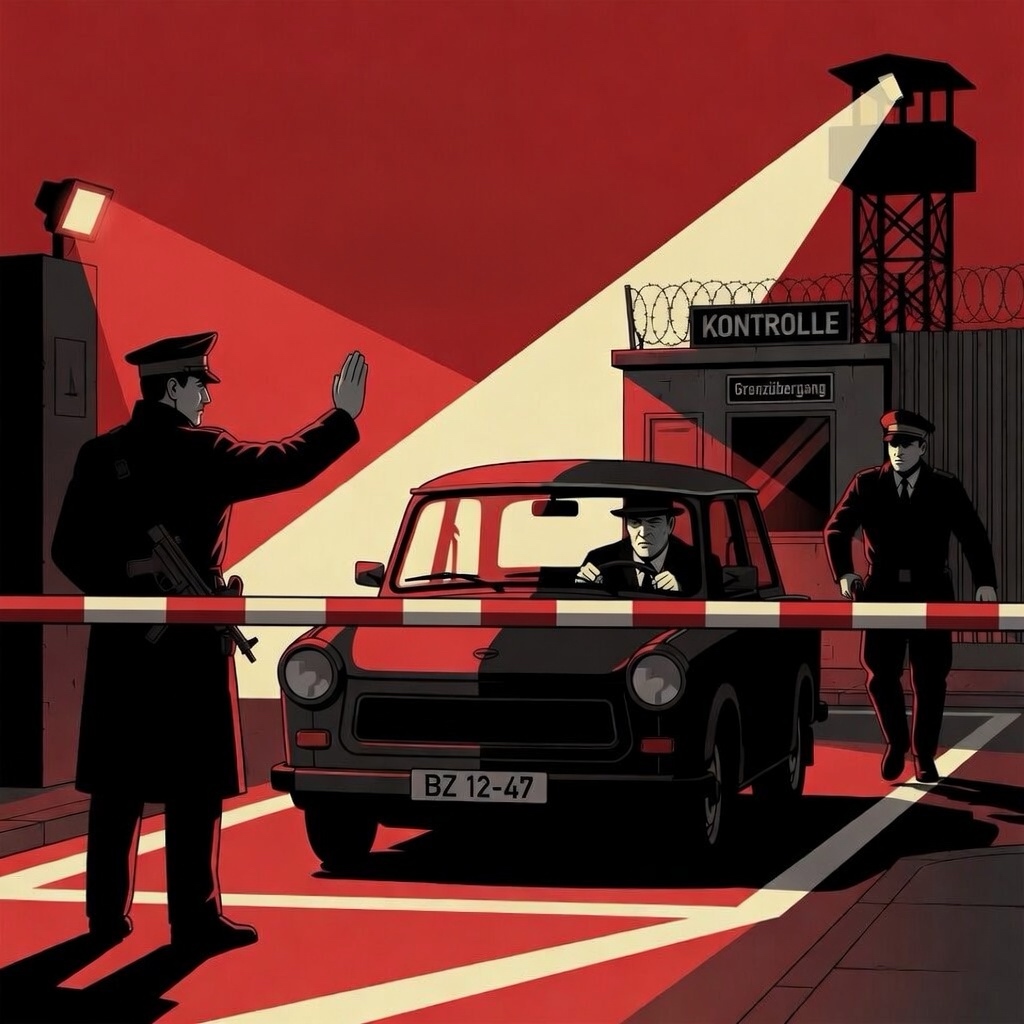
Makarov PM Pistol
Req Cost: 2 · Qualities: Hardened
The standard Warsaw Pact sidearm from the late 1950s onward. 9×18mm Makarov cartridge (distinct from 9mm Parabellum; the round itself is an attribution signature), eight-round magazine, simple blowback action. Rugged, reliable, and carried by every KGB field officer, Stasi case officer, and Soviet military operative in the Eastern Bloc.
A general note applies to every Bloc-issue item in this catalog: in Western hands it means one of two things, a Warsaw Pact Legend or a deliberate attribution choice. There is no third reading.
Walther PPK / PPK-S
Req Cost: 2 · Qualities: Concealable
The PPK continues through the Long Dark as the classic European pocket pistol. The PPK-S variant (introduced for the US market after 1968 import restrictions) is slightly larger but retains the concealment qualities. Still ambiguous in Europe: carried by multiple services across both blocs.
High Standard HDM Silent Pistol
Req Cost: 4 · Qualities: Silent, Concealable
The US successor to the Welrod tradition. .22 Long Rifle, integral suppressor, ten-round magazine. Far quieter than the Welrod and semi-automatic rather than manually-cycled. Used extensively by CIA and allied services from the 1950s through the 1970s.
Mechanical Effect. As the Welrod’s silent-pistol profile (see the Shadow War catalog), but without the per-shot cycling delay.
Beretta 70 Series
Req Cost: 3 · Qualities: Concealable
An Italian .22 or .32 caliber pistol of the 1960s–1970s, adopted by several Western intelligence services for clandestine work. The Beretta 70’s quiet cartridge and reliable action made it a standard item in the Mediterranean theater. Mossad famously used a suppressed Beretta 71 variant for the Wrath of God operations in the early 1970s.
Bulgarian Umbrella Gun (Poisoned Dart Weapon)
Req Cost: 5 · Qualities: Silent, Deniable
The assassination weapon of the 1970s. An umbrella modified to conceal a compressed-air-driven ricin pellet injector: deployable in a crowded street, leaving the victim with a small puncture wound and a ricin pellet that dissolves over days into fatal toxicity. This is the weapon of the Georgi Markov assassination in London, 1978, and the Bloc-issue note under the Makarov applies with full force.
Mechanical Effect. On Success against a target in a crowd, the attack is unnoticed (no immediate alarm). Target takes no visible effect in-scene; the pellet’s ricin dose causes fatal illness over 24–72 hours. Untraceable by standard 1970s forensics.
PSS Silent Pistol (Soviet Special-Purpose)
Req Cost: 5 · Qualities: Silent, Deniable
A Soviet silent pistol using special 7.62×41.5mm cartridges with captive-piston actuation: the cartridge’s internal piston seals the gases after firing, producing virtually no muzzle report. Unlike suppressors, which simply slow gas expansion, the PSS’s ammunition contains the entire firing cycle inside the cartridge case. A technological marvel of Soviet weapons engineering.
Issued only to KGB special-purpose units, GRU Spetsnaz, and a handful of allied special services. Extremely rare outside Warsaw Pact territory. A PSS round’s distinctive shell casing is a strong signature for Soviet intelligence origin.
Walther MPK / MPL Submachine Gun
Req Cost: 4 · Qualities: Concealable (MPK)
The West German answer to the Sten tradition: a compact submachine gun used by security forces and some intelligence services in the Long Dark era. Not as common as the MP5 (see Nightscreen catalog), but present in direct-action roles throughout the 1960s–1980s.
AK-Variants (AKM, AKS-74U)
Req Cost: 3–5 depending on variant
The Kalashnikov family dominates the Long Dark for any paramilitary or third-party operation. The AKS-74U (compact 5.45×39mm variant, introduced in 1979) is particularly useful for close-quarters direct-action. Omnipresent in Warsaw Pact and satellite-state armories; widely available on black markets globally throughout the era.
Sykes-Fairbairn Fighting Knife (Continuing Service)
Req Cost: 2 · Qualities: Silent, Concealable
The Sykes-Fairbairn continues in service through the Long Dark, used by British and Commonwealth special forces and by some intelligence services.
Suppressed .22 Rifle (Sporter-Style)
Req Cost: 4 · Qualities: Silent, Concealable
A suppressed .22 LR rifle built on a sporting-rifle chassis: the kind of weapon that might be reasonably explained as a farmer’s pest-control rifle. Used in the Long Dark for silent rooftop work, rural ambushes, and situations where a rifle-class engagement was required with minimal noise. An operative found with one is either a varmint hunter or has a specific problem.
Mechanical Effect. Uses Sniping. The weapon is quiet and easy to explain under certain covers, but Low-Power (see Gear Qualities: Reference Table).
Dragunov SVD / M21 Precision Rifle
Req Cost: 5 · Qualities: Accurate 1
The Long Dark’s dedicated marksman rifles: the Soviet Dragunov on one side, the American M21 and commercial sporter conversions on the other. These are not concealable weapons and not deniable if recovered. Their value is standoff reach and the psychological authority of a rifle that can own a street, checkpoint, or exchange site without needing to fire.
Mechanical Effect. Uses Sniping. When used from a prepared static overwatch position, a successful setup check that creates Shot Advantage may also identify one abort condition for free: crowd interference, guard route, bad glass, wind exposure, or counter-sniper risk.
Long Dark Specialist Kit
Minox B / C Subminiature Camera
Req Cost: 4 · Qualities: Concealable
The continuing Minox line. The Minox C (introduced 1969) is the workhorse, adding a light meter and automatic exposure to the wartime design. Every major intelligence service issued or acquired Minox cameras; the camera is the single most universal piece of Long Dark tradecraft kit.
One-Time Pad (Booklet, Nitrocellulose Paper)
Req Cost: 2 · Qualities: Concealable, Cryptographic
The one-time pad continues through the Long Dark with minor updates. Nitrocellulose flash paper replaces silk for many services: the used page burns instantly and completely at the touch of a lit match. Every serious agent network carries them; compromised or lost pads cause catastrophic failures throughout the period.
Concealment Devices (Hollow Coin, Hairbrush, Cufflink, Battery)
Req Cost: 2–4 depending on sophistication · Qualities: Concealable
The tradecraft category that defines the Long Dark. A standard CIA or KGB concealment device is a functional everyday object modified to conceal a specific operational payload: a microfilm, a message, a cyanide capsule, a microdot, a miniaturized radio component.
Examples:
- Hollow 5-Kopeck Coin (USSR): Holds a microdot or tightly-folded message. Indistinguishable from a genuine coin to casual inspection; a detailed examination reveals the seam.
- Hairbrush Transmitter (Various): A hairbrush handle conceals a miniature burst transmitter and antenna. The brush is functional; the transmitter is activated by a specific sequence of bristle depressions.
- Cufflink Microfilm Cache: Standard European gentleman’s cufflinks, each containing a small microfilm spool in the post.
- Battery Compartment Concealment: The batteries of a transistor radio or flashlight removed and a message capsule inserted in their place. The device no longer functions; the concealment is routine.
Mechanical Effect. Each concealment device has a detection threshold: a Perception or Tradecraft check at a difficulty set by the device’s quality. Concealment devices can be modified for specific mission needs at Quartermaster expense.
Microdot Reader & Camera
Req Cost: 5 · Qualities: Concealable (camera only)
The production side of microdot espionage: a precision camera that reduces a photographed document to a dot the size of a typed period, plus a reader that magnifies the dot back to legible text. Microdot technology matured throughout the Long Dark; by the 1970s, microdots could be embedded invisibly in postcards, book spines, and even cosmetics.
Dead Drop Indicators (Various)
Req Cost: 1 per set · Qualities: Concealable
The hardware of dead drop operations: a chalk mark on a specific bridge pillar meaning “drop is loaded,” a Coke can placed in a specific window meaning “I need a meeting,” a thumbtack stuck in a specific lamppost meaning “I am being followed, abort.”
A dead drop indicator kit is nothing more than a set of operational agreements plus the specific objects used. Every long-running agent network had its own vocabulary of indicators. Moscow Rules explicitly required redundant indicators: one signal alone is coincidence; two signals are a communication.
Rollover Tags / Document Seals
Req Cost: 3 · Qualities: Concealable
Specialized tools for defeating document seals, tamper-evident bindings, and envelope seals. A rollover tag is a thin transparent adhesive that lifts an intact seal, allowing the envelope to be opened, photographed, and resealed. Professional-grade work leaves no forensic trace detectable by era-standard methods.
Audio Surveillance Devices (Bug, Directional Microphone)
Req Cost: 4–8 depending on sophistication · Qualities: Concealable (some)
The classic “bug” category. Ranges from small radio-frequency transmitters (the size of a pea in the 1960s, smaller by the 1980s) that can be hidden in a light fixture or under a desk, to directional microphones operating through closed windows.
Mechanical Effect. Surveillance devices require Surveillance and/or Cyber checks to deploy, maintain, and defeat. The opposing side’s counter-surveillance (see below) sets a detection threshold.
Counter-Surveillance Equipment (RF Scanner, Sweep Kit)
Req Cost: 5 · Qualities: Hardened
The counter side of bug-hunting. RF scanners, non-linear junction detectors, and sweep kits for checking rooms for listening devices. By the 1970s, professional counter-surveillance was a standard pre-meeting practice for any serious operative.
Lockpick Set (Professional)
Req Cost: 3 · Qualities: Concealable
A professional-grade lockpick set in a concealable case. Handles most mechanical locks in service. Specialist locks (high-security safes, diplomatic pouch locks, bank vaults) require specialist picks or safe-cracking equipment at higher Requisition cost.
Garrote Wire / Piano Wire
Req Cost: 1 · Qualities: Silent, Concealable
A length of fine steel wire with wooden handles at each end, concealable in a shoe heel, a cigarette case, or sewn into clothing. A weapon for the operative trained in close-quarter combat with it; without training, it is as likely to injure the user as the target.
Pressure-Syringe Pen / Injection Device
Req Cost: 5 · Qualities: Silent, Concealable, Deniable
The pen-sized injection device carrying a lethal dose of a fast-acting toxin: standard CIA and KGB kit from the 1960s onward. The 1975 Church Committee hearings famously displayed a CIA-issued heart-attack gun of similar design; the KGB maintained its own poison cupboard throughout the era.
Forged Papers (Long Dark Standard)
Req Cost: 2 / 4 / 6 (Basic / Good / Excellent)
Long Dark forgery is more sophisticated than Shadow War forgery but still operates on the same principles: identity papers, travel documents, employment credentials. The Good-quality tier becomes the default for most long-term Legends; Excellent papers typically require a specific Quartermaster’s workshop and weeks of preparation.
The introduction of watermarks, anti-counterfeiting inks, and machine-readable passports over the era steadily raises the difficulty of producing Excellent documents. By the 1980s, a truly Excellent forgery is a workshop piece of art.
Safe House Prep Kit
Req Cost: 3 · Qualities: Concealable
The miscellaneous preparation items that turn a rented apartment into an operational safe house: pre-cut concealment plates for floors and walls, discreet listening-device detectors, stocked go-bags, pre-prepared emergency exit planning. A professional Handler keeps one prepared for any city they operate in.
Long Dark Armor & Protection
Concealed Body Armor (Vest)
Req Cost: 4 · Qualities: Concealable (barely)
The first generation of civilian-concealable soft body armor, maturing through the Long Dark as Kevlar technology matured. Early 1970s vests were bulky, hot, and noticeable under all but the loosest clothing; by the late 1980s, concealable vests had become a routine item for protective details.
Mechanical Effect. Adds +1 Resistance against handgun-caliber Ranged attacks. Does not protect against rifle rounds or rifle-caliber Sniping attacks. Adds 1 Bane die to Stealth or Coordination checks requiring full freedom of movement.
Armored Sedan (Factory Armored)
Req Cost: Vehicle (see Chapter Seven)
The classic armored diplomatic-service sedan. Factory-armored Mercedes S-Class or Ford Lincoln, depending on bloc. Not concealable as normal transportation (the armored sedan has a distinctive sit and gait) but provides substantial protection against small-arms attack and the IEDs of the day.
Long Dark Signature Items
The Hollow Shoe
Req Cost: 3 · Qualities: Concealable
A shoe with a hollowed-out heel or sole concealing a message capsule, a suicide pill, a microfilm, or a miniature radio component. Every major service produced variants; the Soviet KGB’s were considered the most sophisticated.
The Concealment Passport
Req Cost: 5 · Qualities: Concealable
A genuine passport (stolen, bought, or purpose-built) whose cover conceals a second payload: a microfilm pocket, a message capsule, or a chemical treatment that responds to a specific reagent to reveal hidden writing. A high-value operational item, difficult to produce and valuable to recover.
The Lipstick Gun (Soviet)
Req Cost: 6 · Qualities: Silent, Concealable
A single-shot 4.5mm pistol concealed in a lipstick case: KGB workmanship, point-blank range only, one shot, then discarded. If it is found, attribution to KGB or related Warsaw Pact services is automatic.
The Briefcase Radio
Req Cost: 5 · Qualities: Concealable (as briefcase)
A high-frequency transmitter built into a standard attaché case: larger, longer-range, and more capable than a hollow-device burst transmitter. A briefcase radio allows a field officer to conduct short conversation-mode radio work, not just one-way Morse. Used by station officers in overt diplomatic cover throughout the era.
Mechanical Effect. Extends operational radio range significantly (hundreds of kilometers). Transmission from a briefcase radio generates Compromise marks if the briefcase’s presence in unusual locations is observed.
The Cigarette Lighter Microdot Reader
Req Cost: 4 · Qualities: Concealable
A standard Zippo-style lighter concealing a precision microdot reader in the base. The lighter functions normally; the reader is activated by a specific manipulation. Carried when an operative expects to receive microdot communications in the field.
The Long Dark Requisition Ledger
The Long Dark is the era of specialized Quartermasters. Each major service maintained technical directorates whose entire work was the production of operational equipment: CIA’s Office of Technical Services, KGB’s Operational-Technical Directorate, MI6’s Q-Branch, the BND’s technical wing. These directorates were professional workshops; the people who worked in them often spent their entire careers building and refining operational kit for field officers they would never meet.
Division 5 in this era operates without its own named technical directorate; its Quartermasters (PC and NPC) are cultivated relationships with the named services’ workshops, usually on quiet trades. A D5 Quartermaster in 1974 Vienna who needs a specific item goes to a specific BND technician in a specific basement workshop, carrying a specific favor. The attribution trail of the item itself becomes the attribution trail of the mission.
This is why the Quartermaster Tradecraft Tree’s Tier 4 talent The Workshop (Chapter Five) exists: it represents a Quartermaster who has built their own independent production capability rather than continuing to operate through cultivated relationships.
Era III: Nightscreen (1990–Present)
Era Feel
Gear in Nightscreen is software-as-hardware. A dead phone is worth more than a loaded pistol. The most dangerous item in the room is the laptop nobody recognized, because the laptop is the attack surface: the gate by which the whole operation either holds together or comes apart.
The aesthetic is generic-until-specialized. A Nightscreen Quartermaster’s workshop looks like a tech repair shop: commercial electronics, 3D printers, soldering irons, shelves of burner phones in their original packaging. The operational equipment is built from consumer parts, because consumer parts leave smaller attribution footprints than purpose-built specialty hardware. The burner phone is a burner phone because it is a standard commercial phone bought with cash; the signal jammer is a modified commercial product; the drone is a commercial quadcopter with a custom payload.
The deep change from Long Dark to Nightscreen is the dominance of software. A piece of hardware in 2024 is a platform; its real functionality lies in what software is loaded onto it. A burner phone with the right apps is an encrypted messenger, a surveillance device, a location beacon, or all three. The Quartermaster’s craft has shifted from precision metalwork to precision code, and the operational doctrine has shifted correspondingly.
Attribution in Nightscreen is algorithmic. Every action leaves metadata. Cell-tower handoffs, CCTV camera captures, credit-card transactions, social-media check-ins, facial-recognition matches, gait-recognition analysis: the world is saturated with passive surveillance, and the tradecraft of the era is largely the tradecraft of not producing detectable patterns.
Nightscreen Weapons
Glock 19 / 17 Pistol
Req Cost: 2 · Qualities: Concealable, Hardened
The ubiquitous modern pistol. 9mm Parabellum, reliable, widely available. Every service, private security firm, and civilian carrier on earth has access to Glocks in some variant, which makes it an ideal default sidearm for most Nightscreen Legends.
SIG P226 / P320 Pistol
Req Cost: 3 · Qualities: Concealable
A higher-end 9mm service pistol associated with US and allied special operations units. The P226 is the classic Navy SEAL sidearm of the 1990s–2010s; the P320 has become the US military standard from 2017 onward.
H&K MP5 / MP7 Submachine Gun
Req Cost: 4–6 depending on variant
The H&K MP5 dominated Western counter-terror work from the 1970s through the 2000s. The MP7, introduced in the early 2000s, uses 4.6×30mm rounds designed to defeat modern body armor and has become the compact PDW of Western special operations.
SR-25 / M110 Precision Rifle
Req Cost: 6
A 7.62×51mm NATO semi-automatic designated marksman rifle, used extensively by US and allied special operations from the 2000s onward. The SR-25’s precision and rate-of-fire make it the engagement weapon of choice at 400–800 meter ranges.
Mechanical Effect. Uses Sniping for precision overwatch and assassination shots; uses Ranged only if the rifle is being fired as an ordinary battle rifle in a firefight. In Nightscreen, any recovered optic, suppressor, casing, or rifle part is at least a Contextual attribution signature and often narrower.
PSS Silent Pistol (Continuing Service)
Req Cost: 5 · Qualities: Silent, Deniable
The Soviet-era PSS continues in service with FSB and GRU special units through Nightscreen. The captive-piston cartridge design remains unique to Russian special services; a PSS shell casing at a scene attributes to FSB, GRU, or similar.
Welrod (Still Issued)
Req Cost: 5 · Qualities: Silent, Concealable
The Welrod, astonishingly, remains in limited service with British special forces into the 21st century. The manually-cycled action, while slow, is quieter than any automatic suppressor system. For specific silent-kill operations where absolute noise discipline is required, a Welrod is still sometimes the right tool. Its attribution in Nightscreen is more interesting than in Shadow War: few services still have them, fewer still use them, and the attribution trail is historical rather than geographic.
Suppressed .22 Pistol (Modern)
Req Cost: 4 · Qualities: Silent, Concealable
A commercial-pattern suppressed .22 LR pistol, often on a Ruger Mark IV or Smith & Wesson Victory chassis, filling the role the High Standard filled in the Long Dark. A subsonic .22 wound reads as nothing more specific than “professional.”
Lethal-Injection Pen / Modern Pressure-Syringe
Req Cost: 5 · Qualities: Silent, Concealable, Deniable
Typically preloaded with a fast-acting compound that produces symptoms mimicking natural death: a specific cardiac event, a specific thrombosis, a specific acute allergic reaction. The modern assassination toolkit is designed to defeat forensic investigation rather than merely to kill quietly.
Mechanical Effect. On a Success against an unaware target at close range, inflicts fatal injury. Forensic investigation requires a Medicine check at Hard difficulty to detect the cause; less-than-thorough investigations typically attribute to natural causes.
Improvised / Acquired Weapons
Req Cost: 0–2
In Nightscreen, a significant fraction of operational work is done with acquired weapons: stolen from a gun shop, taken from a killed opposition officer, purchased locally under cover, manufactured from 3D printer files by the Quartermaster in-theater. The attribution value of an acquired weapon is whatever the acquisition story is, and managing that story is part of the tradecraft.
Nightscreen Specialist Kit
Encrypted Smartphone (Burner or Customized)
Req Cost: 3 · Qualities: Encrypted, Concealable
The basic Nightscreen communication device. Either a commercial phone running an encrypted messaging application (Signal, threema, specific custom apps) on an operational account, or a customized handset with additional operational software (secure voice, location obfuscation, call-routing). Both categories are routine; higher-spec variants cost more.
Mechanical Effect. Enables encrypted communication with other operatives carrying compatible devices. Grants +1 Boon die on Cyber checks involving the device’s software. Captured devices can be forensically examined by hostile services: the quality of the encryption determines the difficulty of recovery.
Faraday Bag / RF-Isolation Pouch
Req Cost: 1 · Qualities: Concealable
A fabric-lined pouch that blocks RF signal transmission and reception. Routine kit for modern tradecraft: phones placed in a faraday bag cannot be tracked, cannot be pinged by hostile networks, cannot leak location data. Every field operative carries one.
Signal Jammer (Commercial)
Req Cost: 4 · Qualities: Concealable
A commercial-grade signal jammer capable of disrupting cellular communication, Wi-Fi, and some RF surveillance devices in a localized area (5–20 meters depending on model). Use is frequently illegal in the jurisdictions where the operative is working, which is part of why the Quartermaster’s workshop is involved.
Signal Jammer (Purpose-Built, Narrow-Band)
Req Cost: 6 · Qualities: Concealable
A narrow-band jammer tuned to a specific frequency range: typically built to disrupt a specific surveillance device, drone control link, or communication channel. Narrow-band jammers are harder to detect than commercial broadband jammers and leave smaller attribution footprints.
Burner Laptop (Standard)
Req Cost: 3 · Qualities: Encrypted
A clean commercial laptop configured for operational use: no persistent user accounts, encrypted drive, VPN routing, anonymizing browser. Cheap enough to destroy and replace; portable enough to carry anywhere.
Burner Laptop (Hardened)
Req Cost: 6 · Qualities: Encrypted, Hardened
A professional hardened laptop for high-stakes operational use: anti-tamper case, full-disk encryption, hardware security module, network isolation capabilities, pre-loaded offensive and defensive tooling. A Quartermaster’s personal workstation or a specific high-stakes field loadout.
Drone-in-a-Briefcase (Commercial-Modified)
Req Cost: 5 · Qualities: Concealable (briefcase form)
A commercial quadcopter drone modified for operational use: extended battery, reduced noise profile, low-light imaging, encrypted control link, automated return-to-home, and a small payload bay. Reconnaissance-grade. Can also be configured for signal relay or limited electronic warfare.
Mechanical Effect. Enables Surveillance checks at extended range, overhead angles, and remote locations. Grants +2 Boon dice on overhead reconnaissance tasks. Noise and visual footprint remain non-zero; skilled counter-surveillance operatives can detect a drone at close range.
Drone (Military-Grade / Commercial-Modified Kinetic)
Req Cost: 8+
A larger drone: either genuinely military-grade or a commercial quadcopter modified for kinetic payload delivery. Highly specialized; used rarely and with specific GM approval. Attribution of a kinetic drone attack is a major operational consideration; the signature analysis can converge on military or on non-state actors depending on the drone’s characteristics.
Facial-Recognition Countermeasures Kit
Req Cost: 4 · Qualities: Concealable
A Nightscreen-era specialty kit. Includes adversarial-pattern makeup, anti-recognition eyewear (pattern-obscuring lens treatments), a set of facial-recognition-defeating accessories (wide-brim hats, scarves calibrated for specific camera systems), and lightweight prosthetics for changing facial geometry.
Mechanical Effect. Grants +2 Boon dice on checks to defeat automated facial-recognition systems. Does not defeat human observers or tightly-controlled biometric checkpoints (passport control, secure-facility access). Adds 1 Bane die to social checks with observers who perceive the operative as obviously disguised.
Forged Papers (Digital Era)
Req Cost: 3 / 5 / 8 (Basic / Good / Excellent)
Nightscreen forgery is fundamentally different from earlier eras. The question is no longer “does this document look authentic” but “does this document exist in the databases it needs to exist in.” A modern passport is checked against the issuing country’s machine-readable records; the real forgery work is the database insertion, not the document itself.
- Basic. Paper document only. Fails any database check.
- Good. Paper document plus supporting database insertions in one or two secondary databases. Fails primary government verification but passes most commercial checks.
- Excellent. Full database insertion into primary government records, consistent supporting documentation, credit history, social-media footprint. A Good-quality modern forgery requires weeks and specialist support; an Excellent forgery is typically only available through compromised government officials or through D5’s deepest resources.
Burner Phone (Standard)
Req Cost: 1 · Qualities: Concealable
A cheap commercial phone used for a single operational purpose (typically a single meeting, a single call, or a single day’s comms), then destroyed. Expendable and routine.
SIM Farm / Device Management Kit
Req Cost: 4 · Qualities: Concealable
A Quartermaster’s standing kit of SIM cards, device identifiers (IMEI rotators, MAC-address spoofers), and phone-number registration capabilities: typically produced through shell-company registrations, prepaid accounts in multiple names, and relationships with specific MNOs. Enables an operative to maintain multiple parallel identity-communication streams.
Cellular Signal Interception / Stingray-Class Device
Req Cost: 10
An IMSI-catcher / cell-site simulator used by state-level agencies for cellular interception. Extremely rare for operational use outside signals-intelligence contexts. Attribution of a Stingray-class device to an operation is a major signature event.
Hardware Hacking Kit
Req Cost: 4 · Qualities: Concealable
What the lockpick was to the Long Dark, this kit is to embedded systems: hardware-interface tools for accessing embedded devices, automotive CAN-bus systems, building security panels, and similar targets. Includes USB Rubber Ducky devices, Bash Bunny-class tools, a software-defined radio, and a small selection of pre-built exploit devices.
Mechanical Effect. Enables Cyber checks against hardware targets. Grants +1 Boon die on Coordination or Cyber checks against embedded systems.
Key-Cloning Device (RFID/NFC)
Req Cost: 3 · Qualities: Concealable
A compact device for cloning RFID access cards, NFC-enabled keys, and similar short-range credentials. The Proxmark family (Proxmark3 and derivatives) is the professional standard; simpler commercial clones are widely available. Included on any operation involving secure-facility access.
Lockpick Set (Modern)
Req Cost: 2 · Qualities: Concealable
Mechanical lockpicks continue in service through Nightscreen. Modern high-security locks (Medeco, Mul-T-Lock, Abloy) require specialist picks; commercial standard locks remain vulnerable to a basic professional set.
Counter-Surveillance Sweep Kit (Modern)
Req Cost: 6 · Qualities: Hardened
Includes an RF spectrum analyzer, a non-linear junction detector (finds hidden electronics whether powered or not), a thermal camera for identifying hot electronics behind walls, and software-based network-traffic analysis for detecting compromised devices.
Audio Surveillance (Modern)
Req Cost: 4–8 depending on sophistication · Qualities: Concealable (some)
Nightscreen audio surveillance ranges from commercial GSM-gateway bugs (cheap, high detectability) to purpose-built near-field surveillance devices using ultra-wideband radio or passive acoustic coupling. The high end overlaps with state-grade SIGINT equipment and is extremely hard to detect.
Digital Forensics Kit
Req Cost: 5 · Qualities: Hardened
The Analyst’s standard forensic-imaging kit: write-blockers, disk-imaging tools, memory acquisition devices, mobile-device extraction tools (Cellebrite-class for state-level, commercial tools for lower-resource operations). Used during or after operations to capture a target’s digital artifacts for later analysis.
Anti-Forensics Kit
Req Cost: 5 · Qualities: Concealable
The operational counterpart: a kit for defeating forensic investigation. Includes secure-erase tools, physical drive-destruction devices, memory-wiping routines, and pre-loaded disposable operating system environments. Carried by operatives who expect their equipment to be captured or their safe house to be raided.
Nightscreen Armor & Protection
Concealable Soft Body Armor (Level IIIA)
Req Cost: 4 · Qualities: Concealable
Modern concealable body armor has advanced substantially from Long Dark vests. Level IIIA panels are worn under normal clothing with minimal visible impact. Worn by protective details, direct-action elements, and anyone whose operation makes firefight exposure probable.
Mechanical Effect. Adds +1 Resistance against handgun-caliber Ranged attacks; does not protect against rifle rounds or rifle-caliber Sniping attacks.
Plate Carrier (Tactical)
Req Cost: 5–7 depending on configuration
Hard-armor tactical plate carrier with Level IV ceramic plates. Not concealable under civilian clothing. Reserved for direct-action work, hostage rescue, and similar scenarios where the operation has already committed to a tactical rather than covert posture.
Mechanical Effect. Adds +1 Resistance against handgun-caliber Ranged attacks and +1 Resistance against rifle-caliber Ranged or Sniping attacks. Adds 2 Bane dice to Stealth checks and 1 Bane die to Coordination checks requiring fine motor skills.
Nightscreen Signature Items
The Cyber Operator’s Loadout
Req Cost: 8 · Qualities: Encrypted, Hardened
A complete kit for cyber operational work: hardened laptop, SDR-based signal analysis, portable hardware-hacking kit, key-cloning device, RF jammer, commercial drone, and a set of burner devices. The standard loadout for an Analyst or Quartermaster running cyber-intensive operations. Substantial Requisition investment; represents the “kit that does everything” rather than any single specialty item.
The Face’s Modern Kit
Req Cost: 4 · Qualities: Concealable
A Face’s supporting-identity kit: wardrobe calibrated for a specific Legend, supporting social-media presence (pre-seeded over weeks or months), a set of operational-grade smartphones each registered to a Legend identity, a small set of cover-appropriate business cards and professional accessories. Represents the social-infrastructure gear that makes a Legend operational in Nightscreen: the digital-footprint work that cannot be faked in a single evening.
The Handler’s Asset Kit
Req Cost: 3 · Qualities: Concealable
The Handler’s working kit for asset work: a set of burner phones pre-distributed to cultivated assets, pre-arranged signal protocols, a compact safe-house prep kit, and a small selection of concealment devices for passing materials. The modern Handler’s kit is lighter than the Long Dark equivalent but more elaborate in software-infrastructure terms.
The Wetworker’s Clean Kit
Req Cost: 6 · Qualities: Silent, Concealable, Deniable
The modern silent-kill toolkit: a lethal-injection pen, a suppressed .22 pistol or Welrod (operator’s choice), a garrote, an anti-forensics cleaning kit, and a set of cover-identity supporting materials. The entire kit is designed to leave no forensic trail; its successful use produces a scene that resists attribution.
The Analyst’s Field Station
Req Cost: 6 · Qualities: Encrypted, Hardened
A deployable field-analysis station: a ruggedized laptop preloaded with D5’s analytical tooling, a secure communications link to station, a portable screen-recorder for capturing briefings, and a set of encrypted storage media. Enables an Analyst to operate away from station while maintaining full analytical support.
The Quartermaster’s Workshop-in-a-Box
Req Cost: 10 · Qualities: Concealable (as a single case)
A compact Quartermaster’s workshop deployable in the field: precision tools, a portable 3D printer, soldering equipment, a small stock of frequently-needed components, a hardware-hacking kit, and a small set of pre-built devices. Enables a Quartermaster to improvise specific-need equipment during an operation rather than requisitioning from station.
The Nightscreen Requisition Ledger
In the Nightscreen era, the Quartermaster’s function becomes distributed. The Long Dark’s workshop-behind-the-optician is replaced by a network of small workshops: an industrial-estate unit in Rotterdam, a home workshop in Silicon Valley suburbs, a rented space in Singapore. Each workshop runs off a different shell-company registration; each can produce specific subsets of the operational kit.
The operational doctrine is acquisition over production where possible, for the attribution reasons described under Era Feel. A Nightscreen Quartermaster’s skill is as much in sourcing as in building: knowing which commercial product, modified how, will do the job better than a custom specialty item.
Gear Qualities: Reference Table
A quick reference for the qualities that appear throughout this chapter.
| Quality | Source | Mechanical Effect |
|---|---|---|
| Concealable | D5 | Undetectable in casual search; concealable in standard clothing or small containers. |
| Silent | D5 | Produces minimal noise in operational use. No automatic scene-wide alarm from its discharge. |
| Signature (X) | D5 | Strong attribution to a specific service or origin (named in parentheses). |
| Deniable | D5 | Leaves minimal attribution trail; deliberate non-attribution design. |
| Hardened | D5 | Resists damage, environmental extremes, or forensic examination. |
| Encrypted | D5 | Electronic communication is encrypted at operational-grade. |
| Cryptographic | D5 | Provides mathematically-strong cryptographic protection (one-time pads, modern key-exchange systems). |
| Loud | D5 | Generates significant noise, attention, or collateral effects on use. |
| Unreliable | D5 | Prone to jams, failures, or degradation under use; specific failure mode noted in item description. |
| Disposable | D5 | Single-use or limited-use item; replacement is routine. |
| Sidearm | D5 | Weapon is a normal carried pistol in the era; cover legality depends on jurisdiction and Legend. |
| Civilian-Plausible / Common | D5 | Possession can be explained by an ordinary cover more easily than by an intelligence cover. |
| Clean Profile | D5 | No obvious service signature if recovered; still creates ordinary forensic, ballistic, or witness evidence. |
| Black | D5 | No lawful procurement route exists for PCs without D5, hostile-service, or criminal access. |
| Dirty Chain | D5 | The item points toward local criminals before it points toward D5. |
| Low-Power | D5 | Armor, glass, heavy clothing, bad angles, or long distance may add Bane dice or prevent Clean Kill unless the shot is close and well-built. |
| Grapple | D5 | The weapon is most effective from control or surprise; if the target is alert and free to move, add 1 Bane unless the attacker first establishes position. |
| Slow Method | D5 | The attack takes time, control, or setup. It is not a quick strike unless the target is restrained, surprised, or already under the attacker’s control. |
| Breach | D5 | Built to defeat doors, locks, walls, barriers, or vehicle components. Collateral damage and attribution are likely. |
| Timed | D5 | Can be set to trigger later. Failure or Banes may shift timing, leave evidence, or force immediate action. |
| Poison | D5 | Uses the Poison and Lethal Authority procedure. The attack’s Wound damage is less important than delivery, onset, and forensic trace. |
| Single-Shot / Single-Use | D5 | One attack or use before reload, reset, or replacement. Single-Use items are consumed. |
| Compact | D5 | Easier to conceal or maneuver in tight spaces than a normal weapon of its class. |
| Rugged | D5 | Ignores the first environmental Bane from dirt, weather, rough handling, or poor maintenance. |
| Military | D5 | Ordinary military attribution: possession is explainable in war zones or by military cover, suspicious elsewhere. |
| Concealed | D5 | Built into another object or disguised as a non-weapon; detection requires a focused search or appropriate scanner. |
| Scanner-Evasive | D5 | Adds 1 Bane to ordinary scanner or casual search attempts to detect it. Modern professional screening may still find it. |
| Remote | D5 | Operated at distance through a vehicle, drone, signal, or proxy system. Adds a digital, radio, or control-link trace unless otherwise protected. |
| Digital Trace | D5 | Creates logs, metadata, RF signatures, device identifiers, or platform records usable in Attribution. |
These qualities use the Core rules: Accurate X, Auto-Fire, Blast X, Burn X, Defensive X, Inaccurate X, Limited Ammo X, Linked X, Overheat, Pierce X, Slow-Firing X, Stun X, Vicious X
Stacking Qualities
An item may have multiple qualities. A Welrod is Silent, Signature (SOE), Concealable: all three apply. Where qualities interact mechanically (Silent providing a Stealth bonus while Signature generating an attribution mark on use), both effects resolve as written. The GM adjudicates any conflicts narratively.
On Anachronism
A short GM note for multi-era tables.
Era-displaced equipment is itself a signature. A 1974 Minox camera is a museum piece in a modern Quartermaster’s workshop; using one operationally says that whoever sent this team is either a collector or wants the analyst to believe they are a collector. Every era-displaced item is either a signature event or a signature misdirection.
Multi-era campaigns, the deliberate kind, where the same team operates across decades, should embrace anachronism as a feature rather than fight it. A team that has been running continuously since 1968 may carry items from every era; the Quartermaster’s personal case has a High Standard HDM tucked under the modern burner phones, and the Wetworker still carries a wartime Sykes-Fairbairn inherited from an instructor who is long dead. These items produce strong attribution, but they also produce character; the old weapons are part of the team’s identity.
The practical ruling: era-displaced items carry their original attribution signature plus a “historical” signature that narrows the attribution further (to “a service that has existed since at least the displaced item’s era”). Use this as a feature of the fiction rather than a penalty of the system.
Requisition at the Table
A practical procedure for running Requisition at the start of an operation.
Step 1. The GM confirms the operation type (Standard, Major, Capstone) and announces each character’s Requisition Budget.
Step 2. Each character reviews the era catalog (this chapter) and selects desired items. The character’s Archetype and Legends may restrict or enable specific items: a Face’s Legend as an academic does not support requisitioning an MP5; a Wetworker’s Legend as a security contractor does.
Step 3. The character totals Requisition Cost. Items above catalog availability (custom work, prototype equipment, one-off items) require the sourcing check described under The Requisition System, at difficulty set by the GM based on the item’s obscurity and the operation’s context.
Step 4. The Quartermaster character (if present as a PC) may use Bench Engineer, On the Shelf, Counter-Tech, or Workshop abilities to produce modifications, prepared stash items, or improvised tools within those abilities’ limits. These abilities add capability; they do not erase Requisition Cost for ordinary catalog gear unless the ability specifically says the item is introduced without Requisition cost.
Step 5. The GM notes any attribution-signature items in the team’s loadout. This information feeds into post-operation attribution analysis (see Chapter Two’s seven-signature framework and Chapter Eight’s Compromise & Attribution mechanics).
Step 6. The operation begins.
Common Mistakes and Their Corrections
Over-requisitioning. A character who spends their full Requisition Budget on weapons and no budget on tradecraft kit has, essentially, prepared for the wrong operation. The Intel Phase and the operational scene work are almost always more productively served by a good Minox, a solid cover kit, and a reliable signal jammer than by a second pistol. GMs should let this play out: a team that has overcommitted to kinetic kit will discover, during the Intel Phase, that they do not have the tradecraft tools they need, and the lesson will stick.
Under-requisitioning. The reverse. A character who does not spend budget because “nothing in the catalog fits” is almost always overlooking the supporting kit: the Forged Papers, the Cover Kit, the radio crystal, the concealment device, the burner phone. The Quartermaster (PC or NPC) should prompt the team at the Requisition stage.
Signature-stacking. A team whose Requisition loadout all attributes to a single service (all SOE-signature gear in 1943, all US-special-operations gear in 2024) is producing a strong attribution signal. This is sometimes correct, a deliberate attribution misdirection, or a team operating openly under a Western cover, but it is often accidental. The Handler or Analyst should review the collective loadout for attribution coherence.
Undersourced specialty items. Characters requisitioning items above normal catalog availability should be told at the Requisition stage that a sourcing check applies. The check is not a gotcha; it is the moment the character realizes that “I want a Stingray-class device” requires a specific story about where the device came from.
Requisition as Tempo
Requisition is not a shopping trip. It is a narrative beat at the start of the operation: a chance to establish the texture of the mission and set the tone for what follows. A well-run Requisition stage takes twenty to forty minutes at the table and makes the rest of the operation run faster because every piece of gear has been named, flagged, and introduced.
GMs who rush Requisition produce operations where the gear is invisible. GMs who linger produce operations where the gear is a character. Both are valid; the former fits Le Carré, the latter fits Fleming. Pick the register your table is running and set the Requisition pace accordingly.
When the Catalog Doesn’t Cover It
Every operation, eventually, will require a piece of equipment that is not in this chapter. This is expected. The GM’s procedure for custom equipment:
Name it. Give the item a specific name and form factor.
Cost it. Place its Requisition Cost relative to catalog items of similar capability: usually 1–2 points above the closest catalog analog if it is genuinely novel.
Quality it. Assign one to three qualities from the reference table.
Attribution it. Decide what signature the item carries. Is this a standard commercial item (low signature)? A purpose-built specialty item (high signature)? A modification of a commercial item (moderate signature)?
Test it once. Run the first operation it appears in, watch how it behaves at the table, and adjust for the next time.
Items that prove their value across multiple operations become institutional equipment for the campaign: they are, effectively, catalog entries for that table. Write them down.
In This Chapter
- The Requisition system
- Operational Funds and Personal Stashes
- Era catalogs: Shadow War, Long Dark, Nightscreen
- Attribution signatures on gear
- Gear qualities reference
- Anachronism
- Requisition at the table