Character sheet Operative Dossier
The Pitch
You are a field operative of Division 5, an off-books intelligence service that has never officially existed. Founded in 1939 as a three-nation back-channel, Division 5 has never been shut down. It has only been renumbered, relocated, and redacted. You take the missions that named agencies cannot acknowledge. You leave no footprint. You do not write memoirs.
The work is slow, occasionally violent, and rarely glamorous. Success depends on your ability to lie convincingly and maintain that lie under pressure, sleep deprivation, and interrogation. A burned cover is worse than a bullet wound. A bullet wound has a recovery arc. A burned cover means starting over: new name, new city, new story, new people to memorize, and a new coffee shop to sit in every morning until you no longer look like someone new.
The work also produces rare moments of quiet satisfaction. The right person delivers the right file to the right address, an event that should have happened simply does not, and the world becomes marginally less terrible. No one else will ever know. You will. Division 5 will.
A man in a wool coat lights a cigarette on the platform at Vienna Westbahnhof. He is not waiting for a train. He is waiting for a woman who was supposed to leave a newspaper on the third bench from the left. The newspaper is not there. He finishes his cigarette, walks out of the station, and does not come back for nine years.
You are not that man. You might be the woman who did not leave the newspaper. You might be the person watching the man watch the bench. You might be the other person watching you watch him.
This is the universe of Division 5. Welcome to work.
Tone & Feel
The register is professional, quiet, and tense. The best sessions of Division 5 feel like a prestige television episode: a cold open with a problem, three acts of careful escalation, a climax that turns on character rather than firepower, and a closing scene that lands with one sentence. The table plays to stay operational, not to win outright.
Humor exists in this Universe, but it is dry, mordant, and usually earned through suffering. The joke is the exhale at the end of a scene, never the point of it. A firefight is sometimes the right tool, sometimes the only tool left; the Compromise Track (Chapter Eight) remembers it even after the local police have forgotten (more on what violence costs below).
This Universe has a tonal dial, and the table should agree on a starting position early.
At the Le Carré end, the game is bleak, procedural, and morally complicated. The good guys win sometimes, but they pay for it. The enemy is often a mirror. The institution you work for may be worse than the problem you are solving. The only honest thing left is to be good at the job.
At the Fleming end, the game is stylish, exotic, and larger-than-life. Gadgets have names. Villains deliver monologues. Locations reward the costume budget. The good guys win because they are the good guys, and the world rewards competence and cheekbones.
Most tables land somewhere in the middle and drift over the course of a campaign. Both ends are fully supported, and Chapter Eleven (GM Advice) has specific tools for holding your register when play starts sliding toward the other one.
The Three Eras
Every table picks an era before character creation. Each era is a complete world of its own, with its own equipment, vehicles, adversaries, and tonal register, and all three stand as equals: none is the primary era with the others reduced to footnotes. Pick the one that speaks to your table, or run all three across a multi-generational campaign where the ghosts of previous operatives shape the world the current team must navigate.
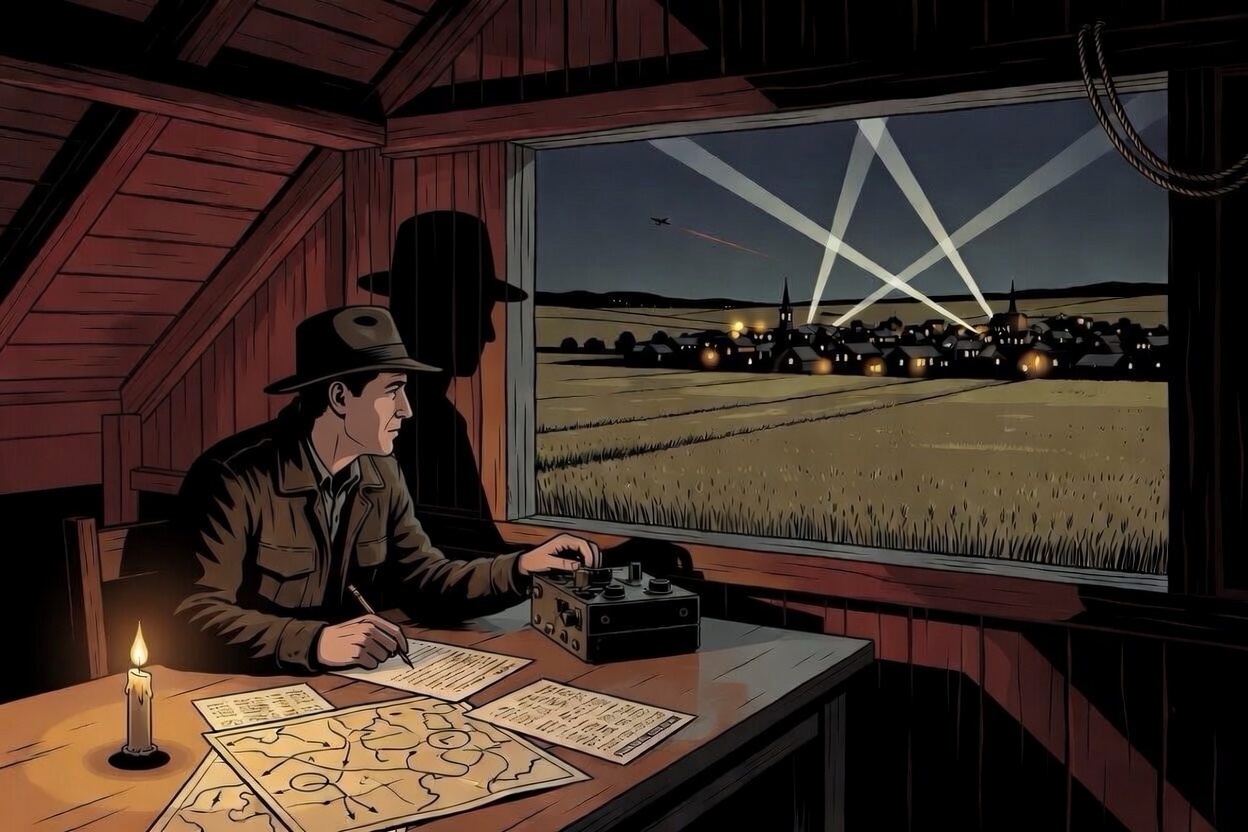
The Shadow War (1939–1945). Occupied Europe. Radio operators in farmhouses. Codebreakers behind blackout curtains. Resistance networks that work and resistance networks that have already been turned. The OSS is six months old and still figuring things out. The SOE is operational but incompletely trustworthy. Division 5 is the connection between them, handling the jobs neither service will put on paper. Cover is thin and capture usually ends one way. The Shadow War is the deadliest of the three eras, the most physically dangerous, and the one where a bad roll has the most permanent consequences. It is also the cleanest morally. The enemy wears a uniform and you know, mostly, which side you are on.
The Long Dark (1946–1989). Berlin, Vienna, Moscow, Havana. Two blocs, the Iron Curtain, and the Moscow Rules: do not go anywhere new, do not accept anything from a stranger, assume you are always being watched. This is the classic tradecraft era, the one the public imagines when they think of spies. Dead drops, brush passes, honeypots, moles, and the long game of turning an asset who may or may not already belong to someone else. The Long Dark rewards patience more than any other era. A well-built asset takes months or years to develop and is worth a decade of risks.
This era is also the most morally ambiguous. The enemy is a professional, a lot like you, and is sometimes genuinely right about the thing you are fighting.
Nightscreen (1990–Present). The Cold War is over. The shadow war is not. SIGINT dominates. Facial recognition rules the airports. Non-state actors, rogue corporations, and AI-assisted analysts have rewritten the map of intelligence work. The deepest cover now is a clean digital footprint, and Division 5 is one of the few services that can still build one from scratch. The Compromise Track accumulates faster in Nightscreen than in any other era because the digital trail never goes cold. The enemy may not be a government. It may be a firm, an algorithm, or an ideology without an address.
Touchstones
The table does not need to have seen everything on this list. It is a shared vocabulary, not a syllabus. Use it to calibrate the register you want, then set the list aside.
Film. Casablanca. Bridge of Spies. Tinker Tailor Soldier Spy. The Spy Who Came in from the Cold. The Lives of Others. Munich. The Bourne Identity. Mission: Impossible - Fallout. Allied. Atomic Blonde. The Courier.
Television. The Americans. Slow Horses. Spooks / MI-5. The Night Manager. Berlin Station. Callan. The Sandbaggers. Tehran. Homeland.
Books. John le Carré (especially Smiley’s People and The Spy Who Came in from the Cold). Graham Greene’s The Human Factor for claustrophobia. Ian Fleming when you want the high-gloss register. Charles Cumming, Mick Herron, and Robert Littell’s The Company for the institutional view.
Games. Night Witches for mission structure. Fiasco (the “Spy Game” playset) for interpersonal rot. Night’s Black Agents if the table wants to import monsters into the Anomalous Files optional module.
What This Book Is Not
Division 5 is not a military shooter. The mission is rarely “go in loud and win the firefight,” and the game is not built around clearing rooms for its own sake. When violence happens, it should be purposeful: extraction under pressure, a failed sneak that turns into survival, a sanctioned kill, a rescue, a desperate holdout, or a direct-action beat the table chose knowingly. The question is not whether spies ever shoot people. They do. The question is what the shooting costs, who notices, and what must be cleaned up afterward.
Division 5 is not a superhero game. No character is immune. The rules make capture, compromise, and death credible outcomes at every level of play. An operative who reaches Compromise 5 is gone from the field. An operative who is killed is dead. The next operative starts from scratch.
Division 5 is not a horror game. The world of D5 is the world outside your window, give or take a classified file cabinet and about eighty years. There are no monsters by default. The Anomalous Files optional module (available at the GM’s discretion) covers Cold War psychotronic programs and Nightscreen AI anomalies for tables that want to push toward the uncanny. Even there, the supernatural is never confirmed.
Division 5 is not a parody. Austin Powers is a fine film; this is not that game. The stakes stay real even when a scene earns a laugh.
The Cover Paradox
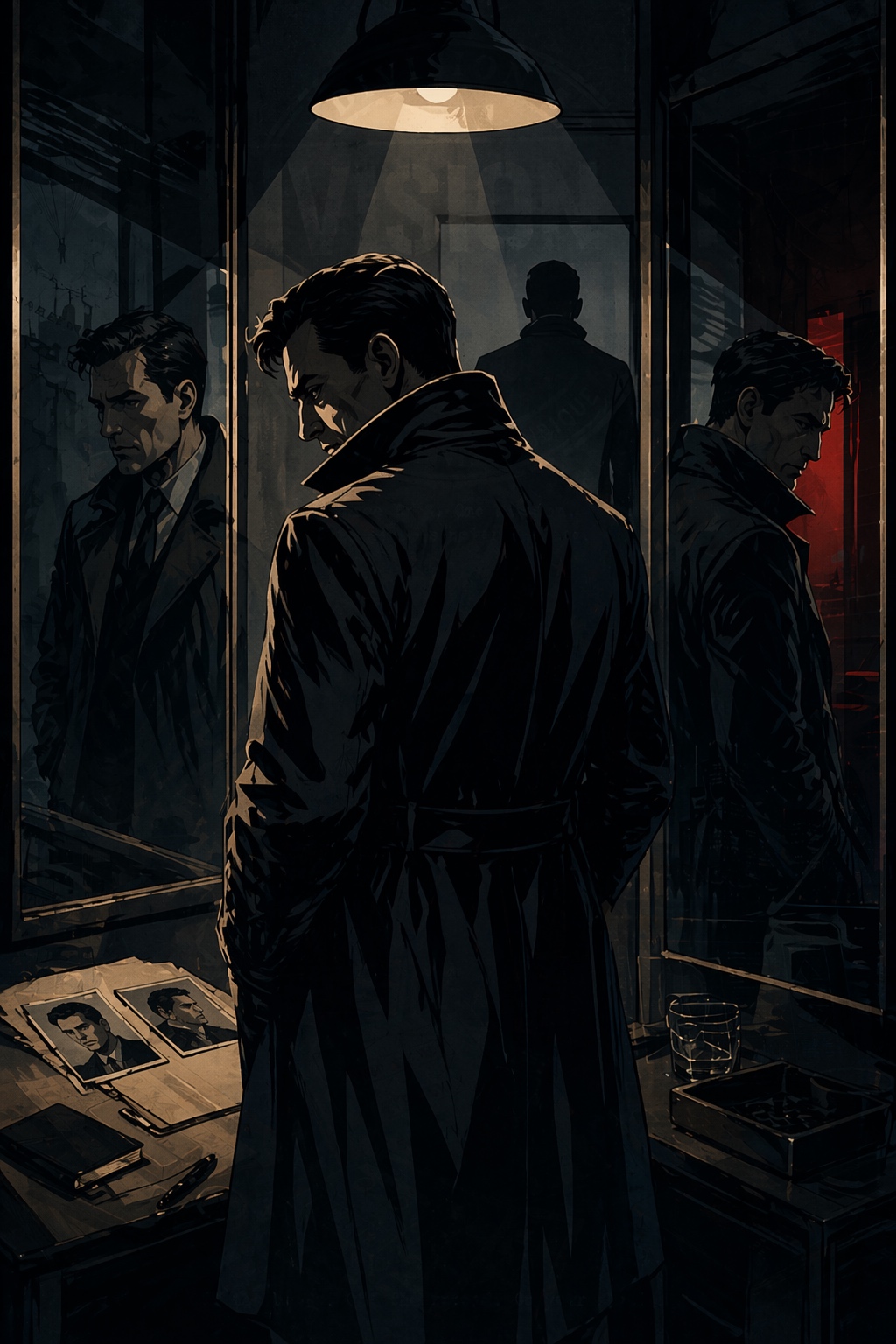
There is a structural tension at the heart of this game, and it is fair to name it.
Intelligence work is built on stable identity. Your Legend is your cover. You maintain it for months or years. Consistency is survival.
Roleplaying games are built on earned change. Characters level up. Relationships develop. Trauma reshapes them. The person who finishes the campaign is different from the person who started it.
These two models sit in friction. The same resistance that makes a spy good at tradecraft (the refusal to show who you really are, the professionalism that keeps emotion off the face, the Legend maintained even when no one is watching) is precisely what makes a character hard to play across an arc.
Division 5 resolves this by separating the layers. Your Archetype (what you do) and your Disposition (who you are) are locked at character creation and do not change. What changes is everything around them: your Legend stack (you burn identities and build new ones that never quite fit the same), your Compromise Track (you are more known than you were), your Tradecraft (you get better at the craft, which does not necessarily make you safer), and your relationships (the handler who sent you into the bad op, the asset who did not come back, the colleague who knows your real name, the enemy you have started to understand too well).
The character at the end of a Division 5 campaign is not the same person who started it. They just have the same name. The same job. The same registered face at a border crossing that stopped mattering twelve months ago.
How to Use This Book
The Front Matter lays out who should read what and in what order. The short version for this chapter: read Chapter One and Chapter Two for the world, then head to your chosen era’s sections in Chapters Four through Seven before the table’s first session.
A Note on Trust at the Table
The most important rule in Division 5 is not in Chapter Eight. It is right here:
The question “who do you trust?” is always live.
This game has structural support for double agents, sleepers, and moles. It has a character replacement system that allows a new operative to enter play without explanation. It has adversaries who look and sound like allies until they do not. These are features, not edge cases, and the table should know they exist before anyone sits down to play.
Using these features well requires a special kind of trust. Players must trust that the GM is not simply ambushing them. The GM must trust that players can absorb a gut-punch without it breaking the table. Everyone must agree that a character who turns out to have been working for the other side all along is the genre doing its job, not evidence that the game is cheating.
(Chapter Eleven has specific guidance for running that reveal without breaking the table’s trust.)
The shadow war rewards the table that walks in with its eyes open.
In This Chapter
- The Pitch
- Tone & Feel
- The Three Eras
- Touchstones
- What This Book Is Not
- The Cover Paradox
- How to Use This Book
- A Note on Trust at the Table