Printable cards Talent Cards 60
A talent is what you learned the hard way and now know well enough to teach. In this business, most of the teachers are dead.
A skill is what you can do. A talent is how you do it: the habit of mind, the reflex, the small trained instinct that makes the difference between a good operative and a great one. Skills are acquired in the classroom and on the range. Talents are acquired in the field, at cost, and the Ledger is full of entries that are, underneath, talents somebody paid for.
How Talents Work in Division 5
Division 5 uses the Exodus NDS talent framework with two additions specific to this Universe.
Talents are tiered. Every talent has a tier rating from 1 (novice) to 5 (master). For General Talents, tier is a power and cost marker, not a separate chain requirement: higher tiers do not require buying unrelated lower tiers first, though Tier 4 and Tier 5 should still have visible in-fiction justification (the full availability rule is under Talents at Creation and in Play, below). Tradecraft Tree talents are the exception: they follow strict tier order, detailed under The Six Tradecraft Trees.
Talents are either Passive, Action, or Incidental.
- Passive talents apply automatically whenever their conditions are met.
- Action talents require an action in a structured scene (replacing or modifying the character’s primary action for the turn).
- Incidental talents can be triggered without consuming an action, typically once per scene or once per session as noted.
The two Division 5 additions:
- Archetype Tradecraft Trees. Each of the six Archetypes (Chapter Three) has an associated Tradecraft Tree, five tiered talents representing the toolkit of that Archetype and available only to operatives of the matching Archetype. Trees carry era-specific flavor variants, the Handler’s Tier 2 talent reads differently in 1943, 1974, and 2024 while the mechanics underneath hold steady.
- The Tradecraft Pool fills the “signature power” slot. Division 5 runs with no magic, psionics, or powers; the slot other Exodus NDS Universes use for a supernatural signature mechanic is filled here by the Tradecraft Pool defined in Chapter Eight, detailed at the end of this chapter under The Signature Power Slot.
Talents at Creation and in Play
At character creation (Chapter Three), every character picks:
- Two General Talents, Tier 1 or Tier 2 only unless the GM explicitly approves a higher-tier exception, from the catalog later in this chapter or from the allowed Core Universal Talents.
- One Tradecraft Tree Talent at Tier 1 from their Archetype’s era-appropriate tree.
During play, additional talents are purchased through experience per the Core Rules. A good rule of thumb: a new talent per three to five sessions for an active operative. Talents can come from the General catalog (any Tier whose listed prerequisite the operative meets) or from the Archetype’s Tradecraft Tree (in strict tier order). After play begins, higher-tier General Talents are available when the character can pay the XP cost, meets the listed prerequisite, and has a visible in-fiction reason to have learned it.
An operative may hold any number of General Talents, but at most one Tradecraft Tree talent per tier from their own tree (see The Six Tradecraft Trees, below). Talents from another Archetype’s Tree are not available: cross-training is represented in the fiction, not the mechanics.
When this chapter says Boon die , Ability die , or another die name, it means an actual die added to a dice pool. When it says Boon result, Success, Breakthrough, or Calamity, it means the outcome after the dice are rolled. Talents that spend results cannot spend unused dice, and talents that spend Tradecraft Pool dice do not require those dice to have been rolled first.
Talent Costs in Division 5
Division 5 follows the Exodus NDS Core Rules talent cost model. Talents cost 5 XP per tier: Tier 1 costs 5 XP, Tier 2 costs 10 XP, Tier 3 costs 15 XP, Tier 4 costs 20 XP, and Tier 5 costs 25 XP. Ranked talents cost an additional 5 XP on each purchase after the first.
Core Universal Talents in Division 5
Division 5 keeps the Core Rules’ Universal Talents unless this section says otherwise. Use the Core Rules text for the talent; the notes below only explain D5 availability or terminology.
Where a Core Universal Talent names a core skill that D5 replaced, use the Core Skill Crosswalk in Chapter Four.
| Core Talent | Division 5 Use |
|---|---|
| Hardy, Steadfast, Skilled, Growth, Greater Growth | Available. These are the standard growth talents and remain legal D5 advancement choices. Growth and Greater Growth require GM approval at a major downtime or campaign break. |
| Keen Eye, Fast Hands, Guarded, Wayfarer, Specialist, Cool Head, Helpful, Momentum | Available as written. Choose D5 skills and D5 specialties when a talent asks for a skill or specialty. |
| Catch Breath, Conditioned, Strong Arm, Twist of Fate, Low Profile, Convincing, Danger Sense, Unshaken, Quick Recovery | Available as written. |
| Practical Expertise | Available with D5 substitutions: Engineering & Repair, Medicine, Cryptography, Cyber, Drive, Pilot, Demolitions, or Forgery, depending on the practical field. Do not choose core Craft, Science, or Operate by name. |
| Boon Reader | Available with D5 substitutions: Perception, Readiness, Streetwise, Knowledge (Geopolitics), Medicine, Cryptography, Cyber, Engineering & Repair, Survival & E&E, Tradecraft, Surveillance, Forgery, or Demolitions when the check is primarily informational. |
| Unbroken, Hardened, Rallying Words, Expert Care, Skeptic, Mental Fortress, Crowd Fighter, Reliable Skill, Resourceful, Mastery Spend, Silver Tongue, Master Infiltrator | Available as written. Use D5 skill names where the Core text names a replaced skill. |
| Commanding Presence, Defensive Operator, Masterful Recovery, Exploit Opening, Tactical Mind, Signature Skill, Peril Turner | Available as written. |
| Defiant Will, Legendary Skill, Signature Technique, Mythic Presence, Last Stand, Impossible Turn, Fatebreaker | Available, but usually reserved for late-campaign operatives. |
| Excluded Core Universal Talents | None by default. A table may restrict a talent for tone, but the base D5 rules do not ban any Core Universal Talent. |
Enhanced Information Spends
Some D5 talents sharpen an information roll rather than making Story Points cheaper. When a talent grants an enhanced information spend, the character may spend 1 Fortune Point after a relevant check. The spend follows the normal Story Point rules and flips to Peril afterward.
The spend does not add ordinary Successes. Instead, treat the check as if it generated +2 Boons usable only for information quality: ask one precise follow-up question, turn a vague answer into a named detail, learn who benefits, learn what evidence would prove the claim, remove one misleading context from the result, or make the answer safer to act on. The GM should relate the benefit directly to the check that was just rolled.
If the check failed but generated at least one net Boon, an enhanced information spend may convert the result into a useful failure: the character does not get the answer they wanted, but learns a concrete next lead, contradiction, or missing requirement.
The Catalog That Follows
This chapter has two halves.
The General Talents catalog lists Universe-neutral talents usable across all Archetypes and eras. Any character may take any of these. These are the talents every D5 officer could theoretically acquire: the professional vocabulary of the trade.
The Six Tradecraft Trees follow, one per Archetype, five talents each with era-specific flavor notes for Shadow War, Long Dark, and Nightscreen.
A brief closing note covers the Signature Power Slot.
Talents Versus Archetype Signatures
Each Archetype has a signature passive ability (Chapter Three) that is not a talent. The signature is the Archetype’s defining baseline capability and applies automatically from character creation. The Operative’s Jack of All Trades, the Handler’s Asset Network, the Analyst’s Pattern Recognition, the Face’s Cover Artist, the Wetworker’s Lethal Option, and the Quartermaster’s On the Bench are all Archetype signatures, not talents.
Talents layer on top of these signatures. A Handler with the Handler’s Asset Network signature plus the Handler Tree’s Tier 1 talent Recruiter has both capabilities simultaneously, and they stack in the obvious ways.
General Talents
Twenty-nine talents available to any Archetype. Presented in tier order.
Tier 1 Talents
Iron Nerve
Tier 1 · Passive
Once per session, when the character would take Strain from an Interrogation, fear, or social-pressure check, they may ignore the first point of Strain inflicted: not the absence of fear, but the trained capacity to function through it.
Common use: a hostile cocktail-party conversation that probes the character’s cover, a sudden revelation in a briefing, the first five minutes of an interrogation.
Linguist
Tier 1 · Passive
At acquisition, pick two additional languages the character is fluent in, beyond their starting two. At GM discretion, they may also have working familiarity (enough to read signs and follow a simple conversation) with one or two additional regional dialects. Linguist may be taken up to three times: each purchase adds two more fluent languages.
A character who already speaks a language fluently may add a specific regional dialect or accent to it for 2 XP, subject to GM approval and a plausible fiction justification (time in-country, a native contact, extended immersion). The dialect removes the accent-pressure penalty when the character operates in that specific regional context.
Note: Division 5 tracks language only when it matters to cover, access, or scrutiny. A character without Linguist is assumed to have two fluent languages (typically their native language plus one operational language). Use the language, dialect, and accent rules in Chapter Four when speech itself becomes operational pressure.
Field Medicine
Tier 1 · Passive
The character is trained beyond standard first-aid. They gain +1 Boon die on Medicine checks made in field conditions (outside a hospital, clinic, or equivalent facility). Additionally, they may perform stabilization on a dying character without any medical equipment at all, using improvised materials, at Average difficulty.
Crowd Blend
Tier 1 · Passive
The character knows how to disappear in a crowd. When in a populated public space (a market, a train platform, a major street, a shopping mall), the character gains +1 Boon die to Stealth and Tradecraft checks for avoiding notice or breaking a tail. Cameras watch the crowd too; see the sidebar below.
Nightscreen and Machine Surveillance
In Nightscreen, cameras, facial-recognition systems, and biometric checkpoints operate continuously and independently of human observation. Talents that grant stealth, disguise, or evasion bonuses defeat a human observer; they do not by themselves defeat a camera, an algorithm, or a biometric scanner. Beating machine surveillance takes equipment, Counter-Biometric specialization, Cyber support, or a talent that says so explicitly.
Lockpick
Tier 1 · Passive
The character has extensive training in mechanical locks. They gain +1 Boon die on Coordination checks against locks of any era-appropriate design, and may attempt a Coordination check against a lock with no tools (at one difficulty higher) using improvised implements. Does not apply to biometric, electronic, or cryptographic locks without a related talent (see the Quartermaster tree).
Handler’s Eye
Tier 1 · Passive
The character has the trained intuition for when a human asset is compromised, unreliable, or about to turn. Once per operation, when interacting with an asset, the GM will tell the character a single true piece of information about the asset’s current state: is the asset under duress? Is the asset being run by another service? Has the asset been compromised in the last seven days? The character names the question; the GM answers.
This talent overlaps with the Analyst’s Pattern Recognition signature. A character with both may use them in the same scene on different questions.
Combatives
Tier 1 · Action
The character has trained in an integrated close-quarters discipline: Sykes-Fairbairn for a Shadow War operative, Sambo, Krav Maga, or national-service combatives for Long Dark and Nightscreen, or the private-contractor descendants of those systems. Once per scene at Engaged range, the character may resolve a close fight as a combined entry: elbow into draw, knife hand into pistol retention, takedown into restraint, weapon strip into counterstrike.
Roll the highest of Brawl, Melee, or Ranged that plausibly applies. The GM increases the base difficulty by one step because integrated close fighting is dangerous and crowded. On Success, resolve the primary skill normally. On a Boon, the player may also apply one secondary effect from another close-combat skill: disarm, pin, silence, shove through a doorway, or prevent the target from drawing a weapon.
Prerequisite: Brawl 2, Melee 2, or Ranged 2.
Tracker
Tier 1 · Passive
The character can read foot-sign, vehicle traces, broken vegetation, disturbance patterns, and the absence of signs where signs should be. They gain +1 Boon die on Surveillance (Tracking), Survival & E&E, or Perception checks involving the location of a target by physical trace, and may attempt these checks where another character would have nothing to roll. In Shadow War partisan and modern E&E contexts the talent is operationally significant; in pure urban work it appears less often.
Long Eye
Tier 1 · Passive
The character has the trained marksman’s eye: distance, windage, posture, sightline, and the small movement that says the target is about to shift. They gain +1 Boon die on Sniping checks, and on Perception checks involving distance estimation, scope-aided observation, or recognition of a person at long range from features alone. Long Eye does not by itself make the character a sniper; it sharpens the eye that a sniper, observer, or Surveillance operator brings to the position.
Tier 2 Talents
Moscow Rules
Tier 2 · Passive
The character has internalized the Cold War surveillance-detection doctrine to reflex level. When making a Tradecraft or Surveillance check to detect, evade, or mount a tail, they gain +1 Boon die and may re-roll one die once per scene without spending a Fortune Point. In Shadow War, this talent is renamed Field Doctrine and applies to the field-officer practice of that era; in Nightscreen, it is renamed Signature Hygiene and applies to the full seven-signature attribution discipline described in Chapter Two.
Prerequisite: Tradecraft 2 or Surveillance 2.
Cold Closer
Tier 2 · Action
When an opponent would reveal a piece of information under Interrogation or social pressure, the character may make an enhanced information spend to obtain specific narrative details, upgrade the nature of the revelation, or compel a more complete answer.
Prerequisite: Interrogation 2, Negotiation 2, or Charm 2.
Photographic Memory
Tier 2 · Passive
The character recalls details with exceptional accuracy. Once per session, the character may ask the GM to describe one specific detail of a scene they observed previously in the campaign: a page of a dossier they glimpsed, the contents of a room they entered briefly, a face in a crowd at a prior meet. The GM must answer truthfully and in the detail the character would plausibly have registered.
This talent is narratively potent and should be used judiciously; it is a powerful investigative tool, not a free plot-solver.
Dead Ear
Tier 2 · Passive
The character is professionally trained to resist pharmacological and psychological interrogation. They gain +1 Boon die on Resilience checks in interrogation scenarios, and may re-roll one die once per scene without spending a Fortune Point when actively resisting pharmacological compromise. In Long Dark and Nightscreen campaigns, this talent is a near-necessity for any operative who may be taken alive.
Prerequisite: Resilience 2.
Burn Bag
Tier 2 · Incidental
The character has rehearsed their emergency-destruction protocols. Once per scene, as an incidental action, the character may destroy a specific piece of evidence on their person (a document, a microdot, a drive, a phone) in a way that is unrecoverable. The destruction requires no check if the item is small and immediately destroyable (paper burned, microdot swallowed); it requires a Coordination check if the item is larger or the destruction must be surreptitious.
Prerequisite: Tradecraft 1 or Demolitions 1.
Signature Weapon
Tier 2 · Passive
The character has a specific weapon they have trained with exclusively for years. Pick one firearm or one melee weapon at acquisition. When using that specific weapon, the character gains +1 Boon die to Ranged, Sniping, or Melee checks. The weapon has a name; the player names it. The weapon can be lost, stolen, or damaged, which temporarily disables the talent.
Flavor varies by era: a Shadow War Signature Weapon might be a specific Welrod; a Long Dark, a specific Makarov carried since training; a Nightscreen, a specific suppressed SIG P226 the Wetworker has modified personally.
Sapper
Tier 2 · Passive
The character has trained in the precise application of explosive and heavy destructive effect. They gain +1 Boon die on Demolitions checks where the desired result is controlled: a breach exactly the size needed, a structural cut that drops only the intended span, a charge that destroys the files without killing the clerks, or a heavy-effect action confined to a specific geometry. The talent does not improve raw destructive output; it improves the control of destructive output.
Prerequisite: Demolitions 2.
Counter-Tracker
Tier 2 · Passive
The character has trained in the deliberate denial of sign: broken-pace movement, terrain selection, false endings, split trails, and the small disciplines of leaving a trail that reads wrong. Opposing Tracking checks made against the character, or against a small group the character is leading, suffer +1 Bane die . Once per scene, the character may also choose to break the trail entirely; the next opposing Tracking check is one difficulty higher.
In Nightscreen, the GM may apply the talent to digital and camera movement patterns when the character has time to prepare the route.
Prerequisite: Survival & E&E 2 or Tradecraft 2.
Tier 3 Talents
Deep Cover
Tier 3 · Passive
The character has a talent for sustaining deep-cover identities. All of the character’s Standard and Deep Legends gain one additional box on their Burn Track. Additionally, a Deep Legend that has been rested for at least one full downtime period may be used without accumulating Compromise from pattern-of-life events for the first operation of its re-activation.
Prerequisite: Deception 2, Tradecraft 2, and at least one Legend already at “Deep” depth.
Plausible Deniability
Tier 3 · Passive
The character is unusually careful about attribution. When executing an operation under a cover identity, the character may use Exfiltration cleanup to turn prepared tradecraft into defensive attribution pressure. During Step 3 of the Attribution procedure, each Tradecraft Pool die the character spends counts as cleanup if the player names the signature it addresses: a Boon die becomes one Bane die , an Ability die becomes one Trial die , and a Mastery die becomes one Crisis die . Alternatively, a spent Boon die may remove one hostile Boon die when the cleanup directly addresses that signal. This follows the standard cleanup conversion rule, but Plausible Deniability allows the character to apply it to their own cover work even when the rest of the team did not frame a full cleanup scene.
Prerequisite: Tradecraft 3 or Cyber 3 (Nightscreen only for the Cyber prerequisite).
Quartermaster’s Friend
Tier 3 · Passive
The character has cultivated a working relationship with at least one of D5’s Quartermasters (an NPC, not a PC Quartermaster). Once per operation, the character may requisition one piece of modified or prototype equipment from the era catalog at no Requisition cost, subject to GM approval of the item. The item is borrowed and must be returned in working order at operation end; failure to return it reduces the next operation’s Requisition Budget by 1.
Prerequisite: At least one completed operation that ended cleanly, GM’s note of ongoing relationship with D5’s Q-Branch equivalent.
The Long Tail
Tier 3 · Action
When mounting a tail on a specific target, the character may declare an extended tail: a multi-day, multi-city surveillance operation. The GM resolves this as a single Surveillance check with expanded narrative scope; on a Success, the character gains substantial intelligence on the target’s pattern of life (GM discretion, but typically: daily routine, known contacts, regular locations, vulnerabilities). On a Calamity, the target becomes aware of the tail and takes countermeasures. The cost is one full week of in-fiction time during which the character is unavailable for other operational work.
Prerequisite: Surveillance 3.
Mole Hunter
Tier 3 · Action
The character has the trained instinct for the institutional anomaly that should not be there: the report that contradicts another report, the asset whose chronology will not close, the senior officer whose access pattern has shifted in the last six weeks. Once per operation, the character may declare a counterintelligence investigation thread. Until the thread resolves, the character gains +1 Boon die on relevant Knowledge (Counterintelligence), Knowledge (Geopolitics), Tradecraft, or Perception checks, and may make an enhanced information spend to obtain specific dossier-level details about the suspect.
The thread closes when the character has confirmed the mole, exonerated the suspect, or accepted that the question cannot be answered with current evidence. The investigation may confirm or clear the suspect; the Ledger records either outcome.
Prerequisite: Knowledge (Geopolitics) 3 or Tradecraft 3.
Master of Disguise
Tier 3 · Passive
The character is, professionally, an artist of the second face. They gain +1 Boon die on all Disguise checks, may carry a disguise kit as a permanent personal item that does not consume Requisition, and may, once per session, declare a rapid identity shift: completing a meaningful disguise change in a single scene break where the standard rule would require extended preparation. In Nightscreen, rapid identity shift defeats human observation only; biometric verification still requires equipment, Counter-Biometric specialization, or Cyber support.
Prerequisite: Disguise 3.
Tier 4 Talents
Ghost in the Wires
Tier 4 · Passive
The character’s digital footprint is professionally managed to a degree that exceeds standard D5 practice. They are effectively invisible to routine facial-recognition and metadata systems; hostile surveillance requires specific, targeted effort to acquire them at all. Mechanically, the character ignores the first Compromise mark from digital-trail events per operation, and may once per session spend 1 Fortune Point to clear one digital-trail-based Bane die from a check or to make an enhanced information spend on a Cyber or Tradecraft check involving digital attribution.
Prerequisite: Cyber 3 and Tradecraft 3. Available only in Nightscreen; Shadow War and Long Dark tables may grant a flavor-adjusted analog with GM approval.
The Long View
Tier 4 · Passive
The character has been in the game long enough to recognize campaign-level patterns that briefing officers miss. Once per campaign season (GM discretion; typically per 8–10 sessions), the character may ask the GM a question about the meta-arc of the current campaign and receive a truthful, useful answer. Question scope is broad: “Is there a mole in Division 5?” “What is the Nemesis’s ultimate objective?” “Is the current operation a setup?” The answer may be partial; it must not be misleading.
This is a campaign-level talent with deliberate scarcity. The GM may refuse to answer if the question is too broad, but must then help the player narrow the question.
Prerequisite: A character who has survived at least one “burning event” (major Compromise spike resolved without retirement); at least two Tier 3 talents.
Ghost Walker
Tier 4 · Incidental
Given a scene’s worth of warning, the character’s E&E training lets them simply not be there. Once per operation, when the character would otherwise be captured, killed, or detained at the end of a compromised scene, they may instead disappear into the surrounding terrain or city with no immediate opportunity for pursuit to close.
The cost: the character takes one Legend hit on the cover they were wearing during the compromise, accumulates one Compromise for the operation, and is unavailable to the team for the remainder of the current scene-block. They reach the next safe rendezvous on their own unless the GM has established that no route exists.
Prerequisite: Survival & E&E 3 and Tradecraft 3.
Tier 5 Talents
The Ledger
Tier 5 · Passive
The character has been granted reading access to the Ledger, D5’s oral-and-partially-written institutional memory. This is not an ordinary privilege; the character must have earned it through a campaign’s worth of service, and the Ledger chooses its readers. In practical terms, the character may once per operation consult the Ledger for direct guidance on the current mission. The GM resolves this as a pre-prepared piece of historical D5 experience that bears on the current situation, a prior operation that went well, or went badly, for similar-shaped reasons.
This talent represents the character becoming part of D5’s institutional continuity: their own entries will be in the Ledger after they retire.
Prerequisite: Character must have served at least two full campaign seasons; at least three Tier 3+ talents; GM approval at a narrative break.
Grey Retirement
Tier 5 · Passive
The character has begun the long quiet transition toward grey (see Chapter Two, D5’s retirement-without-ceremony). They have reduced exposure, cleaner records, and deeper Legends from the institution’s slow-cooking long-term preparation. Mechanically: the character clears Compromise at twice the normal rate during downtime, and may once per campaign season declare themselves “off the map” for one full operation, skipping it narratively while the rest of the team runs, and returning for the next operation with one Compromise level cleared.
This talent is, structurally, a character’s prepared exit. A character who holds Grey Retirement is signalling that their career is winding down. Some campaigns see this as the capstone the character works toward; others see it as the beginning of a slow farewell. Both readings are correct.
Prerequisite: Character must have served at least three full campaign seasons; the GM and player should agree that this is a deliberate character arc.
The Other Face
Tier 5 · Passive
The character has, somewhere in their career, built a second documented identity: fully papered, fully aged, and integrated into a real life that the character can step into for days, weeks, or in extreme cases months. The Other Face functions as a permanent Deep Legend with the Aged and Networked qualities, plus a unique additional quality: Independent. This explicitly breaks the normal two-quality limit for Legends.
Independent means the Other Face cannot be cross-referenced with the character’s primary identity by ordinary investigation. It does not appear in the same databases, does not share obvious documentary trails, and in Nightscreen has been protected by extensive Counter-Biometric work. The Other Face can only be Burned by an event that specifically targets it, and clears that compromise according to standard Legend rules. A character may have only one Other Face. Building another is a campaign-arc undertaking, not an XP purchase.
Prerequisite: Disguise 4, plus narrative justification: the character must have built the second identity through play, not at character creation.

The Six Tradecraft Trees
Each Archetype has a five-tier tree. Tree talents must be taken in strict tier order: Tier 2 requires Tier 1, Tier 3 requires Tier 2, and so on. A tree is a character’s professional specialization ladder within their Archetype.
Each tier is accompanied by era-specific flavor notes under the heading Era Flavor. The mechanical effect is identical across eras; the flavor describes how the talent is framed in the fiction. Tables running a single era can ignore the off-era notes.
Operative Tradecraft Tree: “The All-Rounder’s Arts”
The Operative’s tree reflects the field generalist’s trained breadth. From Tier 1 on, it sharpens the ability to bridge skill gaps and operate outside a nominal specialty.
Tier 1: Field Improvisation
Passive
Once per scene, when the Operative makes a skill check using a skill they have at Rating 0 (untrained), they may treat it as Rating 1 for that check: gaining one Mastery die they would otherwise not have.
Era Flavor. Shadow War: the SOE generalist’s training in useful incompetence: knowing just enough to try anything. Long Dark: the working Moscow-Rules officer’s reflex to attempt the job that the specialist isn’t available for. Nightscreen: the cross-trained modern officer who handles the Cyber task when the Analyst has been compromised, at the cost of doing it imperfectly.
Tier 2: The Second Plan
Incidental
Once per operation, as an incidental, the Operative may declare that they have a backup plan ready for a specific contingency that has just happened. Mechanically, this introduces a single useful fact into the scene: a second exit, a pre-stashed piece of gear, a contact who can help with the immediate problem. The GM may require the fact to be plausible given the Operative’s prior preparation.
Era Flavor. Shadow War: a buried cache in a specific field, a pre-arranged signal to a specific sympathizer. Long Dark: a second apartment rented on a rolling lease, a secondary dead drop. Nightscreen: a backup burner phone pre-connected to a second infiltration network, a pre-arranged extraction vehicle in a garage nobody knows about.
Tier 3: Clean Hands
Passive
The Operative leaves unusually small operational footprints. When the Operative succeeds on a check that would ordinarily generate a Compromise mark (a covered appearance in a surveilled zone, a social encounter that gave up too much information, a failure of small-scale tradecraft), they may spend two net Boon results from that check to prevent the Compromise mark. If the check did not generate enough net Boon results, the Operative may instead spend two Boon dice from the Tradecraft Pool, provided the player explains how prior preparation prevents the mark.
Era Flavor. Shadow War: the Operative who leaves no second set of footprints in the snow. Long Dark: the Operative who exits the park meet without the tail officer having quite placed their face. Nightscreen: the Operative who appears in the footage, but not in a way the algorithm catches.
Tier 4: The Generalist’s Eye
Passive
The Operative has developed a trained breadth-of-vision that few specialists match. Once per scene, when any other character at the table makes a skill check, the Operative may assist by offering a narrative contribution: a piece of cross-domain knowledge, a connection between things the specialists haven’t linked. The assist adds +1 Boon die to the check. This assist does not require the Operative to have any skill in the domain in question; the value is the cross-domain reading.
Era Flavor. Shadow War: the Operative in the briefing tent who notices the Analyst has missed a detail from the radio traffic. Long Dark: the Operative who, mid-operation, points out that the asset’s story does not match the station’s assumptions. Nightscreen: the Operative who sees the pattern that neither the Cyber specialist nor the Face has assembled.
Tier 5: The Field Marshal
Passive · Capstone
The Operative has reached the top of their craft. Mechanically, once per operation, the Operative may reroll any single check, their own or a teammate’s, and keep either result.
Era Flavor. Shadow War: the senior SOE officer running a late-war operation, every beat measured. Long Dark: the station’s deputy chief who has been through every failure mode already. Nightscreen: the senior officer whose name is on no press release but whose operations do not fail.
Handler Tradecraft Tree: “The Runner’s Craft”
The Handler’s tree reflects the asset-runner’s craft. Each tier deepens the Handler’s capacity to build, sustain, and protect the human relationships that carry the mission.
Tier 1: Recruiter
Action
Once per operation, the Handler may convert a civilian NPC into an Asset with a single successful Charm, Negotiation, Leadership, Streetwise, or Tradecraft check at a difficulty set by the GM based on the target’s predisposition. A successful recruitment yields a standard Asset (see Chapter Eight for Asset rules); the NPC is now available to the Handler as a cultivated source. The Asset remains cultivated across sessions until lost or retired.
Era Flavor. Shadow War: the Resistance-era recruitment of a village farmer, a railway clerk, a sympathetic schoolteacher. Long Dark: the cultivation of a Warsaw Pact official over months of patient contact. Nightscreen: the recruitment of a junior analyst at a private intelligence firm who has seen something unforgivable.
Tier 2: Safe House
Passive
The Handler begins each operation with one pre-established safe house in the area of operations. The safe house provides a secure meeting space, basic supplies, and enough paper-trail preparation to support a 48-hour presence without triggering surveillance. The safe house is narrative, the GM and player agree on its location and character at start of operation, and can be used once per operation for a specific purpose (meeting an asset, hiding an operative, stashing materials).
Era Flavor. Shadow War: a farm in the Limousin, a boarding-house room above a café, a shepherd’s hut in the Vercors. Long Dark: an apartment behind a shop, a back room in a neighborhood bar, a borrowed dacha outside the city. Nightscreen: a rented Airbnb under a burner email, a serviced apartment in the expatriate quarter, a short-term let in a district the surveillance has not covered.
Tier 3: Asset Doctrine
Passive
Assets personally recruited and sustained by the Handler are harder to break, the patient, specific work of preparing them for the kinds of pressure they will eventually face. When one of those Assets makes an Asset Check to resist compromise, interrogation, institutional pressure, panic, defection, or double handling, add +1 Boon die to the Asset Check. If the scene uses a full NPC statblock instead of the compact Asset profile, the NPC instead gains +1 Boon die on the relevant Resilience, Deception, Leadership, or Tradecraft check.
Era Flavor. Shadow War: the radio operator the Handler personally drilled on schedule discipline and counter-capture protocol. Long Dark: the long-handled Asset who has been drilled in the rehearsal scenarios the Handler prepared over years. Nightscreen: the corporate-insider Asset whose OPSEC and personal security protocols the Handler has walked through in detail.
Tier 4: The Network
Passive
The Handler’s Assets begin to form a network: a web of cultivated sources with their own internal relationships. Mechanically, the Handler has permanent access to a small Asset pool (typically three to five standing Assets, GM-curated) who are available for specific narrative uses across operations. Assets in the Network may be called upon for favors, information, or small operational tasks; the Network generates one minor piece of intelligence per downtime period at the GM’s discretion.
Era Flavor. Shadow War: a small Resistance cell the Handler runs personally: names, faces, kids, the whole texture of a sustained field relationship. Long Dark: a ring of contacts across a city, coordinating through the Handler without ever meeting each other. Nightscreen: a distributed, compartmented network of sources across multiple private-sector and state environments, linked only through the Handler’s personal knowledge.
Tier 5: The Institution
Passive · Capstone
The Handler’s Network is built to outlive them. Mechanically, the Network is durable, if the Handler is captured, burned, or killed, the Network does not immediately disband. The Network may continue operating under another Handler (PC or NPC). The successor treats each inherited Asset as having Trust 1 lower until they complete a successful Handling scene with that Asset; Exposure does not rise simply because the succession happened. In practical campaign terms, this means the Handler’s work persists, their Assets can be passed on to a successor rather than burned with the Handler’s retirement.
Era Flavor. Shadow War: the Handler whose Resistance cell continues after their capture, feeding intelligence to London through the war. Long Dark: the Handler whose Moscow asset network is inherited by a successor who knows three of the five names by face and the other two by reputation. Nightscreen: the Handler whose network of tech-sector sources is, after their retirement, picked up by another Handler with only moderate disruption.
Analyst Tradecraft Tree: “The Brain’s Arts”
The Analyst’s tree reflects the intelligence professional’s craft of reading, connecting, and predicting, turning raw information into operational advantage one tier at a time.
Tier 1: Ledger Sense
Passive
The Analyst has learned to read the Ledger with unusual care. On any Knowledge (Geopolitics) check that constitutes a Ledger Query (see Chapter Eight’s Intel Phase), the Analyst gains +1 Boon die . Additionally, the Ledger Query limit of “one per operation” is relaxed for this Analyst specifically: they may attempt a second Ledger Query per operation at +1 Crisis die (representing the increased institutional notice).
Era Flavor. Shadow War: the codebreaking sensibility that notices what Bletchley missed in a specific weekly batch. Long Dark: the desk-ranger’s trained sensitivity to historical precedent: the 1971 operation that matches the 1983 target’s shape. Nightscreen: the data professional who has read enough of D5’s archive to recognize the current target’s resemblance to a prior case.
Tier 2: Dossier Eye
Passive
The Analyst reads documents at professional speed and depth. When making a Perception or Knowledge check against a document, file, or data set, the Analyst may re-roll one Trial die once per scene without spending a Fortune Point. Additionally, the Analyst’s Dossier Dive checks in the Intel Phase contribute an extra +1 Boon die to the Tradecraft Pool on a Success.
Era Flavor. Shadow War: the operative who can read a captured Abwehr memo in twenty minutes and extract every usable fact. Long Dark: the desk officer who goes through six months of station traffic in a weekend and surfaces the one thread that matters. Nightscreen: the analyst who can parse a target’s digital footprint, recognize the significant anomalies, and flag them by name.
Tier 3: Pattern Hunter
Action
Once per operation, during the Intel Phase or at any narrative break, the Analyst may declare a Pattern Hunt, a focused analysis of the target’s pattern of life, operational history, or network. The GM provides a structured piece of intelligence, typically identifying a vulnerability, an associate, a regular activity, or a prior-operation parallel: that shapes the remainder of the operation. The Pattern Hunt takes narrative time (a full evening’s focused work, or equivalent) but cannot be disrupted by external events.
Era Flavor. Shadow War: the analyst who spends a night with the captured documents and emerges with the route the German convoy will take tomorrow. Long Dark: the desk officer who reviews two years of the target’s traffic and identifies the window of vulnerability. Nightscreen: the Cyber-literate analyst who correlates the target’s public behavior with their private data and surfaces the one weakness.
Tier 4: The Quiet Voice
Passive
The Analyst’s opinion now carries professional weight of its own. Mechanically, once per operation, the Analyst may direct the Intel Phase: deciding which checks the team attempts, which order they run them in, and which sources they prioritize. The GM awards one additional Ability die to the Tradecraft Pool at the end of the Intel Phase if the Analyst’s direction was followed.
Era Flavor. Shadow War: the junior analyst whose recommendations the desk chief has started reading first. Long Dark: the station analyst whose weekly summary goes on the director’s desk. Nightscreen: the senior analyst whose briefings are the ones the operational officers pay closest attention to.
Tier 5: The Architect
Passive · Capstone
The Analyst now designs operations rather than merely supporting them. Mechanically, once per campaign season, the Analyst may propose a full campaign-level operation: a multi-session arc targeting a specific outcome. The GM accepts the proposal as the spine of the next campaign arc and builds the season around it. This is a meta-level capability: the Analyst is no longer a participant in operations, but a contributor to the institutional architecture of the campaign itself.
Era Flavor. Shadow War: the late-war analyst whose proposed operations are adopted by the joint Anglo-American planning committees. Long Dark: the senior analyst whose strategic recommendations shape the next year’s operational priorities. Nightscreen: the director-level analyst whose cross-theater campaigns define what D5 is actually doing across a decade.
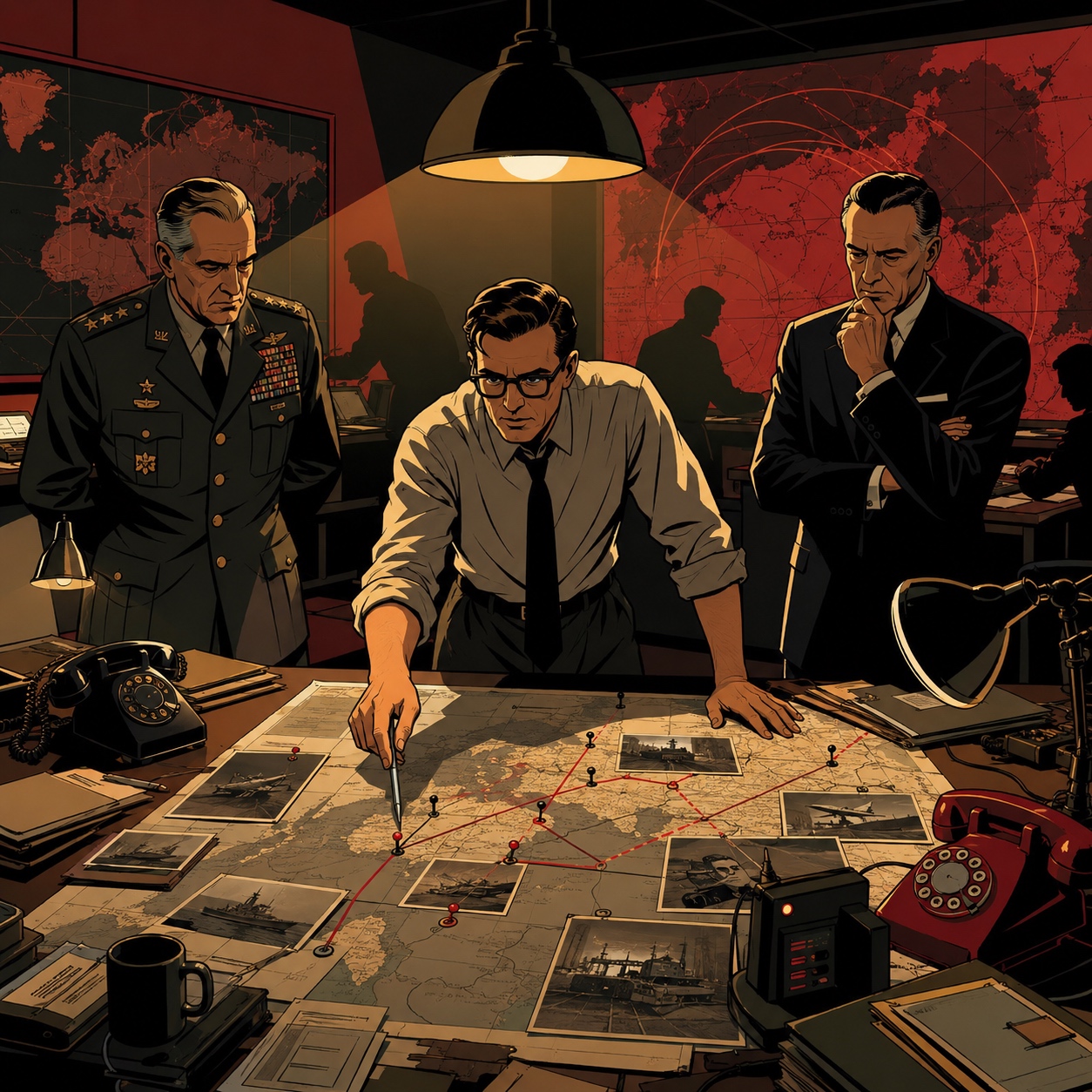
Face Tradecraft Tree: “The Charmer’s Arts”
The Face’s tree reflects the social infiltrator’s craft: living inside a cover identity, managing social encounters under pressure, and turning social contact into operational opportunity, all of it sharpened tier by tier.
Tier 1: Cover Artisan
Passive
The Face’s Legends gain one additional quality slot: each of the Face’s Legends may have up to three qualities (see Chapter Eight) instead of the standard two, more than any other Archetype manages.
Era Flavor. Shadow War: the cover as a Belgian wine merchant, complete with real wine-trade contacts and a plausible twenty-year trade history. Long Dark: the cover as a Swiss art historian, with real scholarly publications and a real museum appointment. Nightscreen: the cover as a regional risk analyst, with a genuine client list, real press appearances, and a credible academic affiliation.
Tier 2: Warm Entry
Action
When initiating contact with an unfamiliar NPC under cover, the Face may make a Charm check (Average) as part of the first interaction. On Success, the NPC begins the relationship pre-disposed toward the Face: treating them as if they had one prior friendly interaction. Mechanically, this grants +1 Boon die on all social checks with that NPC for the remainder of the operation.
Era Flavor. Shadow War: the first meeting at a black-market café, where the Face’s manner somehow already reads as “one of us.” Long Dark: the cocktail-party introduction that leaves the NPC certain they have met the Face before, if only briefly. Nightscreen: the conference-reception entry that puts the Face immediately on the list of people the target wants to talk to.
Tier 3: The Role
Passive
When operating in a Legend that has been in active use for at least one prior operation, the Face becomes the Legend for mechanical purposes in social scenes. Once per scene, when a social or knowledge check depends on expertise the Legend would plausibly have, the player may roll a related or adjacent trained skill instead of the normally called-for skill. A wine-merchant Legend might use Charm or Negotiation instead of Knowledge (Wine) to carry a wine-trade conversation; a regional-analyst Legend might use Deception, Tradecraft, or Knowledge (Geopolitics) depending on what the scene is actually testing. The substitute skill must be rated 1 or higher, must fit the Legend’s profession, and cannot be used for technical work the Face could not plausibly fake under pressure.
Era Flavor. Shadow War: the Face who has been a Belgian wine merchant so long that they actually can taste and grade a 1937 Bordeaux. Long Dark: the Face whose cover as a scholar has produced genuine expertise through years of cover-work. Nightscreen: the Face whose cover as a fintech consultant has actually given them working expertise in global payments.
Tier 4: The Second Face
Passive
The Face can sustain two full Legends simultaneously, living parallel lives at once. Mechanically, the Face may keep two active Legends running at the same time (Standard depth or deeper), each maintained as a live parallel life with its own paper trail and supporting cast, rather than switching between covers one operation at a time. This does not grant additional Legends; it lifts the normal one-active-Legend limit so both can be worked in parallel. The two active Legends must be geographically separated (different cities, different countries ideally) and the Face must divide their time plausibly between them. This capability is enormously valuable, and enormously burdensome; it requires constant maintenance and GM adjudication on time allocation.
Era Flavor. Shadow War: the officer running one identity in occupied Paris and a second in neutral Lisbon. Long Dark: the officer with a Vienna cover and a simultaneous Zurich cover, crossing between them quarterly. Nightscreen: the officer whose Dubai life and London life are both fully paper-trailed and operationally credible.
Tier 5: The Ghost Socialite
Passive · Capstone
At the top of the craft, the Face’s Legends are indistinguishable from real people, and their social footprint is, by design, unremarkable and pervasive. Mechanically, the Face’s Compromise Track accumulates at half the normal rate from social-encounter events (pattern-of-life events, digital-footprint events, first-impression-failure events), and the Face may burn a Legend without triggering the standard Compromise mark for a linked burn (see Chapter Eight).
Era Flavor. Shadow War: the officer whose face is remembered fondly by dozens of people across three countries, none of whom can give a useful physical description. Long Dark: the officer who has been a regular guest at three embassies’ holiday parties without any of the three knowing their real name. Nightscreen: the officer whose LinkedIn profile is perfectly credible, whose social-media presence is curated to algorithmic blandness, and whose face passes facial-recognition as an unremarkable expatriate professional.
Wetworker Tradecraft Tree: “The Specialist’s Arts”
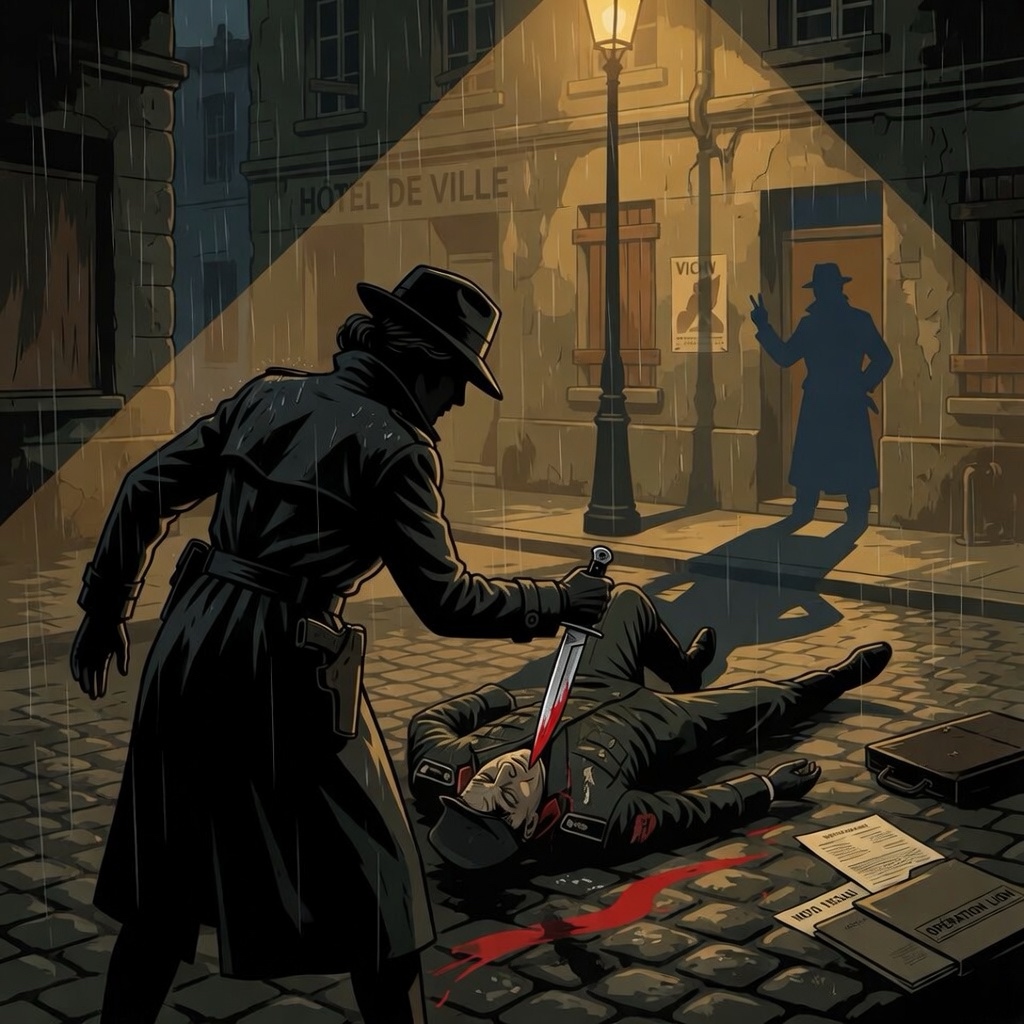
The Wetworker’s tree reflects the kinetic specialist’s craft. The tiers build toward decisive action delivered at the right moment, cleanly, and without cascade consequences.
Tier 1: Cold Focus
Passive
When making a Combat skill check in a scene that has not yet produced violence (the first attack of an engagement, the surprise round of an ambush, the silent takedown that opens a scene), the Wetworker gains +1 Boon die , the trained ability to act first, cleanly, from a place of calm preparation.
Era Flavor. Shadow War: the SOE operative setting the first charge of an ambush with the methodical precision of training. Long Dark: the Wetworker executing the silent takedown in the hallway: the first, only, and complete kinetic beat of the operation. Nightscreen: the private contractor whose first shot is the one that ends the engagement.
Tier 2: Silent Work
Passive
The Wetworker has specialized in suppressed, concealed, and unobtrusive weapons craft. When using a suppressed or concealed weapon, the Wetworker may spend one net Boon result from the relevant attack, Stealth, or Tradecraft check to reduce the scene’s noise footprint by one step: a firefight becomes a quiet engagement; a quiet engagement becomes an incident the neighbors will not even report. The GM adjudicates narratively.
Era Flavor. Shadow War: the Welrod used at close range; the blade used instead. Long Dark: the suppressed High Standard HDM that sounds like a dropped book, not a gunshot. Nightscreen: the PSS silent pistol, the lethal-injection pen, the garotte that leaves no ballistic trace.
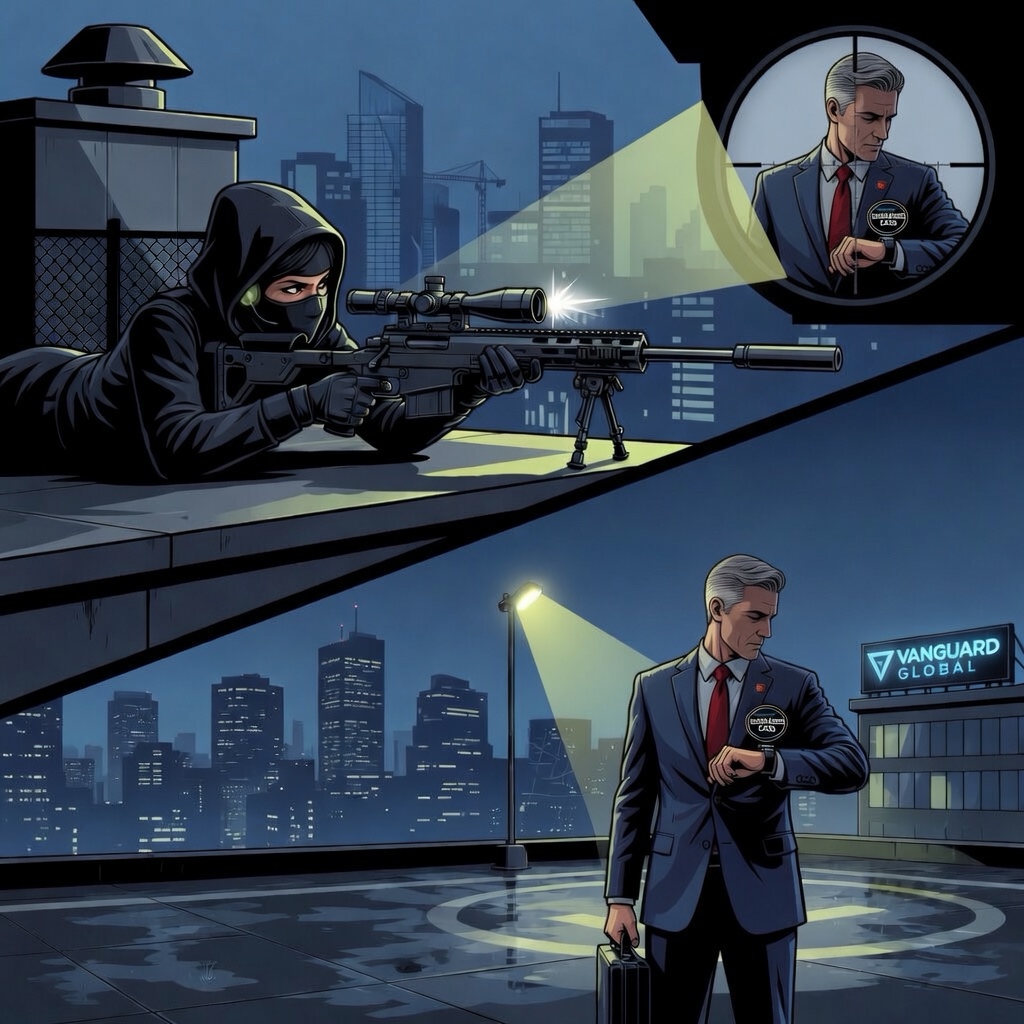
Tier 3: Precision
Action
Once per scene, the Wetworker may declare a called shot at a specific tactical outcome: a disabling rather than lethal injury, a silenced takedown without body damage, a specific weapon disabled rather than the wielder harmed, a specific location chosen for forensic reasons. The GM sets a difficulty one step higher than the basic combat check; on Success, the specific outcome is achieved.
Era Flavor. Shadow War: the operative who shoots the radio operator’s hand rather than kill the man. Long Dark: the sniper who places a round through the target’s briefcase from three hundred meters. Nightscreen: the Wetworker who puts the opposition officer down without damaging the phone in his pocket.
Tier 4: The Measured Hand
Passive
For the Wetworker, choosing not to act has become a discipline as powerful as acting. Mechanically, the Wetworker may refuse to use Lethal Option in a scene where the fiction would ordinarily invite it, and the refusal converts into a one-time narrative resource: +2 Boon dice on a non-combat check later in the same operation.
Era Flavor. Shadow War: the SOE officer who chooses not to kill the compliant sentry and instead uses him as a live source. Long Dark: the Wetworker who turns down a clean opportunity on a target and, three days later, uses the operational window to close the larger case. Nightscreen: the tier-one operator who lowers the weapon when the scene did not actually require firing it, and who is remembered by the extraction team for it.
Tier 5: The Shadow Craft
Passive · Capstone
The Wetworker has reached the level where their operations are, effectively, invisible. Mechanically, once per operation, the Wetworker may take a kinetic action (a takedown, a sabotage, a targeted strike) and immediately afterward declare that the scene left no forensic trail. The GM treats the action as not having attribution signatures of the standard kind; follow-up investigation will fail to link the action to the Wetworker or the team unless an independent source compromises them.
Era Flavor. Shadow War: the SOE officer whose late-war operations are not fully attributed even decades after the war. Long Dark: the Wetworker whose three signature operations are still officially unsolved mysteries in open archives. Nightscreen: the specialist whose signature work simply never generates an attribution trail worth following.
Quartermaster Tradecraft Tree: “The Tech’s Arts”
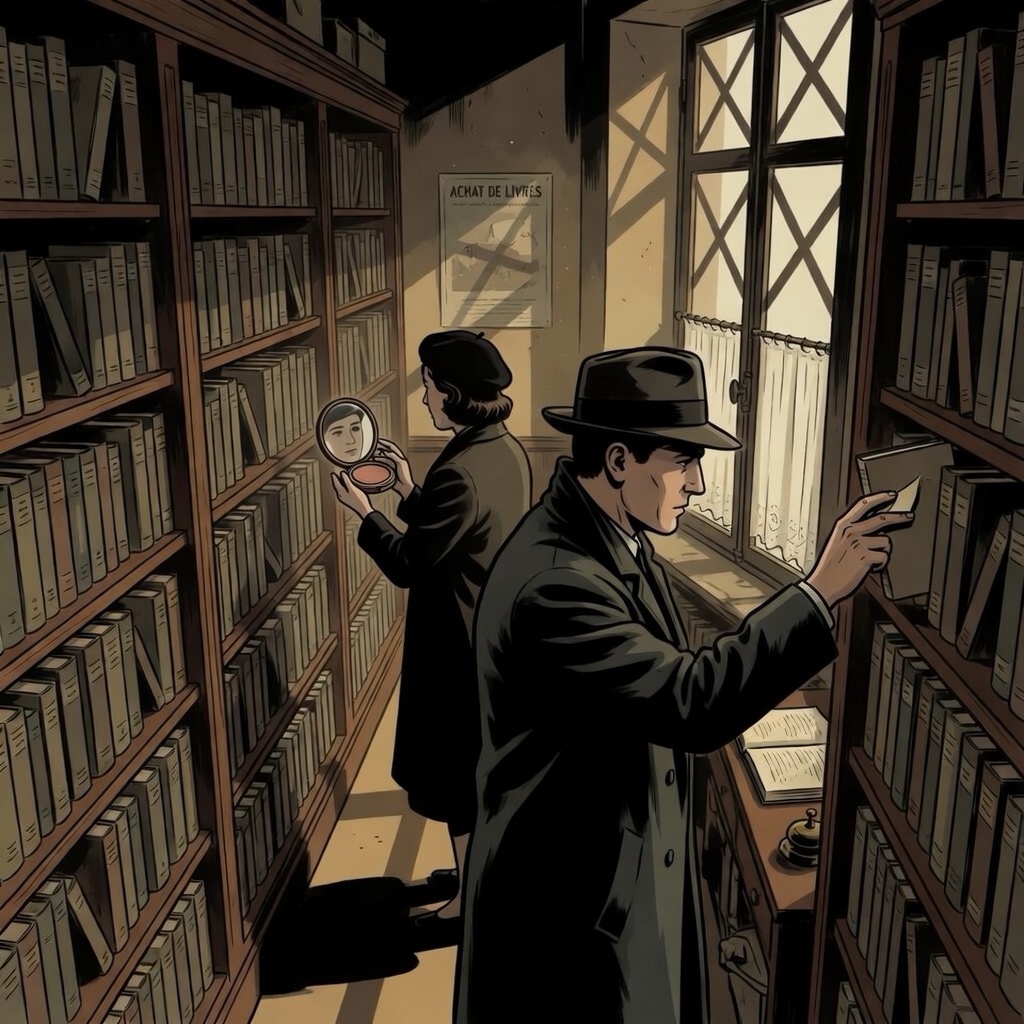
The Quartermaster’s tree reflects the gear-maker’s craft: the engineer, the armorer, the hacker. Each tier deepens the Quartermaster’s ability to build what the operation needs and defeat what the opposition has.
Tier 1: Bench Engineer
Passive
The Quartermaster’s Requisition Budget is calculated at +3 additional points at the start of every operation, representing the standing workshop capacity they bring to the team. Additionally, one piece of standard equipment per operation may be modified by the Quartermaster during the Intel Phase to grant +1 Boon die on a specific related check (an improved scope on a rifle, a silencer tuned to the specific weapon, a lockpick set customized to the mission’s locks).
At character creation this +3 does not stack with the Quartermaster’s creation Requisition modifier (Chapter Three, Step 8); that starting boost already reflects the same workshop capacity. The +3 applies to every operation after character creation, and the equipment-modification benefit applies from creation onward, so the talent remains worth taking on a starting Quartermaster.
Era Flavor. Shadow War: the SOE armorer who tunes the Welrod for the specific operative. Long Dark: the armorer working out of a rented garage on the edge of the city, building operation-specific concealment devices. Nightscreen: the hardware hacker who solders a custom signal jammer for the specific venue the team is infiltrating.
Tier 2: On the Shelf
Passive
The Quartermaster maintains a personal gear stash: a private workshop and cache that exists across operations. The stash contains three pre-built specialty items of the Quartermaster’s design, each usable once per operation. Each item must be named during downtime, must be era-appropriate, and normally should be Requisition Cost 4 or lower if it resembles catalog gear. Black, prototype, vehicle-scale, or mission-defining items still require ordinary Requisition, explicit brief authority, or a GM-approved acquisition scene. The stash is best used for tools that unlock an attempt, add +1 Boon die to a narrow prepared use, or answer a plausible contingency. The items may be swapped during downtime.
Era Flavor. Shadow War: a suitcase full of prototypes in a basement in London. Long Dark: a locked room above a print shop in East Berlin, well-stocked with specialty items. Nightscreen: a storage unit in Rotterdam that contains several generations of devices the Quartermaster has built over five years.
Tier 3: Counter-Tech
Passive
The Quartermaster has specialized in defeating opposition equipment. When acting against hostile surveillance devices, counter-intrusion systems, or other opposition technology, the Quartermaster gains +1 Boon die on the relevant check (Surveillance, Cyber, Coordination, or Demolitions as appropriate). Additionally, the Quartermaster may spend one net Boon result from that check to disable an active opposition device (a bug, a camera, an alarm system) for the remainder of the scene.
Era Flavor. Shadow War: the operative who knows where the German direction-finding vans are and can jam the specific frequency they operate on. Long Dark: the Quartermaster who recognizes the Stasi’s standard-issue audio surveillance and defeats it with a pre-built countermeasure. Nightscreen: the hardware hacker who recognizes the make and model of a hostile drone and brings it down with a targeted signal.
Tier 4: The Workshop
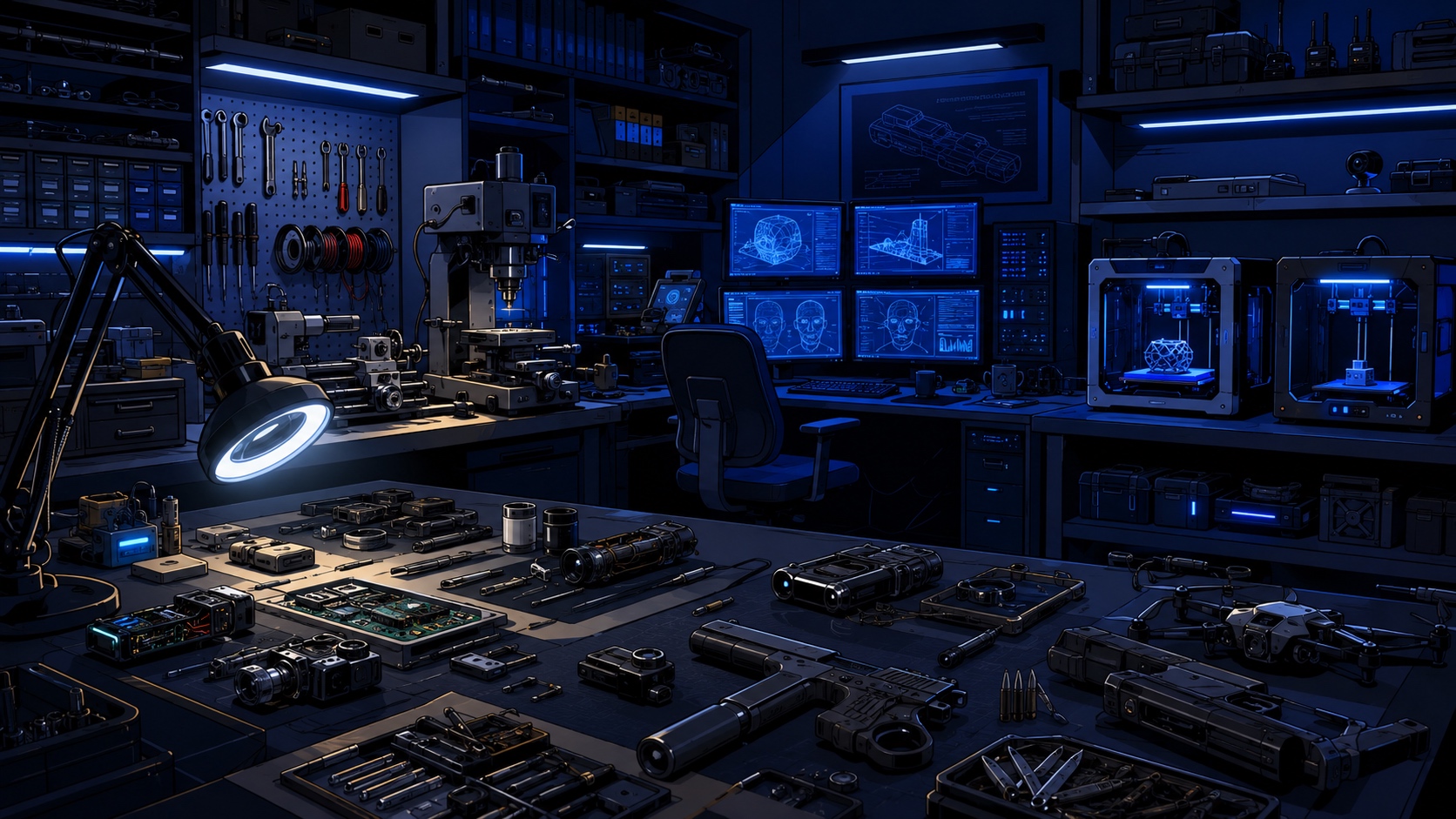
Passive
The Quartermaster has assembled a permanent workshop: a dedicated facility (real or virtual) for gear development and deployment. The workshop provides two things: first, the Quartermaster’s standing gear stash expands to five items (up from three); second, once per operation, the Quartermaster may introduce an improvised piece of equipment designed collaboratively with the GM to address a specific emergent problem, without Requisition cost.
The improvised item should be roughly comparable to Requisition Cost 5 or lower catalog gear and must still obey era availability, physical plausibility, and brief authority. Dangerous, illegal, explosive, or network-facing improvisations require an Engineering & Repair, Cyber, Demolitions, Forgery, or Tradecraft check as appropriate. On a Bane or Calamity, the item works but creates an attribution signature, a device flaw, or a future Quartermaster debt. The Workshop solves how the team can try something now; it does not automatically solve the operation.
Era Flavor. Shadow War: the SOE Experimental Station IX-equivalent that the Quartermaster runs on loan from the service. Long Dark: the workshop behind the Vienna optician, staffed by the Quartermaster and one trusted apprentice. Nightscreen: the industrial-estate unit in a European capital with machine tools, 3D printers, and soldering stations, registered under a shell corporation the Quartermaster controls.
Tier 5: The Signature
Passive · Capstone
The Quartermaster’s gear is recognized by name in the trade now. Hostile services have files on the Quartermaster’s distinctive work, the specific shape of their improvised charges, the signature of their custom silencers, the tell-tale design cues of their hacking tools. This is, paradoxically, an advantage: the Quartermaster can now deliberately leave a false signature, their gear can be made to appear as the work of another engineer or another service, by design. Once per operation, the Quartermaster may declare that a piece of their work on the operation has been signed with a deliberately misleading attribution signature, engineered to point straight at someone else; hostile attribution analysis converges on that wrong actor unless independently compromised.
Era Flavor. Shadow War: the Quartermaster whose signature improvised charge is used deliberately to credit a specific Resistance cell that did not, in fact, do the job. Long Dark: the Quartermaster whose custom concealment devices are used to frame an opposing service for an operation they had nothing to do with. Nightscreen: the hardware hacker whose distinctive code style is deliberately planted to attribute a cyber operation to a specific state actor.
The Tradecraft Tree Summary Grid
A one-page reference to the six trees, for GM-screen use.
| Tier | Operative | Handler | Analyst | Face | Wetworker | Quartermaster |
|---|---|---|---|---|---|---|
| 1 | Field Improvisation | Recruiter | Ledger Sense | Cover Artisan | Cold Focus | Bench Engineer |
| 2 | The Second Plan | Safe House | Dossier Eye | Warm Entry | Silent Work | On the Shelf |
| 3 | Clean Hands | Asset Doctrine | Pattern Hunter | The Role | Precision | Counter-Tech |
| 4 | The Generalist’s Eye | The Network | The Quiet Voice | The Second Face | The Measured Hand | The Workshop |
| 5 | The Field Marshal | The Institution | The Architect | The Ghost Socialite | The Shadow Craft | The Signature |
Capstone Notes
The Tier 5 talent in each tree is a campaign-capstone talent, and reaching one takes time. Before a character may purchase a Tree’s Tier 5 talent, the character must have served at least two full campaign seasons, earned several Tier 3+ talents, and passed narrative milestones the GM and player have agreed upon.
Capstones are structurally designed to be the character’s last acquisition: the shape of their legacy, mechanically expressed. A character holding a Tier 5 talent is usually within one season of retirement, promotion to grey, or campaign-level resolution. Tables that find themselves with three or four Tier 5 talents on the same team have reached the natural end of the current campaign generation.
The Signature Power Slot: Resolved by the Tradecraft Pool
Division 5 is a zero-supernatural Universe by design. No magic, no psionics, no powers. The mechanical slot that Exodus NDS Universes typically use for supernatural signature mechanics is filled in this book by the Tradecraft Pool defined in Chapter Eight.
The Tradecraft Pool is, mechanically, the equivalent of a “signature power resource”: a Universe-specific dice economy that every PC contributes to and every PC can spend from. The difference is that the Tradecraft Pool is earned through preparation (the Intel Phase) rather than through ambient access to a supernatural substrate.
Tables that want to import Division 5 into a cross-setting campaign with supernatural elements, a Night’s Black Agents-style overlay, for example, where the spies are also fighting vampires, may graft a supernatural signature system onto this framework. The Tradecraft Pool can coexist with such systems without structural conflict; the two mechanics do different work. The base book does not prescribe how that graft should be built.
On Custom Talents
Every table, eventually, will want a talent that is not in this catalog. That is fine. The guidance for designing one:
Name it. A talent has a specific name that describes its function. Iron Nerve. Cold Closer. The Long View. The name is half the work.
Tier it. Put the custom talent at the tier where its mechanical effect feels balanced against peers.
Scope it narrowly. A custom talent that improves a single specific skill in a single specific context is stronger design than a talent that gives a general bonus across many checks. Moscow Rules affects Tradecraft and Surveillance for tailing, not “all social checks.”
Test it once. The first session a custom talent is in play, the GM should watch how it behaves. If it dominates the scene every time it triggers, tone it down. If it never triggers, loosen the conditions. Two sessions of live testing will show what three hours of design cannot.
Version it. Write the talent down, with a date and a version number. When you revise it, note the revision. Custom talents that are documented and versioned become institutional: other GMs can use them, and the character who took it knows what they bought.
Tables that develop strong custom talents are encouraged to contribute them back to the community via the table of contents note in Chapter Twelve.
Custom Tradecraft Trees
Some campaigns need a seventh professional lane: a courier network specialist, a radio intercept officer, a medical clandestine specialist, a journalist-source operator, or a corporate penetration lead. Build those as Custom Tradecraft Trees rather than as loose one-off talents.
A custom tree has five tiers. It should be narrower than an Archetype and broader than a single mission specialty. The player and GM define the tree together before the first Tier 1 talent is purchased.
| Tier | Design Job | Mechanical Ceiling | Example Talent Shape |
|---|---|---|---|
| 1 | Establish the lane | +1 Boon in a narrow context, or one minor narrative permission | “Once per operation, establish a plausible courier contact.” |
| 2 | Make the lane reliable | Reroll one failed die in the lane, reduce one defined difficulty, or bank one small resource | “When moving a package through civilian traffic, reduce the first Tradecraft difficulty by 1.” |
| 3 | Turn the lane into doctrine | Team-facing benefit, asset-facing benefit, or repeatable preparation benefit | “During the Intel Phase, add 1 Tradecraft Pool die if the plan uses your network.” |
| 4 | Bend the operation | Once-per-session scene control, a strong escape clause, or a major attribution shield | “Once per session, declare a prepositioned route, safe clinic, or cutout that plausibly exists.” |
| 5 | Define the legacy | Campaign-scale capstone that changes what the character can retire into or leave behind | “At season end, convert the network into an enduring D5 asset or burn it to erase an operation.” |
Rules for building one.
- Anchor it to one job. A custom tree should answer “what professional problem does this character solve?” in a single sentence.
- Pick two signature skills. Most talents in the tree should interact with one of those skills. A tree that touches six skills is too broad.
- Choose an attribution profile. Every custom tree leaves a trace. A courier tree leaves route patterns; a medical tree leaves hospital records; a corporate tree leaves access logs.
- Write era skins. The mechanical talent can stay the same, but each era needs different fiction. A courier tree is bicycle-and-rail in Shadow War, diplomatic pouch and dead drop in Long Dark, platform logistics and encrypted parcel routing in Nightscreen.
- Require tier order. Custom trees advance in tier order like the Archetype trees; do not cherry-pick the Tier 4 talent without carrying the earlier doctrine.
- Keep the capstone terminal. A Tier 5 custom-tree talent should feel like the end of a career arc, not a routine efficiency purchase.
Example Custom Tree: The Cutout
Signature skills: Tradecraft and Streetwise. Attribution profile: route repetition, compromised intermediaries, and dead-drop surveillance.
Tier 1 might establish one reliable anonymous handoff per operation. Tier 2 might reduce the difficulty of moving a small item through a city. Tier 3 might let the team add a Tradecraft Pool die when the plan uses layered cutouts. Tier 4 might let the character declare a prepositioned dead-drop chain once per session. Tier 5 might allow the character to burn the entire network to erase the team’s physical route through one operation, permanently removing the tree’s active benefits until rebuilt in a later season.
In This Chapter
- How talents work: tiers, Passive/Action/Incidental, Archetype Tradecraft Trees, and the Tradecraft Pool as the signature-power slot.
- General Talents: Tiers 1–5, available to any Archetype.
- Six Tradecraft Trees: one per Archetype, five tiers each, era flavor for Shadow War, Long Dark, and Nightscreen.
- Capstone structure: Tier 5 talents as career endpoints.
- The Signature Power Slot: the Tradecraft Pool, detailed in full below.
- Custom talents and custom trees: design guidance for extending the catalog.