Printable cards Skill Cards 29
A skill, in this profession, is the muscle memory of a job done right and a job done wrong. You learned to pick locks because a door was closed and the key was three hundred miles away. You learned to lie because the truth was suicidal. You learned to read a train timetable in a language you did not speak because the departures board said verspätet and a man across the platform was looking at you in a way you recognized.
Every skill on the list that follows has a cost attached. Someone taught it to you, and they are not always available to be thanked.
How Skills Work in Division 5
Division 5 uses the standard Exodus NDS skill framework with small modifications for this Universe. Skills are rated 0 to 5 and are linked by default to one of the six characteristics. Characters build a pool by combining their characteristic with their skill: the core rule is unchanged.
This chapter presents twenty-nine skills organized into six categories:
- Combat Skills: four skills for scenes in which violence becomes necessary, chosen, or precise.
- Physical Skills: six skills for the body’s work: running, hiding, enduring, reacting under pressure, moving quietly, and surviving when the team is no longer there.
- Mental Skills: five skills for the analytical and technical side of the job.
- Social Skills: five skills for the work that is done across a table, with words.
- Vehicle Skills: two skills for moving through the world on wheels or wings.
- Tradecraft Skills (Universe-Unique): seven skills of the professional intelligence trade, found in no other Exodus NDS Universe.
Of the twenty-nine, twenty-two occupy the general Exodus NDS framework categories: combat, physical, mental, social, and vehicle skills, most of them retained, renamed, split, or folded from core skill spaces. The remaining seven are tradecraft-unique skills and are marked in their own category at the end.
Core Skill Crosswalk
Division 5 uses its own skill list. When converting from the Exodus NDS Core Rules, use this mapping for skills not retained. Melee, Athletics, Perception, Stealth, Readiness, Streetwise, Charm, Deception, Negotiation, and Medicine are kept as the core rules.
| Core Skill Space | Division 5 Treatment |
|---|---|
| Ranged | Retained as Ranged for ordinary firearms, thrown weapons, and non-sniper shooting. Precision rifle work that depends on sniper procedure uses Sniping. |
| Unarmed | Replaced by Brawl. |
| Fortitude | Replaced by Resilience for endurance, pain, poison, disease, interrogation resistance, and prolonged strain. |
| Reflexes | Split by function. Coordination handles fine motor reaction, balance, restraint escape, and precise body control. Athletics handles gross movement. Readiness handles surprise, nerve, and acting before danger lands. |
| Subterfuge | Split by function. Coordination handles locks, sleight of hand, small-device bypass, restraints, and physical manipulation. Tradecraft handles espionage procedure: dead drops, brush passes, SDRs, asset protocol, emergency contact, and Moscow Rules. |
| Lore | Replaced by Knowledge (Geopolitics) for intelligence, politics, history, services, finance, and institutional memory. |
| Craft | Replaced by Engineering & Repair for building, repairing, modifying, and sabotaging devices, vehicles, structures, and field gear. Use Demolitions, Forgery, or Cyber instead when the task is primarily explosive, documentary, or digital. |
| Science | Split by domain. Use Knowledge (Geopolitics) for political, historical, institutional, and intelligence analysis; Cryptography for codes and ciphers; Cyber for computer systems; and Engineering & Repair for applied technical design and diagnostics. |
| Leadership | Retained as Leadership, with D5’s Willpower-linked default. |
| Intimidation | Folded into Interrogation when extracting information or applying coercive pressure, and into Leadership when asserting command presence over allies, assets, or subordinates. |
| Operate | Replaced by Drive for wheeled vehicles and Pilot for aircraft, boats, and drones where appropriate. |
| Survival | Replaced by Survival & E&E. |
| Science / Craft hacking space | Replaced by Cyber in Nightscreen, rare specialist Cyber in Long Dark, and unavailable in Shadow War unless repurposed as Signals Engineering. |
Difficulty Step Shorthand
When a D5 rule says a check is one difficulty step easier or harder, move one step on the core difficulty ladder: Simple, Easy, Average, Hard, Severe, Extreme. A step cannot reduce a check below Simple; if the task has become too routine to matter, the GM may call for no roll. A step cannot raise a check beyond Extreme; if pressure would exceed Extreme, add Bane or Crisis dice , advance a clock, or rule that the attempt is impossible without changing the circumstances.
Ratings in Practice
A newly-inducted D5 operative has skill points to spend at creation. The distribution varies by Archetype (see Chapter Three) but the general shape is:
- Zero or one skill at 3 (the operative’s signature, if they took the optional signature skill).
- Three class skills at 2 (solid competencies), unless one was raised to 3.
- Two or three skills at 1 (familiar ground), depending on whether the optional signature skill was taken.
- Everything else at 0 until purchased through experience.
A senior officer, a recurring NPC at the station-chief level, say, might have one skill at 4 or 5 and three or four skills at 3. See the Skill Rating Scale, below, for how rare a 5 actually is.
Characteristic Links
Every skill has a default characteristic, the one it is most commonly linked to. Skills may, with GM approval, be used with a different characteristic when the fiction supports it. A Stealth check is typically Agility + Stealth, but a character moving silently while absolutely exhausted might make the check Willpower + Stealth instead, how long can you hold your breath and your body’s weight off the floor without your discipline slipping? These re-linkings are case-by-case, not a standing option.
Specializations
Many of the skills in this chapter allow sub-specialization: Brawl, Melee, Ranged, Sniping, Coordination, Readiness, Survival & E&E, Knowledge (Geopolitics), Perception, Streetwise, Medicine, Engineering & Repair, Tradecraft, Disguise, Surveillance, Demolitions, and Cyber. Cryptography also allows sub-specializations in practice. A specialization grants +1 Boon die on checks within its scope and costs 1 XP to acquire after the parent skill reaches rating 2. The GM should require a clear specialty name and a plausible training, mission, or downtime justification. Each skill’s entry lists its established specialties.
Tables may invent additional specializations with GM approval. A Perception specialization in Detail Recognition (for a forger-turned-officer), a Deception specialization in Written Lies (for an Analyst working through documents), a Negotiation specialization in Inter-Service Arrangements: all are plausible. Keep the list short; the specialization bonus should feel like texture, not a loophole.
Era Notes
Some skills mean different things in different eras. Cryptography in 1944 is paper and one-time pads; in 2024 it is lattice cryptography and side-channel analysis. As a rule, the underlying craft carries across the three eras while the tools, targets, and verification around it rotate; the notes flag the skills where more than the tools change. Where era matters for a specific skill, there is an era note inside the skill’s description. Tables running a single era can ignore the notes for the other two.
The default is simple: every skill is available in every era except Cyber, which is era-gated. The Cyber entry at the end of the chapter carries the full rule, including the Shadow War replacement option.
Skills Versus Talents
A skill is what you can do. A talent is how you do it. The two interact at every check: the skill sets the pool, the talent may modify the pool, add a re-roll, upgrade dice, or trigger a narrative beat. Chapter Five covers talents in depth.
When in doubt, a rule that says “skill” affects the dice pool; a rule that says “talent” affects how the pool is used.
The Skill Rating Scale
The core scale applies unmodified:
| Rating | Professional Meaning (Division 5 Register) | Pool Effect |
|---|---|---|
| 0 | Untrained. You have heard of this. You could describe it at a cocktail party. You cannot do it. | Roll Ability dice equal to the characteristic; no upgrades. |
| 1 | Novice. You have been to the course and passed it. You have not yet done the job. | Builds the pool by the Core Rules: higher of characteristic or skill sets total dice; lower rating upgrades dice. |
| 2 | Competent. You have done the job a handful of times. You will not embarrass the Division. | Normal baseline for an experienced officer in a skill. |
| 3 | Professional. You are the person the team turns to when this skill is needed. | Specialist territory; often the highest starting skill rating. |
| 4 | Expert. You are known outside D5 in this field, under a cover name. | Rare; usually gained through play or assigned to senior NPCs. |
| 5 | Master. You are, by internal D5 assessment, among the small handful of people in the world at this level. | Usually one per officer, if any at all. |
Combat Skills
Division 5 has four Combat skills. Most sessions will not call for any of them; when a session does, these skills decide how the violence resolves.
Sniping stands separate from Ranged; the distinction is explained in its entry. Heavy weapons, room-clearing, sentry removal, hostage rescue, and other specialist violence are applications of the Combat skills supported by specializations, talents, gear, and other professional skills.
Brawl · Might
Unarmed combat. Fists, feet, elbows, knees, and whatever improvised object is to hand. Brawl covers punches, grapples, restraints, and the silent takedown: choking a man unconscious without leaving bruises a coroner would notice, for example.
Brawl is a professional’s skill in Division 5, not a tavern-brawl skill. The D5 use of Brawl is almost always in close quarters, almost always against a single opponent, almost always for the purpose of silencing them, not defeating them.
Era notes. In the Shadow War, Brawl training leaned heavily on the Sykes-Fairbairn close-combat system developed at SOE’s Scottish training centers. A Shadow War operative with Brawl 3+ has almost certainly been through a version of that course. In Long Dark and Nightscreen, the schools are different: Krav Maga and its descendants, various national service hand-to-hand systems, and the body of professional technique that has accumulated since the 1970s.
Specializations. Brawl can sub-specialize into Silent Takedowns (ending a sentry without gunfire), Restraints (controlling a target without injury), Disarms (taking or neutralizing a weapon at contact distance), Close Protection (body placement, shield work, and extracting a principal), and Escape Holds (getting out of grabs, cuffs, or improvised restraint under pressure).
Common uses. Restraining an asset who has panicked. Surviving an ambush at contact range. Escaping a grab. Disarming someone who should not have brought a weapon to a meet.
Example check difficulties. Silencing an unsuspecting sentry with hands only: Average. Restraining a struggling asset without injury: Average. Taking down a trained opponent in the open: Hard. Surviving unarmed against multiple armed attackers: Severe.
Melee · Might
Combat with handheld weapons: knives, improvised clubs, the occasional blackjack or set of brass knuckles. In Division 5, Melee is overwhelmingly a knife skill. The profession’s knives are the Sykes-Fairbairn (Shadow War), the Bulgarian drop-point (Long Dark), and various modern fixed-blade tactical knives (Nightscreen). Operatives rarely carry longer weapons; a sword or baton is a specific, rare tool.
Era notes. None of substance; the knife and its technique, close, low, fast, and silent, carry across all three eras.
Specializations. Melee can sub-specialize into Knife Work (the professional close blade), Garrote (silent strangulation and control from behind), Improvised Weapons (hotel-room and street-object violence), Concealed Blade (drawing, hiding, and using scanner-plausible tools), and Sentry Removal (the coordinated approach-and-kill problem).
Common uses. The close-quarters kill. The defensive slash. The improvised weapon in a hotel room (a heavy lamp, a broken bottle, a length of electrical cord). The interrogation implement, used as a threat rather than in application: a professional D5 operative does not actually torture with a knife; the knife is a lever that changes the conversation without being applied.
Example check difficulties. A prepared ambush on a stationary target: Easy. A surprise close-quarters engagement: Average. A fight against an armed opponent at knife range: Hard. Defending against a knife attack while unarmed: Hard to Severe.
Ranged · Agility
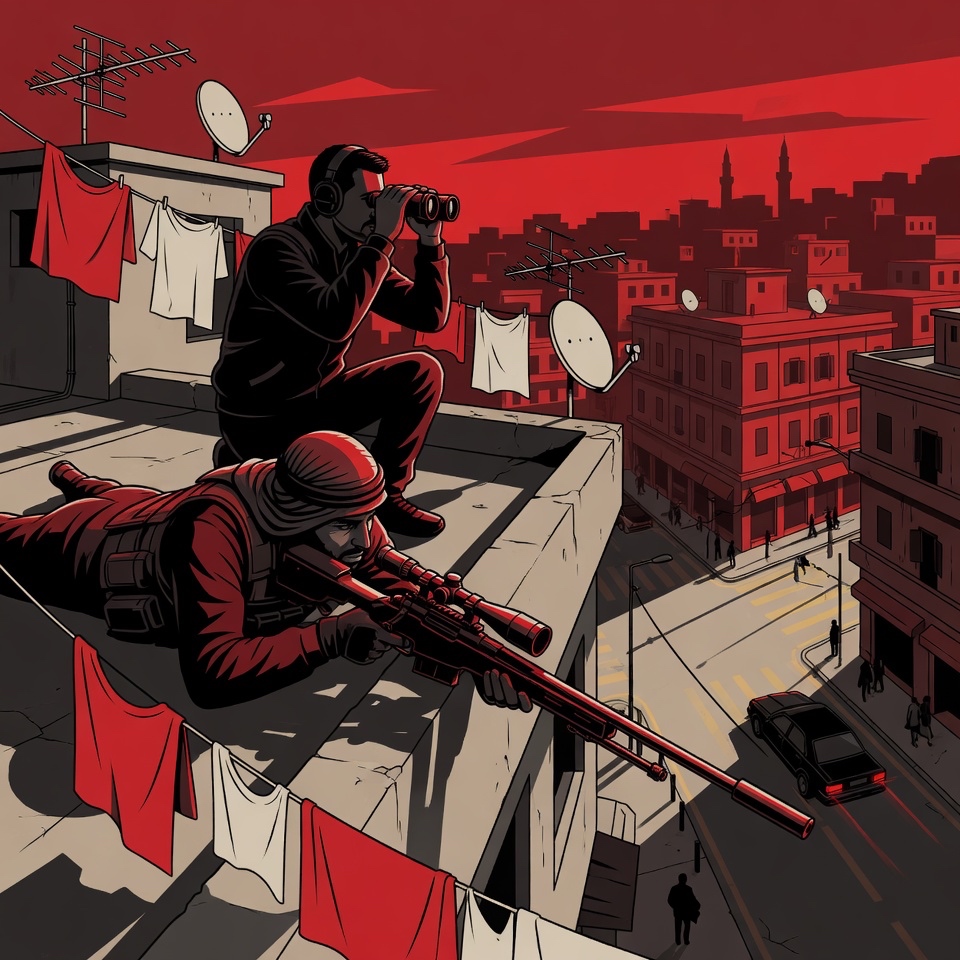
All firearms, from the Webley revolver through the Makarov through the SIG P226. Also covers bows and crossbows (Shadow War partisan work), thrown weapons (rare, but some gear qualifies), and, with GM discretion, heavier weapons such as grenades and breaching charges where precision rather than brute power is required (Demolitions covers the other half of that field).
Era notes. The Ranged skill’s behavior varies substantially across eras by virtue of the Era Framing rules in Chapter Eight. In the Shadow War, firearm damage is +1, weapons of this era are lethal with a single solid hit, and armor is largely absent. In Long Dark and Nightscreen, Ranged behaves at baseline, but firing in front of witnesses draws more scrutiny than the shot itself; see the Note on Combat, below.
Specializations. Ranged can sub-specialize into Pistol Work (the close-and-medium-range professional pistol register that is the D5 default), Rifle / Carbine (the operator’s long gun), Automatic Fire (suppression and beaten zones), Throwing (grenades, knives, and improvised projectiles), and Less-Lethal (beanbag, baton, gas, dart, and specialty capture rounds where era-appropriate).
Common uses. Suppressive fire during an emergency extraction. Ordinary pistol, rifle, carbine, thrown-weapon, or automatic-fire work. A discreet pistol shot at close range. A disabling shot in a firefight where the main question is aim under pressure rather than sniper discipline. The weapons retention fight, when the opponent has closed and the fight has become a contested pistol at bad-breath distance.
Example check difficulties. A controlled pistol shot from good cover at a stationary target inside ordinary firearm range: Average. Covering a teammate’s withdrawal under pressure: Hard. A running gunfight through a civilian area: Severe.
Sniping · Agility
Precision rifle work at ranges, angles, and time scales where ordinary shooting is no longer the whole task. Sniping covers range estimation, wind reading, ballistic solution, hide discipline, target confirmation, spotter coordination, counter-sniper work, and the long patience of waiting for the one shot that may never become authorized.
A D5 sniper does not simply hit targets at distance. A D5 sniper turns a shot into a controlled event: the target is confirmed, the condition is met, the line of fire is understood, the exit is planned, and the scene’s attribution has been considered. A character with Ranged 3 can shoot well. A character with Sniping 3 can conduct professional overwatch or a prepared assassination shot.
Sniping attacks target Ranged Defense unless a specific called effect or vehicle rule says otherwise.
Era notes.
- Shadow War. Bolt-action precision rifles, partisan hides, rough optics, and field judgment. The classic task is the single shot against an officer, collaborator, or courier at a known waypoint, followed by a long walk-out.
- Long Dark. Dedicated marksman rifles, improved optics, and sniper work mostly kept at the edge of D5’s institutional practice. The usual work is the observation post supporting a defection, exchange, or extraction, with the shot held in reserve.
- Nightscreen. Modular precision rifles, laser rangefinders, computed ballistic solutions, suppressed platforms, drone-assisted observation, and biometric attribution risk. Typical employment is standoff overwatch on a high-risk meet.
Specializations. Sniping can sub-specialize into Long-Range Precision (the classical long shot), Counter-Sniper (finding and neutralizing an opposing sniper), Static Overwatch (holding a hide for hours or days in support of an operation), Urban Sniping (glass, angles, crowds, cameras, and short exposure windows), and Anti-Materiel (precision shots against vehicles, equipment, sensors, locks, or engines rather than people).
Common uses. Standoff overwatch. The denied-area assassination shot. The disabling shot on a fleeing vehicle or carried object. Counter-sniper action when the opposition has read the same playbook. The last-resort hostage-rescue shot, authorized only when every other option has closed.
Example check difficulties. Stationary target at known range from a prepared position: Average. Moving target through an urban window at uncertain range: Hard. Shot through glass with no certainty what is behind it: Hard to Severe. Counter-sniper engagement against a hidden professional: Severe, and one of you may be dead within the next two checks.
Shot Advantage
Sniping uses Shot Advantage when the shot is a scene, not a reflex attack. Use it for assassinations, overwatch, counter-sniper work, anti-materiel shots, hostage-rescue shots, and any operation where the table cares about the difference between “I fire” and “I built the shot.”
Shot Advantage is a temporary pool for one declared sniper shot.
- It starts at 0.
- Its maximum equals the shooter’s Sniping rating (minimum cap 1 for an untrained emergency attempt).
- It is built during Intel, setup, and aiming.
- It is spent only on the declared sniper shot.
- It clears after the shot, abort, relocation, or scene end.
The cap still applies. A character with Sniping 3 can hold at most 3 Shot Advantage no matter how much preparation the team performs. Extra successful preparation should still matter narratively: it may reduce Compromise, identify abort conditions, improve exfiltration, or prevent Soured Intel, but it does not increase the shot pool beyond the cap.
In structured play, a D5 Aim maneuver is the core Aim maneuver applied to Shot Advantage. It does not stack with a separate core Aim bonus. The sniper either uses the maneuver to add Shot Advantage up to the cap, or takes the ordinary core Aim benefit if the GM is not using Shot Advantage for that shot. Aiming prevents meaningful movement. If the table is resolving the scene in broader turns, aiming consumes the sniper’s turn. Each Aim maneuver can add Shot Advantage up to the cap, but each one also gives the GM permission to advance scene pressure.
| Source | Typical Check | Gain |
|---|---|---|
| Pattern of life confirmed | Surveillance | +1 |
| Clean firing position secured | Stealth or Survival & E&E | +1 |
| Range, wind, and ballistic solution prepared | Sniping | +1 |
| Target identity and kill condition confirmed | Perception or Surveillance | +1 |
| Exit and signature-control plan established | Tradecraft | +1 |
| Spotter provides a concrete assist | Perception, Surveillance, or Sniping | +1 |
| Aim maneuver in-scene | No roll, or Sniping under pressure | +1 |
| Spend | Effect |
|---|---|
| 1 | Add +1 Boon die to the Sniping check. |
| 1 | Cancel 1 Bane die from wind, range, glass, movement, bad rest, poor light, or similar pressure. |
| 1 | Ignore 1 Resistance on a hit. |
| 1 | Add +1 damage on a hit. |
| 1 | Lower the weapon’s Critical threshold by 1 for this shot, minimum Critical 2. |
| 2 held | Enable Clean Kill or another decisive called effect on a hit: kill, incapacitate, disable limb, destroy object, or disable vehicle component, if the fiction supports it. These points must remain unspent until the shot resolves. |
| 2 | Keep the shot cleaner: reduce ballistic, witness, position, or escape-route signature by one step, if the fiction supports it. |
Clean kill. If the target is unaware, the shooter has a prepared position, the weapon is appropriate, and the Sniping check succeeds with either 2+ held Shot Advantage or a triggered Critical Injury (by spending a Breakthrough or spending net Boons equal to the weapon’s Crit rating), the target is killed or incapacitated at the player’s declared level, subject to target tier and fiction. Held Shot Advantage is not spent for dice, damage, Resistance, or signature control before the roll; it is reserved to make the successful shot decisive. Minions usually die. Elites die or are incapacitated if the setup was clean. Nemeses suffer a severe wound, forced retreat, or campaign-changing injury unless the whole arc has built to the kill.
Waiting cuts both ways. Every extra Aim maneuver improves the shot, but gives the GM pressure: target movement, bystander crossing the line, guard entering the sight picture, wind shift, spotter losing view, counter-surveillance advancing, or the mission window closing. The player may always abort. A professional sniper’s most common successful action is not firing.
Assassination procedure. For sanctioned sniper wet work, run the scene in order: confirm authority, build the shot, secure the position, confirm target and kill condition, take the Sniping check, resolve effect, then exfiltrate and run attribution. The shot can be mechanically lethal. The operation is dramatic because the team must earn the moment where that lethality is justified, clean, and survivable.
Covert Combat Applications
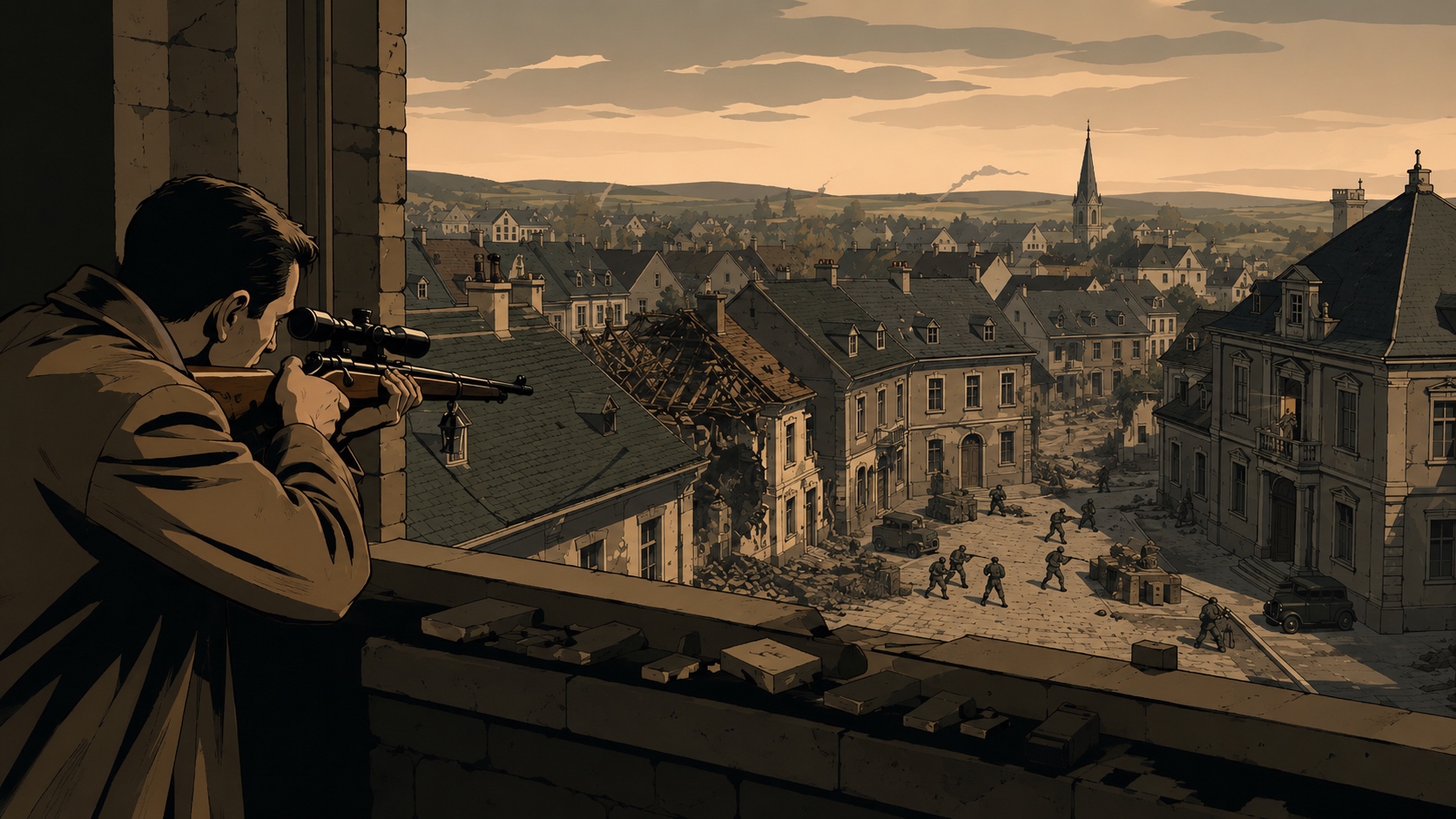
Use the Combat skill that answers the immediate physical problem, then ask what professional discipline supports it. A clean hostage-rescue shot is Sniping if it depends on precision rifle discipline, but the permission to take it usually comes from Perception, Surveillance, and the mission brief. A door breach may be Demolitions, Ranged, or Coordination depending on whether the answer is explosive, ballistic, or quiet.
| Action | Primary Check | Supporting Skills | Failure Cost |
|---|---|---|---|
| Silent Takedown | Brawl or Melee | Stealth, Perception | Noise, injury, witness, missing-person clock. |
| Take Alive | Brawl | Medicine, Leadership, Drive | Target injured, target screams, wrong person, Exposure. |
| Close Protection | Brawl or Athletics | Perception, Drive, Leadership | Principal hurt, route blocked, public incident. |
| Room Entry / CQB | Ranged or Brawl | Perception, Tradecraft, Leadership | Crossfire, civilian harm, +Compromise. |
| Overwatch / Sniping | Sniping | Surveillance, Perception, Survival & E&E | Missed window, ballistic signature, public death. |
| Vehicle Interdiction | Ranged or Drive | Surveillance, Demolitions | Crash, civilian casualty, police response. |
| Breach | Demolitions, Ranged, or Coordination | Tradecraft, Perception | Alarm, wrong room, excessive damage. |
| Base of Fire / Heavy Weapons | Ranged | Leadership, Demolitions | Public Heat, attribution, collateral injury. |
| Sabotage Under Fire | Demolitions | Stealth, Ranged, Survival & E&E | Premature detonation, captured gear, team pinned. |
Heavy weapons. Belt-fed guns, rockets, mortars, anti-materiel weapons, and mounted weapons use Ranged when the problem is aim and fire discipline; Demolitions when the problem is placement, shaped effect, or destructive geometry; and Pilot or Cyber when the weapon is platform-controlled. Heavy weapons fire in a civilian space is +2 Compromise and usually creates an automatic Public Heat or attribution signature. There is no such thing as a deniable mortar strike.
A Note on Combat in Division 5
The Exodus NDS combat system works the same here as in any other Exodus NDS Universe. The difference is tonal.
In Division 5, violence is a tool with a bill attached. An operation that ends in a firefight may have gone wrong, or it may have reached the part of the brief where force was always possible: an extraction under fire, a sanctioned kill, a rescue, a breached safe house, a failed infiltration, or an opposition ambush. Well-run D5 operations often end without a shot being fired, but spy stories also include the moment when someone hears the team break in and opens fire.
The rules care about the bill. Firearms discharge in public can add Compromise. Heavy weapons create obvious signatures. Nightscreen gunplay creates cameras, casings, forensics, and platform traces. Long Dark violence draws institutional attention in a world where professionals notice deviations. The GM should not disallow violence by lecture. Let the scene resolve, then make the aftermath concrete: witnesses, bodies, missing persons, attribution, asset exposure, Public Heat, and cleanup.
All four Combat skills remain important. You will use them, and they matter when the operation becomes physical. The specialized end of violence is still here: snipers, breachers, close-protection officers, knife workers, capture teams, and paramilitary support. The game treats those scenes as mission pressure rather than as a separate tactical mini-game.
Compact Combat Walkthrough
Use this when violence breaks out inside an operation and the scene needs to flow without being a full tactical exercise.
Scene. Long Dark, Vienna. The team is inside a records office after hours. A night guard enters early. The brief allows covert entry and file copying; it does not authorize a public firefight.
Approach. The Operative tries to close quietly before the guard reaches the alarm. The GM calls for Stealth opposed by the guard’s Perception. The Face assists by speaking from the hallway to hold the guard’s attention. This is an Assisted Check: the Face’s concrete assist adds +1 Boon die . If the Face had more Stealth ranks than the Operative, the assist could add +1 Ability die instead of the normal Boon die , within the normal two-assisting-dice cap.
Action. The Operative succeeds and reaches Engaged range. The player chooses Brawl rather than Melee because the goal is to take the guard alive and quiet. The attack uses the normal core combat procedure: one Action, Brawl check, damage if it hits. Extra Successes add damage. Boons can impose a temporary condition, keep the guard from crying out, or set up the next ally.
Result. The hit lands with 2 Boons. The player spends the Boons to make the takedown quiet and Prone the guard rather than chasing extra damage. The guard is not dead. The GM marks no Public Heat, but notes a future witness risk unless the team handles the guard before Exfiltration.
If it went loud. A failed Brawl check with Banes might let the guard shout, hit the alarm, or identify a face. That does not automatically start a firefight. It creates a choice: flee, restrain the guard with higher force, burn a Legend, spend Tradecraft Pool dice, or accept Public Heat and run Attribution at debrief.
If it turned lethal. A knife or pistol would use Melee or Ranged, and a Breakthrough or enough Boons could trigger a Critical Injury per the core rules. In Division 5, that is not just more damage; it changes the operation’s category, and the bill described in the Note on Combat comes due.
Physical Skills
Six skills for the body’s work.
Athletics · Might
Running, climbing, swimming, jumping. The baseline physical competence of a field operative. Athletics is the skill that keeps a chase alive when the car is no longer an option. A D5 operative with Athletics 2 can reliably escape a foot pursuit through a city; at 3 they can escape across roofs.
Common uses. The chase scene. Crossing a border on foot through terrain. Climbing up a drainpipe to a third-floor window. Swimming a harbor in cold water. Carrying an injured asset across a neutral ground.
Example check difficulties. Scaling a standard commercial wall with handholds: Easy. Swimming across a mid-sized river in fair conditions: Average. Rooftop chase through urban terrain at speed: Hard. Crossing a glacier with inadequate equipment: Severe.
Coordination · Agility
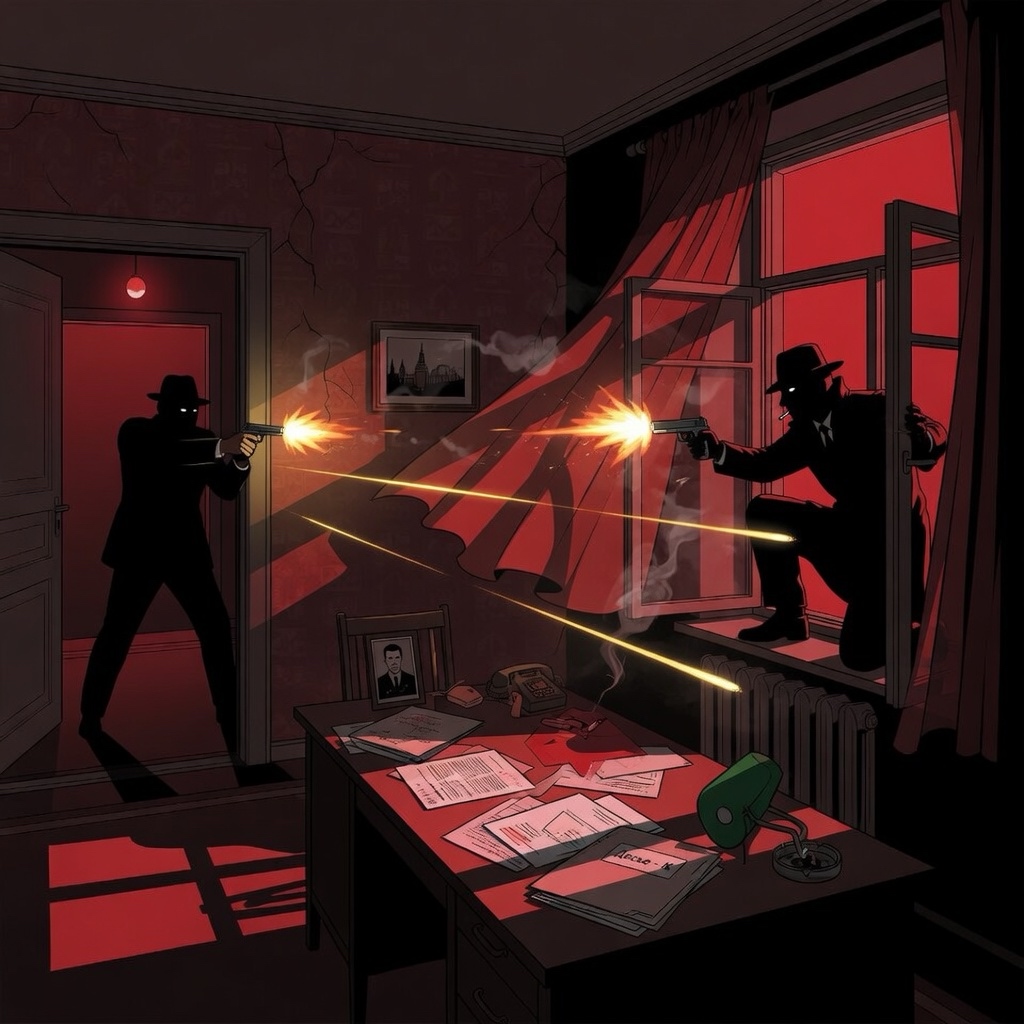
Picking locks, opening safes, pickpocketing, lifting a badge from a jacket at a diplomatic reception, disabling a wrist restraint with a paperclip, threading a listening device through a door seam: this is Coordination, the fine-motor register. It is also the primary skill for escape from restraints, a critical D5 competency, and for the general category of small precise motions made under pressure.
Era notes. The specific tools shift across eras. A Shadow War operative uses rakes and tension wrenches on mortice locks; a Long Dark operative adds electric picks for modern pin-tumbler locks and safecracking tools for mechanical combinations; a Nightscreen operative works against electronic locks and biometric locks, both of which usually need specialist support or gear to defeat outright.
Specializations. Coordination can sub-specialize into Lockwork (mechanical locks, safes, and restraints), Sleight of Hand (the brush pass, lifted badge, planted device, and pocketed key), and Insertion Methods (parachuting, static-line jumps, freefall, combat diving, swimmer infiltration, and similar motor disciplines). Insertion Methods is qualification-flavored: a character with the specialization is jump-qualified, dive-qualified, or otherwise trained for that insertion mode; a character without it usually needs specialist support or a much harder check.
Common uses. Lock picking. Safe opening. Pickpocketing. Slipping restraints. Fine-motor sabotage (loosening a bolt, disabling a phone’s charging circuit). The quiet insertion of a listening device or camera into a contested space.
Example check difficulties. A standard household lock in a quiet corridor: Easy. A commercial safe at a bank during business hours, with tools, uninterrupted: Average. A wrist-restraint escape while being watched: Hard. A safe in a bank’s main vault with a silent alarm active: Severe, and the scene is already going badly.
Stealth · Agility
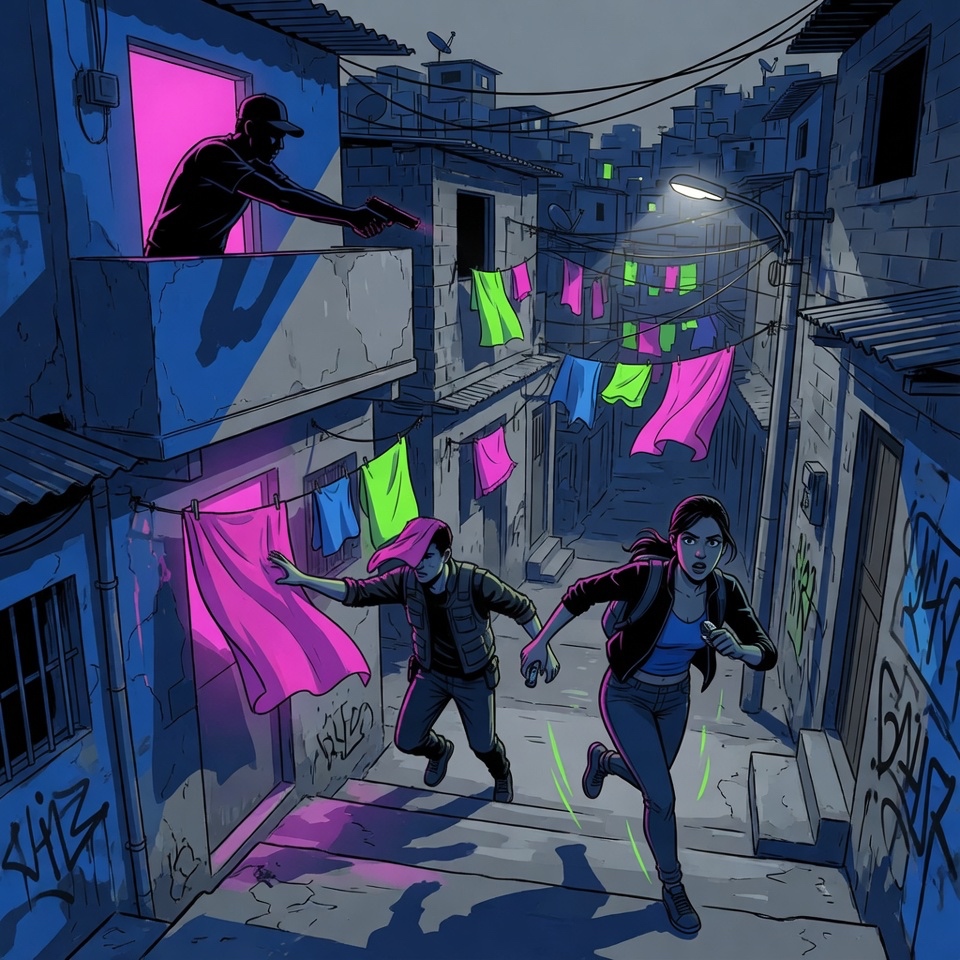
Moving quietly. Remaining unseen. Being in a place while being invisible. Stealth is the skill of fieldcraft in its most literal form: the ability to traverse a hostile space without being noticed. It covers nighttime infiltration, shadowing a target through a crowd (partially; also see Surveillance), holding a position in cover, and the specific Division 5 specialty of being in the same room as someone and not existing to them.
Era notes. Stealth in the Shadow War is the skill of the night raid, blacked-out approaches, sentries to evade, the resistance fighter sliding past a German patrol. In the Long Dark it is urban, quiet, surveillance-aware, the skill of crossing a hostile city without presenting a signature. In Nightscreen it is layered: physical stealth is still necessary, but staying out of camera coverage and drone sightlines is now its own discipline. A modern Stealth check often combines with Tradecraft; the body hides, the pattern of life also hides.
Common uses. Night infiltration. Holding cover under patrol. Exiting a surveilled building without being seen. Crossing a camera-coverage zone in a modern city. The silent approach that sets up a takedown.
Example check difficulties. A moonless-night infiltration of a lightly-patrolled perimeter: Average. Slipping through a crowded public venue without being flagged by a trained observer: Hard. Crossing a modern airport’s secure perimeter: Severe, with gear.
Resilience · Willpower
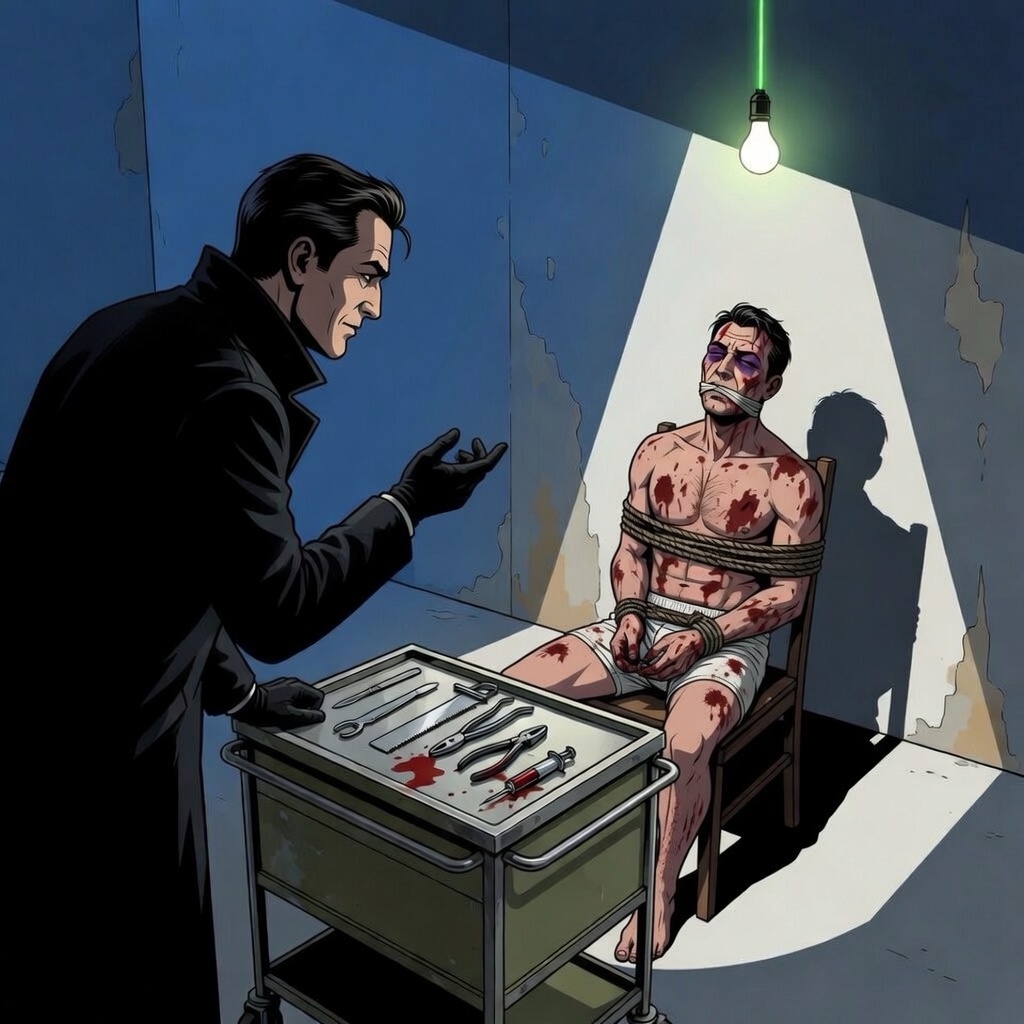
Endurance, pain tolerance, and the capacity to continue functioning past the body’s normal stopping points. Resilience is the skill of how long you can do this: holding your breath in cold water, staying conscious after blood loss, standing for ninety-six hours of enhanced interrogation without breaking, walking thirty kilometers in winter boots that do not fit.
Resilience is also the primary Interrogation defense skill in Division 5; see Interrogation, below, for how that contest resolves.
Era notes. The specific techniques an operative is resisting evolve. In the Shadow War, interrogation was often direct physical, Gestapo techniques being what they were. In the Long Dark, interrogation trended toward psychological and sensory, sleep deprivation, isolation, stress positions, pharmacological augmentation. In Nightscreen, interrogation is biometric and pharmacological: polygraph (and its successors), voice-stress analysis, chemical-assisted questioning. Resilience covers the operative’s capacity against all of these; specific talents in Chapter Five can specialize.
Common uses. Extended physical exertion. Resisting interrogation. Resisting torture. Resisting chemical compromise (truth drugs, sedatives, intoxicants deployed as tradecraft). Maintaining cover under extreme emotional stress (the funeral of an asset under a cover identity, for example).
Example check difficulties. A 24-hour forced march in cold conditions: Average. Resisting an 8-hour interrogation under standard techniques: Average (D5 baseline). Resisting a 72-hour interrogation under pharmacological pressure: Hard. Resisting indefinite solitary confinement without breaking: Severe.
Readiness · Willpower
The skill of being ready before the scene has caught up to you. Readiness covers immediate nerve, surprise resistance, threat response, fear discipline, and the first seconds of a bad situation: the hand moving toward a pistol, the moment the elevator doors open onto a hostile team, the instant an interrogation shifts from conversation to coercion.
Readiness is retained from the Exodus NDS Core Rules because structured play still needs it. In Division 5, initiative uses the core split: Savvy + Perception when the operative is on watch, prepared, or had warning; Willpower + Readiness when the operative is surprised, ambushed, panicked, or forced to react under sudden pressure.
Readiness is not the same thing as Perception. Perception notices the danger. Readiness answers whether the operative moves before the danger owns the scene.
Specializations. Readiness can sub-specialize into Ambush Response (reacting when violence starts), Interrogation Nerve (the moment pressure first lands), Counter-Panic (keeping composure during disaster), and Operational Alertness (watch rotation, boring vigilance, and fatigue-aware readiness).
Common uses. Initiative when surprised. Resisting panic. Holding composure when an asset bolts. Acting before a tail team closes. Keeping a weapon, cover story, or exit plan usable when the scene turns.
Example check difficulties. Reacting to a suspicious movement you half-expected: Easy. Keeping initiative when a quiet meet becomes a snatch attempt: Average. Acting cleanly in the first second of a well-planned ambush: Hard. Staying functional when drugged, sleep-deprived, and surprised by a hostile interrogation team: Severe.
Survival & E&E · Savvy
The skill of staying alive when the team is no longer there. Survival & E&E (Escape and Evasion) covers wilderness survival (food, water, shelter, fire, navigation by terrain and stars), urban survival (food, water, shelter, anonymity in a hostile city without papers), evasion (movement through hostile terrain on foot, deliberate route selection to defeat tracking, pace-versus-noise judgment), and the broader category of getting from a compromised position back to a friendly one with no support.
Survival & E&E is the operative’s last skill before the cover story collapses entirely. Resilience keeps the body moving. Survival & E&E decides where it goes next. Extended evasion typically rolls Survival & E&E to plan the route and Resilience to endure it.
Era notes.
- Shadow War. The signature era. Every SOE and OSS course included extended E&E training: how to walk out of occupied France, live off a winter forest in Norway, or cross the Pyrenees without papers. The wilderness side matters more here than in the other eras; the urban side matters about equally.
- Long Dark. The skill professionalizes. The wilderness side remains, but urban evasion grows. Crossing East Berlin on foot in 1965 with no documents and a compromised cover is a Survival & E&E operation in the same sense as crossing the Pyrenees in 1943.
- Nightscreen. The wilderness component shrinks; the urban component now contends with persistent camera and phone-tracking exposure. Survival & E&E frequently combines with Tradecraft for signature hygiene.
Specializations. Survival & E&E can sub-specialize into Wilderness (bushcraft, cold-weather discipline, desert and jungle survival), Urban Evasion (movement through hostile cities on foot without trace), Cross-Border (moving across a national frontier on foot, with or without papers), and Resistance (organizing local support without prior contact).
Common uses. Walking out of a compromised operation. Surviving a winter in cover terrain. Crossing a hostile border on foot. Going to ground in a hostile city for days or weeks. Setting up an emergency rendezvous when the planned one is burned.
Example check difficulties. Three days of foot evasion through familiar countryside in fair weather: Easy. A week of urban evasion in a moderately surveilled city: Average. A month of cross-border evasion through hostile territory in winter: Hard. The classical six-month walk-out of an entirely burned operation: Severe.
Mental Skills
Five skills for the analytical and technical work.
Knowledge (Geopolitics) · Intellect
Geopolitics is a term of art here: political history, economic systems, international relations, intelligence-service histories, current-affairs analysis, and the general background of the modern world. A D5 operative with Knowledge (Geopolitics) 3 can read any newspaper in any major language with a professional understanding of what is on the page and what is not.
Knowledge (Geopolitics) is the skill of the Ledger Query: the formal D5 procedure by which an operative consults institutional memory for context on a target or operation. It is also the primary dossier-reading skill during the Intel Phase.
When tables or quick-reference text abbreviate this skill as Knowledge, they mean Knowledge (Geopolitics) unless a narrower specialization or domain is named.
Specializations. Some operatives specialize further: Knowledge (Geopolitics) can be sub-specialized at GM discretion into Knowledge (Soviet Intelligence), Knowledge (Middle Eastern Politics), Knowledge (Gulf Finance), Knowledge (European Criminal Networks), Knowledge (Counterintelligence), Knowledge (Linguistics), and similar. Counterintelligence covers mole hunting, defector vetting, debrief-consistency analysis, walk-in evaluation, and the long study of opposition-service tradecraft. Linguistics covers accent detection, dialect placement, sociolect reading, and the analytical side of the language-pressure rules later in this chapter.
Common D5 Knowledge specializations include:
| Specialization | Covers |
|---|---|
| Knowledge (Counterintelligence) | Mole hunts, defector vetting, canary traps, double-agent patterns, hostile-service method. |
| Knowledge (Soviet Intelligence) | KGB, GRU, Stasi, Warsaw Pact security services, doctrine, rank, institutional habits. |
| Knowledge (Western Services) | CIA, SIS/MI6, DGSE, BND, allied liaison culture, NATO-adjacent intelligence practice. |
| Knowledge (Regional Politics) | A defined theater such as Balkans, Gulf, Central America, or South China Sea politics. |
| Knowledge (Financial Systems) | Sanctions, shell firms, banking compliance, black-market currency, invoice trails. |
| Knowledge (Organized Crime) | Criminal groups, smuggling routes, protection markets, prison and broker networks. |
| Knowledge (Linguistics) | Accent tells, dialect placement, idiom traps, sociolect, native-speaker scrutiny. |
| Knowledge (Terror Networks) | Non-state militants, cells, support networks, ideology, logistics, and propaganda channels. |
Era notes. The content of the knowledge evolves dramatically. A Shadow War operative needs to know the Axis order of battle and the shifting geography of occupied Europe. A Long Dark operative needs to know the Warsaw Pact command structures and the economic indicators of a dozen client states. A Nightscreen operative needs to know global finance, non-state actors, private-intelligence firms, and the organizational charts of state services that did not exist thirty years ago.
Common uses. Dossier dives. The Ledger Query. Contextualizing briefing material. Recognizing the significance of a name, a flag, a date, a phrase. Understanding the political framing of an operation beyond the operational brief.
Example check difficulties. Recognizing a named opposition officer from a photograph: Average. Placing a coded newspaper reference in political context: Average. Identifying the backing of a non-state actor from its technique signature: Hard. Reconstructing the long pattern of an opposition service from fragmentary evidence: Severe.
Perception · Savvy
Noticing things. Active and passive awareness: the subtle change, the detail that is slightly off, the person who is not where they were five minutes ago. Perception is the skill that most distinguishes a trained operative from a civilian. A D5 officer with Perception 3 walks into a room and leaves with a mental inventory the rest of the party has not registered at all.
Perception covers the baseline noticing function. Active tailing and pattern-following are the domain of Surveillance (a tradecraft skill); the overlap between the two is real, and GMs may ask for either depending on framing. As a rule of thumb: Perception notices; Surveillance pursues.
Specializations. Perception can sub-specialize into Search (the methodical sweep of a room, person, vehicle, or route for hidden objects, bugs, contraband, or anomalies) and Microexpression (close reading of stress, deception, and intent at conversational distance).
Common uses. Noticing a tail. Spotting a changed cover in a room (someone has moved a photograph, a chair, a glass). Catching the small-scale lie: the assertion of fact that is slightly wrong. Noticing that the food at a meet has been altered. Reading the room during a negotiation.
Example check difficulties. Noticing that a known tail is across the street: Easy. Noticing that a professional tail is across the street: Average. Noticing that a professional tail has been with the operative for six days without being seen: Hard. Catching a well-rehearsed lie in a hostile interrogation environment: Hard to Severe.
Streetwise · Savvy
The operational knowledge of the underside of a city. How to find a fence. How to pay a bribe appropriately. How to disappear in a bad neighborhood when the neighborhood is not your bad neighborhood. How to read what a given piece of local custom means: a closed shutter at midday, a bouquet left at a shrine, a car parked crooked outside a particular address.
Streetwise is the skill of operating in environments where the formal rules are not the real rules. It is the skill of the asset recruit in the low underbelly: the bought asset, the coerced asset, the walk-in who started life as a thief. Streetwise and Negotiation overlap substantially in practice; as a working distinction, Streetwise covers where you are and Negotiation covers what you say there.
Era notes. The shape of the underworld changes. Shadow War streetwise is wartime black market, forgery networks, the refugee underground. Long Dark streetwise is arms dealers, brothels, currency traders, and the gray economy of a divided city. Nightscreen streetwise is ransomware brokers, counterfeit-document rings, the dark web, and the illicit-service economies of gray-zone cities.
Specializations. Streetwise can sub-specialize into Underworld (the criminal-network register that is the skill’s default), Officialdom (border control, embassy procedure, customs declaration, hotel registration, and the small officialese of moving without flagging), and Local Networks (the specific ground-level knowledge of one city or region).
Common uses. Finding a fixer. Negotiating a bribe. Locating a source of forged documents on short notice. Blending into a neighborhood whose rules the operative does not natively know. Recognizing a local criminal network’s signature on an event.
Example check difficulties. Finding a passable forger in a friendly city: Easy. Finding a forger in a hostile city at 2 a.m.: Hard. Negotiating safe passage through a gang-controlled neighborhood: Hard. Extracting from a city under an active hostile dragnet through local criminal-network assistance: Severe.
Medicine · Intellect
First aid, field surgery, diagnostic reading, and the operational use of pharmaceuticals. Division 5 officers with Medicine skills are rare and valuable; every operation with a non-zero chance of serious injury benefits from a team medic. Medicine covers the standard battlefield-medicine range plus several Universe-specific uses: identifying drugs and poisons, preparing sedatives for operational use, recognizing when an asset is being pharmacologically coerced.
Specializations. Medicine can sub-specialize in Field Surgery, Pharmacology (drug preparation and identification), and Forensics (post-mortem and injury-pattern reading).
Era notes. Wound management in 1944 and 2024 is more similar than different at the field level. The tools change: antibiotics transform the profession between Shadow War and Long Dark; hemostatic agents and prehospital trauma medicine transform Long Dark to Nightscreen.
Common uses. Treating a teammate’s injury in the field. Identifying a poison from symptoms. Preparing a sedative for operational use (often combined with Forgery or Streetwise to acquire the substance). Recognizing that an asset is being drugged by a handler.
Example check difficulties. Standard field first aid on a stable wound: Easy. Field surgery on a penetrating wound with improvised tools: Hard. Identifying an unknown compound from symptoms alone: Hard. Keeping a severely injured asset alive over a 12-hour extraction: Severe.
Engineering & Repair · Intellect
Building, repairing, modifying, maintaining, diagnosing, and sabotaging physical systems. Engineering & Repair is the Division 5 replacement for the core Craft skill for practical, technical work.
Engineering & Repair covers vehicle repairs, field electronics, mechanical cameras, bugs, radios, weapon maintenance, improvised devices, workshop fabrication, safe-house infrastructure, and the Quartermaster’s constant problem: making civilian equipment do operational work without looking like operational equipment.
Use Demolitions when the main question is explosive effect, shaped destruction, or blast timing. Use Forgery when the object is a document, seal, credential, signature, or identity artifact. Use Cyber when the system is primarily software, networked, or digital. Use Engineering & Repair for the hardware, vehicle, mechanical, and applied-engineering layer around those tasks.
Era notes.
- Shadow War. Radios, weapons, timers, vehicle field repair, improvised silencers, hidden compartments, and simple electrical devices. Engineering & Repair is often grease, wire, and nerve.
- Long Dark. Miniaturized cameras, transistor bugs, burst transmitters, vehicle modifications, safe-house wiring, and workshop-grade fabrication. The skill becomes one of the signature Quartermaster competencies.
- Nightscreen. Consumer electronics modification, drones, surveillance devices, 3D-printed parts, biometric spoofing hardware, vehicle telemetry work, and physical access tools that surround Cyber operations.
Specializations. Engineering & Repair can sub-specialize into Vehicles (field repair and modification), Electronics (bugs, radios, sensors, cameras), Weaponsmithing (maintenance and covert modification), Fabrication (workshop construction and improvised devices), and Safe-House Systems (power, concealment, alarms, compartments, and physical infrastructure).
Common uses. Repairing a damaged vehicle. Building a concealed transmitter. Modifying a camera into a dead-drop scanner. Diagnosing why a bug failed. Keeping an old aircraft engine running one more night. Building a hidden compartment that survives a casual search.
Example check difficulties. Basic field repair with proper tools: Easy. Modifying a consumer device for an operation: Average. Repairing a vehicle under pursuit pressure: Hard. Building a scanner-resistant device from local parts in a hostile city: Severe.
Social Skills
Five skills for the work that happens across a table, in words.
Charm · Charisma
The skill of making people want you around. Not seduction: Charm is not flirtation per se, though flirtation is one of its applications. Charm is the broader competency of being pleasant, being interesting, being remembered as warmer than you actually are. A Charm 3 operative can walk into a cocktail party where they know nobody and leave with three new acquaintances who will remember them fondly in eighteen months.
Common uses. Cultivating a potential asset. Making a cold approach warm. Working a room at a reception under cover. Disarming a suspicious contact. Recovering from a small cover slip by being liked. Generating goodwill that a later request can draw on.
Example check difficulties. Starting a conversation with a stranger at a public event: Easy. Getting a skeptical businessperson to accept your card and remember you: Average. Convincing a wary security officer that you belong where you are: Hard. Turning a hostile first encounter into a genuine friendship over the course of an evening: Severe.
Deception · Charisma
Lying. Specifically, lying well: telling a falsehood that survives scrutiny. Deception is the skill of cover maintenance under pressure. Every scene in which the operative is in a Legend and being questioned about any of its details is a Deception scene.
Deception overlaps with Charm, but the two part ways at the goal: Charm gets you liked, Deception gets you believed. An operative can be liked without being believed (the charming drunk at the party who is obviously making up his résumé) and can be believed without being liked (the cold technical expert whose claims are all plausibly checkable). D5 operatives are typically trained in both.
Era notes. The targets of Deception change. In Shadow War, the Deception target is often a German officer who may have read the operative’s cover dossier that morning. In Long Dark, the target is often a professional counter-intelligence officer who has seen every technique an operative has. In Nightscreen, the target is sometimes an algorithm: a voice-stress analyzer, a polygraph, a behavioral-biometric system. Specific talents in Chapter Five cover algorithmic deception.
Common uses. Cover maintenance under questioning. Bluffing a sentry. Lying to an asset about the operation’s ultimate purpose (a sadly common D5 activity). Passing an interrogation without giving the interrogator anything actionable.
Example check difficulties. Lying to a civilian with no professional scrutiny: Easy. Holding a cover story through a standard passport control: Average. Deceiving a trained counter-intelligence officer under sustained questioning: Hard. Passing a polygraph with no preparation: Hard. Passing a polygraph while high on a truth drug: Severe.
Leadership · Willpower
Leadership is the team-coordination skill: the operative who can pull a ragged assembly of disparate personalities into a coordinated operation, the handler who can convince an asset to take a step they did not want to take, the station chief who can hold a cell together under sustained adversity.
Leadership is also the primary skill for asset handling under stress. When an asset balks at a rendezvous, when a nervous local contact is about to do something stupid, when a team member is about to quit the mission in the middle: the skill that intervenes is Leadership.
Common uses. Coordinating a multi-person infiltration. Holding an asset on-mission when they want to abort. Rallying a team that has just taken a significant setback. Asserting authority in an ad-hoc coalition with another service. Convincing an asset to do something their conscience resists.
Example check difficulties. Holding a briefing that leaves the team coordinated and committed: Easy. Keeping an asset on-mission through a moment of cold feet: Average. Convincing a team to continue an operation after a teammate has been captured: Hard. Holding a multi-service coalition together under active sabotage: Severe.
Negotiation · Charisma
Negotiation is transactional: it governs conversations in which both parties have something the other wants, and an exchange must be arrived at. It is the primary asset-recruitment skill (where the exchange is your loyalty for my protection and my compensation) and the primary skill of inter-service arrangements (where the exchange is your silence for my silence, and our mutual operational breathing room).
Common uses. Asset recruitment. Inter-service arrangements (“we look the other way on yours; you look the other way on ours”). Purchasing of services on the gray market (combines with Streetwise). Hostage negotiations in the rare cases they reach the table. The long cultivation of a relationship that will pay off operationally years later.
Example check difficulties. Negotiating a standard commercial arrangement under cover: Easy. Recruiting an asset who is already partially disposed to you: Average. Recruiting a hostile asset whose resistance must first be converted: Hard. Negotiating an extraction deal with a hostile service on their terms: Severe.
Interrogation · Willpower
Extracting information from an unwilling source. Interrogation is the reciprocal of Resilience: an interrogator rolls against the subject’s Resilience checks over extended time, and a Resilience 3 subject can expect to hold out for three to five days under standard hostile techniques before giving up anything meaningful. Interrogation in Division 5 covers a spectrum of techniques, from the almost-conversational (“Let us share this coffee and discuss your situation”) through the sustained pressure of professional interrogation to the extreme methods that D5 officially does not use and occasionally employs anyway.
A note on practice. The institution’s doctrine on interrogation is complicated. D5 has historically preferred the rapport-based technique associated with the most successful American and Israeli interrogators of the modern era: build a relationship with the subject over time; the information follows from the relationship. The institution has, at times, used harsher techniques; the Ledger notes them; the institution considers most of them operational failures in the long run.
Tables should decide at session zero what the campaign’s register on interrogation is. Some tables run the Le Carré default: the rapport-builder who gets the truth because he has offered the subject the only clean conversation in weeks. Other tables run the harder register. The mechanics support both; the Ledger judges neither.
Common uses. Professional interrogation of a detained source. The soft interrogation of an asset who is lying. The counter-interrogation, resisting an interrogator while appearing to cooperate. Reading the interrogation, a skilled interrogator can tell when they are being fed false information, which is sometimes more useful than the false information itself.
Example check difficulties. Casual professional interrogation of an untrained subject: Easy. Sustained professional interrogation of a trained subject: Average. Breaking a D5-equivalent officer under time pressure: Hard. Extracting information from a prepared subject without leaving evidence of coercion: Severe.
Vehicle Skills
Two skills; see the sidebar below for the third slot Division 5 leaves empty.
Drive · Agility
Operating a wheeled vehicle under ordinary and operational conditions. Drive covers cars, trucks, motorcycles, and, with GM discretion, armored vehicles. The D5 use of Drive is not the stunt-driver register of an action film; it is the quiet professional register of driving a tail without giving away that you are driving a tail, of crossing a hostile border without attracting attention from a guard who has stopped ten thousand cars that week, of running a counter-surveillance drive through a modern city and emerging clean.
The stunt-driver register is available when the fiction calls for it. Shadow War pursuits through bombed-out French villages; Long Dark chases through divided Berlin; Nightscreen urban combat driving in armored SUVs. Drive covers all of it. The era framing moderates the frequency.
Era notes. The vehicles change substantially. Shadow War vehicles are mechanically simple and breakable: a Drive 3 operative in 1944 spends as much time keeping the vehicle running as operating it. Long Dark vehicles are more refined; the professional-driving techniques of the era (box drills, counter-surveillance routes) reach maturity. Nightscreen vehicles are computer-managed, tracked by everything with a camera, and require constant awareness of the biometric and surveillance environment around them.
Common uses. The routine cover drive. The counter-surveillance route. The tail. The evasive drive after a compromise. The pursuit. The border crossing in a vehicle under cover.
Example check difficulties. Routine driving under cover: Easy. Executing a counter-surveillance drive through a moderately surveilled city: Average. Losing a professional tail in traffic: Hard. Evasive driving under active pursuit with civilian casualties imminent: Severe.
Pilot · Agility
Operating aircraft and watercraft. Pilot is a rarer skill than Drive: few D5 operatives learn it, and those who do usually learn only one category. The skill covers: fixed-wing (Cessna through light commercial), rotary-wing (helicopters, increasingly common from Long Dark onward), and watercraft (RHIBs, small motor yachts, coastal operations boats). When an operative reaches Pilot 3, they choose one of those three categories as a free Pilot specialization. Pilot 4 or 5 does not automatically grant every category, but it is a strong fictional basis for buying additional Pilot specializations with XP.
Era notes. The Shadow War Pilot is, canonically, the SOE / RAF liaison pilot flying the Westland Lysander, the aircraft most associated with the era. D5 had access to a very small number of Lysander pilots during the war; the ones who survived are spoken of with reverence in the Ledger. Long Dark Pilots trend toward helicopters and light multi-engine fixed-wing. Nightscreen Pilots cover a broader range, with increasing overlap into drone operation, a skill that is borderline between Pilot and Cyber, and which GMs may rule as either depending on the specific drone.
Common uses. The covert insertion by light aircraft or watercraft. The pickup extraction. The long-range transport that avoids commercial aviation’s paper trail. Drone operation (Nightscreen) for surveillance or kinetic effects.
Example check difficulties. Routine commercial-pattern flying under cover: Easy. Landing a light aircraft on an unimproved field at night: Hard. Night maritime insertion against a defended coast: Hard. Flying a damaged aircraft out of a compromised landing zone: Severe.
Mounts & Beasts: Intentionally Absent
Exodus NDS provides for a Ride skill and mounts. Division 5 does not use either; the Universe has no regular need for it. The handful of scenarios where an operative rides a horse, a camel, or a dog sled, a Shadow War partisan in the Balkans, a Long Dark operation in Afghanistan, a Nightscreen operation in the Mongolian steppe, can be adjudicated by the GM as extensions of Athletics or, for vehicle-like handling, Drive.
Tables running a highly-specialized campaign where mounted operations are frequent can restore Ride as a standard Exodus NDS skill; this is homebrew. The default is that the slot is empty.
Tradecraft Skills (Universe-Unique)
Seven skills. These are the defining professional language of Division 5, found in no other Exodus NDS Universe. A campaign that runs without at least one of these in active use per session is probably not a Division 5 campaign yet.
Tradecraft · Savvy
Tradecraft is the umbrella skill of professional intelligence craft: dead drops, brush passes, surveillance-detection routes (SDRs), Moscow Rules execution, asset handling protocol, emergency contact procedures, and the entire body of professional technique that separates a trained intelligence officer from a gifted amateur. It is the single most important skill in the game.
Every D5 operative learns Tradecraft at some point, but not every operative carries it at the same depth on the character sheet. Tradecraft 1 means basic course familiarity and enough doctrine to know when a specialist should take over. Tradecraft 2 means working competence under ordinary field conditions. Tradecraft 3 is the mark of a field officer who can carry the procedure themselves. Tradecraft 4 is senior-officer territory, probably a station chief. Tradecraft 5 is the mark of a legend.
Specializations. Tradecraft can be sub-specialized into Dead Drops (physical static exchange), Live Meets (brush passes, park-bench handoffs, the art of the two-person conversation that neither party was seen to have), Surveillance Detection (the active art of being certain you are not being followed; distinct from Surveillance, which is the art of following), and Asset Handling (the tradecraft of the handler-asset relationship specifically).
Era notes. Tradecraft is the most era-continuous skill in the book. A 1944 dead drop and a 2024 dead drop are recognizably the same activity: the specifics rotate (a loose brick in East Berlin becomes a geocache in a modern park becomes a pre-arranged edit on a low-traffic wiki page), but the skill transfers. A Tradecraft 3 officer trained in the Long Dark could, with a couple of sessions of updating, operate in Nightscreen. The reverse is also true.
Common uses. Executing a dead drop. Executing a brush pass. Mounting an SDR. Managing a live asset meet under surveillance. Running an emergency contact procedure when a standard protocol has failed. Recognizing an opposition service’s tradecraft signature from a few of their operations.
Example check difficulties. A routine dead drop at a prepared site with no observed hostile activity: Easy. A brush pass on a surveilled street: Average. An SDR in a hostile capital with active tailing: Hard. Handling a panicked asset through a compromised meet sequence without aborting: Severe.
Cryptography · Intellect
Codes, ciphers, and the mathematics of secret communication. Cryptography covers both encryption (sending protected messages) and cryptanalysis (breaking protected messages). A D5 cryptographer works on the offensive and defensive sides of the same problem; common specializations include Encryption, Cryptanalysis, Secure Channels, One-Time Pads, Steganography, and Signal Authentication.
Era notes. This is one of the most era-dependent skills in the game.
- Shadow War. The era of field ciphers, book codes, poem codes, and one-time pads. A Shadow War cryptographer is often a radio operator by second trade. The skill is about manual encoding and decoding under time pressure, in a farmhouse attic, without the tools. The one-time pad is the gold standard if the operative can reliably destroy it after use. The cryptanalytic side is done mostly offsite at places like Bletchley Park; a field cryptographer rarely breaks enemy codes in the field.
- Long Dark. The era of one-time pads evolved, book codes, and the first generation of mechanical encryption devices. Cryptographers work with dedicated one-time-pad procedures, microdot-distributed keys, and early computer-supported encryption. A Long Dark cryptographer must also know how to detect compromise of a pad: an essential Moscow Rules competency.
- Nightscreen. The era of public-key cryptography, symmetric block ciphers, steganography, and post-quantum primitives. A Nightscreen cryptographer works on key management, secure-channel protocol, side-channel resistance, and the continuous arms race between encryption standards and state-level cryptanalysis.
Common uses. Sending a secure message. Breaking an intercepted message. Building a secure communication channel. Detecting whether a channel has been compromised. Forging encrypted documents (combines with Forgery). Preparing one-time pads or modern equivalents.
Example check difficulties. Sending a routine one-time-pad message in the Shadow War: Easy. Breaking an unknown field cipher with limited traffic: Hard. Establishing a clean channel in a hostile SIGINT environment (Nightscreen): Hard. Detecting a subtle cryptographic-protocol compromise by a state adversary: Severe.
Forgery · Intellect
The skill of creating false documents and, equally, detecting false documents. Forgery covers: printed documents (passports, identity papers, travel permits), signatures, seals and stamps, artwork (rare but it happens), digital documents (modern era), and the general category of artifacts of identity.
A D5 operative with Forgery 2 can create passable documentation for a Thin Legend. Forgery 3 extends to Standard Legends. Forgery 4 is required for Deep Legends, and those are usually built by the Garden (Nightscreen) or by career-long specialists. Forgery 5 is an artist.
Era notes. Forgery has changed dramatically across eras in its specific technique but less in its fundamental logic: every era has an ecosystem of documents that can be faked, inspectors who can be fooled, and verification protocols that can be bypassed.
- Shadow War. Hand-engraved stamps, typewriter-matched documents, ration cards, work permits, travel documents. The forgery target is usually a harried sergeant at a checkpoint. A Forgery 3 operative produces documents that survive a five-minute check; Forgery 4 produces documents that survive a full review in an office.
- Long Dark. The era of printer-based forgery with increasingly sophisticated verification. Documents acquire watermarks, UV elements, embedded fibers, microprinting. The Forgery 3 operative now works with a small workshop; Forgery 4 runs a full forging operation with industrial-grade tools.
- Nightscreen. The era of biometric and digital verification. Paper documents now chain into databases; a forged passport that is physically perfect still fails if the passport number is not registered in the issuing authority’s database, which may be real-time checked at border controls. Modern Forgery combines with Cryptography for cryptographically-signed credentials, and a high-end Nightscreen job is typically a two-person effort pairing the forger with a technical specialist.
Common uses. Building a Legend’s document stack. Producing forged meeting documents for an asset. Faking a signature on a critical document. Recognizing a forgery: the detection side of the skill, often underappreciated. Building a fake digital credential that survives cross-reference.
Example check difficulties. Forging a ration card for a Shadow War rural checkpoint: Easy. Producing a passport that survives a Long Dark border guard’s inspection: Average. Producing a modern e-passport that survives an airport biometric check: Hard. Producing a credential that survives sustained scrutiny by a hostile counter-intelligence service: Severe.
Disguise · Charisma
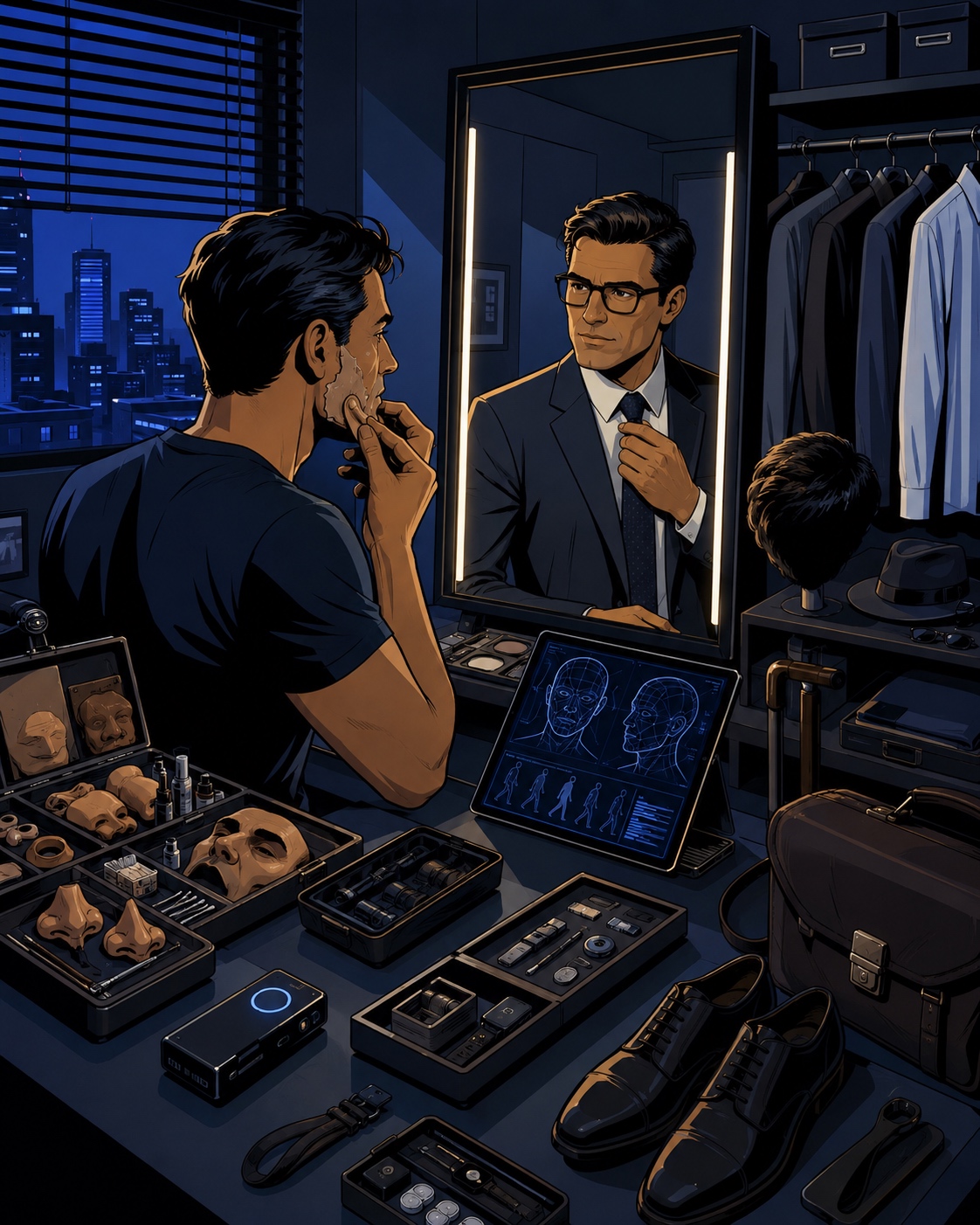
The skill of physically becoming someone else. Disguise covers cosmetic alteration (makeup, hair, prosthetics, dental, scarring), costume and identity dressing (the bureaucrat’s worn briefcase, the laborer’s hands, the academic’s specific shoes), voice and accent performance (building on the language and accent rules earlier in this chapter), and gait, posture, and mannerism (the body’s tell, harder to fake than any document).
Disguise is the physical complement to Cover. A Legend is the documentary skeleton of an identity. Disguise is the body that wears it. A Standard Legend with a poor Disguise check produces an officer who looks like an officer pretending to be a businessman. A Standard Legend with a strong Disguise produces an officer who is, for the duration of the meeting, the businessman they claim to be.
Disguise is the Face’s core professional skill, but is not exclusive to that Archetype. Quartermasters often invest in the production side: kits, prosthetics, dental, gait aids, and counter-biometric materials. Operatives invest in field-level Disguise for cover transitions. Wetworkers occasionally invest in Disguise for the close-quarters approach.
Era notes.
- Shadow War. The era of field-improvised disguise. A Shadow War operative working in occupied Europe carries a small kit and assembles disguises in farmhouses and cellars. The standards of the era are forgiving: a passable working-class disguise need only fool a tired patrol on a dim street.
- Long Dark. The era of studio-supported disguise. D5’s institutional capacity grows; kits improve, prosthetics improve, and the Garden maintains workshops for senior officers who need extended cover work. The standards rise because trained counterintelligence officers are now the usual audience.
- Nightscreen. The era of biometric-resistant disguise. Modern Disguise has to contend with facial recognition, gait recognition, voice biometrics, and sometimes infrared or thermal imaging. A Nightscreen Disguise specialist is half artist, half engineer, and the kit is correspondingly expensive.
Specializations. Disguise can sub-specialize into Cosmetic (makeup, hair, prosthetics), Identity (the costume-and-kit craft of being a specific type of person), Performance (voice, gait, posture, and mannerism), and Counter-Biometric (Nightscreen-only technical work against algorithmic recognition).
Common uses. Walking past a checkpoint as someone the checkpoint is not looking for. Sustaining a face-to-face meeting as a specific other person. Going through a controlled space under a physical identity that does not match any photograph or biometric record on file. Becoming the asset’s late husband for one conversation that the asset cannot otherwise be brought to have.
Example check difficulties. Walking through a busy street under a basic working-class disguise: Easy. Holding a thirty-minute professional meeting under a sustained physical identity: Average. Defeating a trained counterintelligence officer’s scrutiny across an evening: Hard. Defeating a modern airport biometric system without specialty equipment: Severe.
Surveillance · Savvy
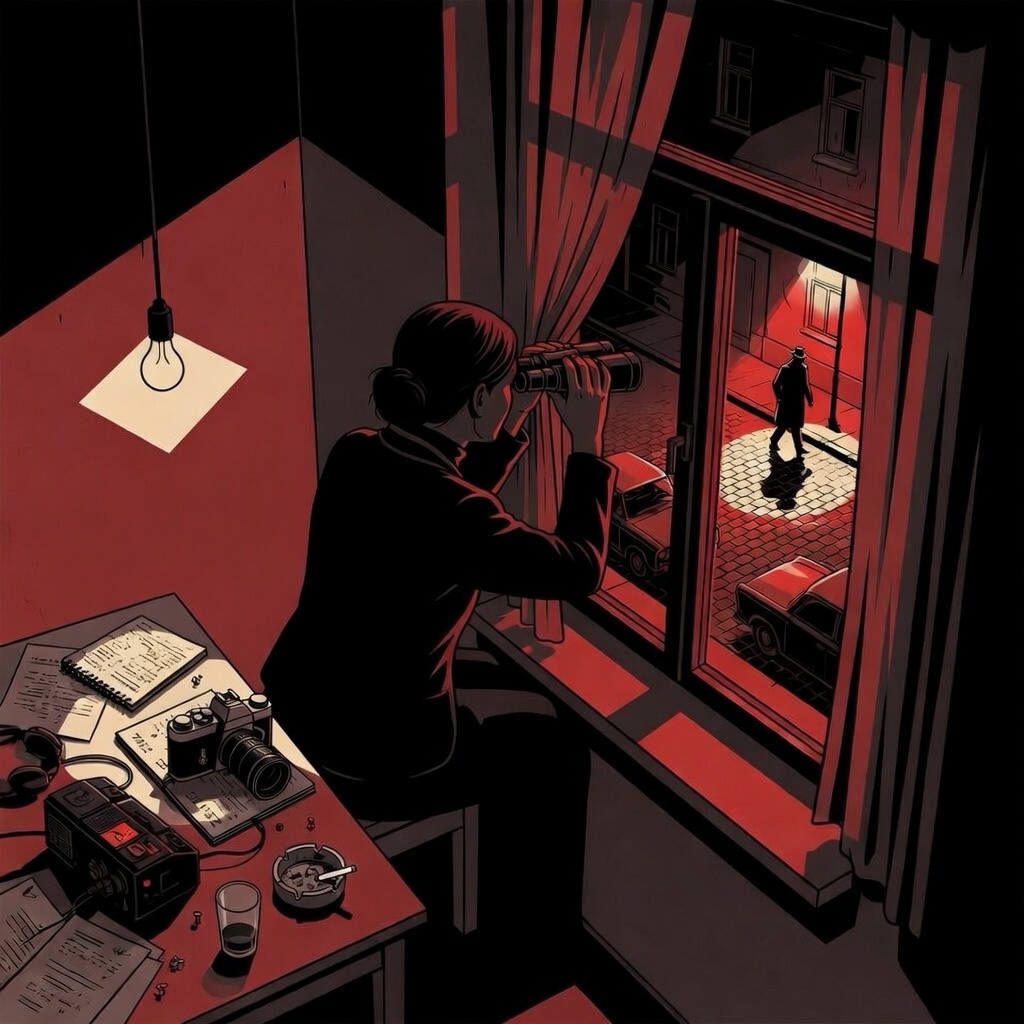
Watching, listening, and following. Surveillance covers physical tailing (foot, vehicle, combined), static observation posts, audio surveillance (wiretapping, parabolic microphones, modern audio devices), and video surveillance (the installation and monitoring side; the countermeasures side is Stealth and Tradecraft): broadly, being aware of a target without the target being aware of you. Surveillance and Stealth are reciprocal skills, one watching, the other hiding; an operative high in one and low in the other is effective on one side of the street and vulnerable on the other.
Specializations. Surveillance can sub-specialize into Static Posts (long-position observation), Mobile Tail (foot, vehicle, and box-team work), Audio / Technical (bugs, wires, parabolic microphones, signal collection, and monitored feeds), and Tracking (foot tracking and sign-reading on mixed terrain). Tracking is most useful in Shadow War partisan operations and modern E&E support; in dense urban Long Dark and Nightscreen operations it appears less often, but matters sharply when it appears.
Era notes. Surveillance is a technology-heavy skill and shifts substantially across eras.
- Shadow War. Mostly direct observation and physical tailing. Audio surveillance is primitive (large, obvious microphones; hard-wired setups). A Shadow War Surveillance operator is usually working foot and vehicle tails on small numbers of targets.
- Long Dark. The era of professionalized surveillance. The KGB’s Seventh Chief Directorate (surveillance) was, per capita, one of the largest-scale surveillance operations of the era; the equivalent Western services were smaller but very capable. Audio surveillance reaches maturity (transistorized bugs, parabolic microphones, room-audio). Video is present but rare. Tailing dominates; the four-person box team is the standard tactic.
- Nightscreen. The era of persistent digital surveillance. Physical tailing still matters but is supplemented (and increasingly replaced) by CCTV, facial recognition, mobile-phone tracking, vehicle ALPR, and drone overwatch. A Nightscreen Surveillance operator is as much an analyst as a field operator: sitting in front of three monitors watching a target through six different feeds.
Common uses. Static surveillance of a target (location, building, person). Active tailing. Installing and monitoring audio surveillance. Running counter-surveillance (combines heavily with Tradecraft). Analyzing surveillance feeds for operational intelligence (Nightscreen).
Example check difficulties. Static observation of a building in civilian clothing: Easy. Maintaining a foot tail through a moderately busy public space: Average. Mounting a box-tail on a professional intelligence officer: Hard. Surveilling a target through a state-level hostile counter-surveillance environment: Severe.
Demolitions · Intellect
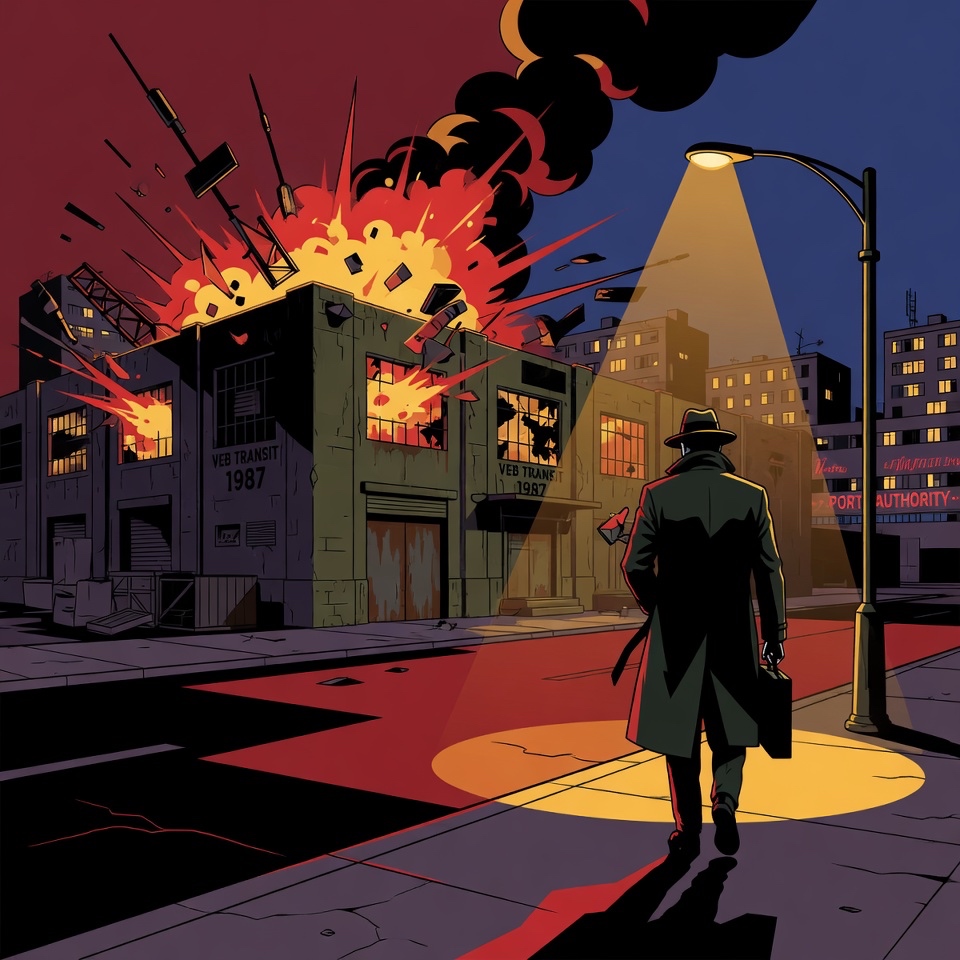
Charges, timers, precision structural destruction, and simply, the trade of making things explode on purpose, at the right time, in the right shape. Demolitions is the skill of the sabotage op: the hallmark of SOE in the Shadow War, carried forward by the Special Operations communities in Long Dark, and by the special-mission-unit tradition that continues into Nightscreen.
A note on purpose. Division 5 demolitions work is almost never about killing people. It is about denying industrial capacity, disabling infrastructure, destroying evidence, or creating a specific effect at a specific time. A demolitions specialist is valued precisely because they can destroy a bridge without being present when it goes, or disable a specific piece of equipment without harming the technicians around it, or create a distraction that draws security away from the operational objective.
Specializations. Demolitions can sub-specialize into Sabotage (industrial, military, or infrastructure denial), Breaching (controlled entry under time pressure), Evidence Destruction (burning material without leaving a useful signature), Distraction / Denial (noise, fire, smoke, and controlled panic), and Heavy Effect (the destructive geometry of rockets, anti-materiel weapons, mortars, and other paramilitary tools where the key question is effect rather than marksmanship).
Era notes.
-
Shadow War. Demolitions’ peak era as a D5 skill. SOE demolitions training produced some of the best sabotage operators in military history. The weapons are plastic explosive (Nobel 808, later Composition C), fuses, detonators, time pencils, limpet mines. A Demolitions 3 operative in the Shadow War is one of the most valuable assets on the team.
-
Long Dark. The skill matures into a wider practice. C-4, Semtex, shaped charges, more sophisticated timing. Soviet sabotage doctrine and Western special-operations doctrine evolve in parallel. Demolitions continues to matter operationally but moves further from D5’s regular caseload.
-
Nightscreen. The skill persists but has narrowed. Precision cutting charges, breaching charges, deniable IEDs (usually as evidence-denial tools, not offensive weapons). A modern infrastructure attack often pairs a physical charge with a digital one: Stuxnet was not a Demolitions op, but the campaigns that followed against similar targets have been hybrid Cyber/Demolitions operations.
Common uses. Sabotage of industrial or military targets. Breaching a door or wall under operational conditions. Disabling a specific piece of equipment. Creating a deniable destruction of evidence. Creating a controlled distraction (the explosion that draws security to the other side of the building).
Example check difficulties. Setting a timed charge on a prepared target in a quiet environment: Easy. Placing a breaching charge on an operational door under time pressure: Average. Sabotaging a complex industrial target with minimum collateral effect: Hard. Disabling a hardened target under active defense without alerting the defense: Severe.
Cyber · Intellect
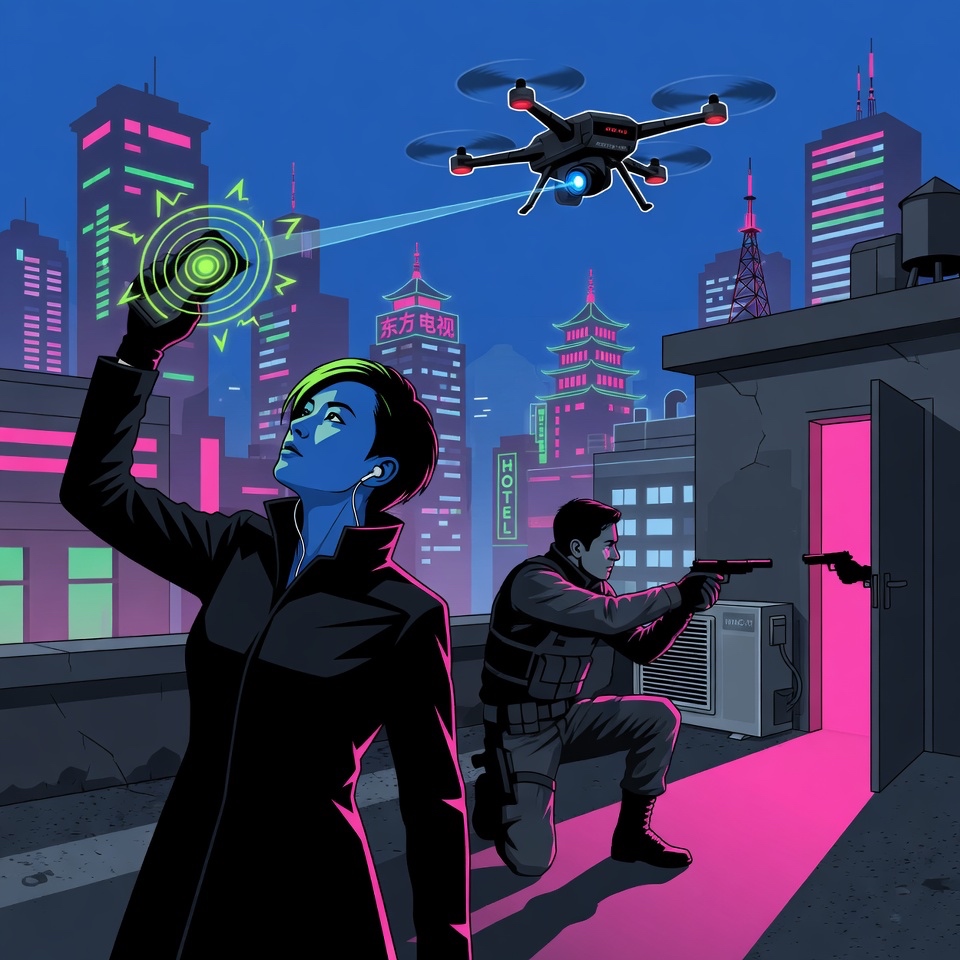
Operating in and through computer networks. Cyber covers network intrusion, malware development and deployment, operational security (OPSEC) in digital environments, counter-intrusion, cryptographic implementation attacks (software side; pure math is Cryptography), and the general professional craft of the modern digital intelligence officer.
Cyber is era-gated by default. Tables running the Shadow War do not have access to Cyber. Tables running the Long Dark have access but should treat it as a rare, specialized skill: computer-based intrusion exists in this era but is the domain of a few dozen people in the world, not a general-purpose skill. Cyber is a primary skill in Nightscreen and should be invested in by at least one PC in every Nightscreen team. By Nightscreen, Cyber touches nearly every other skill on the sheet: locks that need a network credential, documents backed by a database, sabotage with a digital half, evasion complicated by a phone, and drones flown as much as piloted.
Specializations. Cyber sub-specializes into Network Intrusion (getting in), Malware Development (tools), OPSEC (staying in; staying hidden), Cryptographic Attack (implementation-side attacks), and Forensics / Counter-Intrusion (detecting others).
Era notes.
- Shadow War. Does not exist. Points that would go into Cyber may be redirected into Cryptography with GM approval, or, at a stretch, into a Signals Engineering homebrew skill covering advanced radio work.
- Long Dark. Exists but rare. A Cyber 2 operative in 1985 is a genuine specialist; a Cyber 3 operative is a small-handful-in-the-world figure. The skill is very narrow: mainframe access, early computer network attack, primitive malware. Many tables running a Long Dark campaign simply do not use the skill.
- Nightscreen. Primary. Every team should have access. Cyber 2 is the minimum competent level; Cyber 3 is a working specialist; Cyber 4 is a senior capability.
Common uses. Intrusion into a target’s network or devices. Recovery of encrypted or remotely-stored information. OPSEC work to protect the team’s digital footprint. Attribution analysis (attributing a cyber incident to an actor, or obscuring that attribution, for D5’s own operations). Drone hijacking (with GM discretion; overlaps with Pilot).
Example check difficulties. Reading an asset’s unsecured phone: Easy. Penetrating a standard corporate network: Average. Penetrating a state-level adversary’s internal network: Hard. Exfiltrating high-value data from a hardened state target without triggering attribution: Severe.
Era-Shifted Skill Usage
As a consolidated reference for tables that move between eras or run cross-era campaigns, a summary of which skills shift most significantly by era.
| Skill | Shadow War | Long Dark | Nightscreen |
|---|---|---|---|
| Brawl | Sykes-Fairbairn school | Modern mixed schools | Modern mixed schools |
| Ranged | +1 damage (era rule) | Standard; high social cost | Standard; attribution cost |
| Sniping | Bolt-action precision; partisan hides | Dedicated marksman rifles; rare D5 use | Modular precision; drone-assisted overwatch |
| Coordination | Mortice locks, mechanical | Electric picks; safecracking | Electronic/biometric; pairs with Cyber |
| Stealth | Night/rural emphasis | Urban/surveillance emphasis | Camera-aware emphasis |
| Resilience | Physical interrogation | Psychological/sensory | Biometric/pharmacological |
| Readiness | Ambush and occupation pressure | CI pressure and sudden compromise | Algorithmic alerts and fast escalations |
| Survival & E&E | Wilderness and walk-out dominant | Mixed wilderness/urban cross-border | Urban evasion plus surveillance hygiene |
| Knowledge (Geopolitics) | Axis/Allied orders | Bloc structures | Global + non-state + private |
| Streetwise | Wartime black markets | Divided-city gray economy | Modern illicit ecosystems |
| Medicine | Pre-antibiotic field medicine | Modern field medicine | Modern; prehospital trauma |
| Engineering & Repair | Radios, timers, vehicles | Bugs, cameras, workshop fabrication | Consumer tech, drones, biometrics |
| Deception | Human targets only | Human; early machines | Human + algorithmic |
| Interrogation | Physical-heavy doctrine | Psychological doctrine | Pharmaceutical/biometric |
| Drive | Breakable vehicles | Professional-driving mature | Surveillance-dense environment |
| Pilot | Lysander emphasis | Helicopters emerge | Wider; drones overlap |
| Tradecraft | Continuous; rural | Continuous; mature | Continuous; digital extensions |
| Cryptography | One-time pads | Pads + early machines | Public-key + post-quantum |
| Forgery | Paper-based | Paper with verification layers | Paper + digital + biometric |
| Disguise | Field-improvised kits | Studio-supported, Garden workshops | Biometric-resistant, technical equipment |
| Surveillance | Direct observation | Peak professional doctrine | Persistent digital |
| Demolitions | Peak era of the skill | Mature doctrine | Narrower; hybrid with Cyber |
| Cyber | Unavailable | Rare specialist | Primary skill |
The Specialization Rule, Summarized
The standing rule is stated once, under Specializations near the start of this chapter (the Boon die, the XP cost, and the rating threshold that unlocks it). Each skill entry above lists only its established specialties; consult that earlier section for the rule itself and for guidance on GM-approved custom specializations.
The Skills You Actually Use
Every Division 5 campaign leans on a predictable subset of the skill list more heavily than the rest. As a GM’s quick reference, the five skills used in almost every session:
The Always-Five
- Tradecraft: baseline for all operational scenes.
- Perception: the skill that catches what’s wrong.
- Deception: cover maintenance under any scrutiny.
- Surveillance: the Intel Phase, the tail, the static post.
- One Combat skill, for the scene where violence happens.
A team that does not have coverage in all five will feel the gap. One operative should be at least Competent (rating 2) in each of Tradecraft, Perception, and Deception. Surveillance and at least one Combat skill can be concentrated in specialists.
Conversely, the skills that are used rarely but critically:
The Critical Rarities
- Medicine: the shift that saves a teammate’s life.
- Engineering & Repair: the fix that keeps the vehicle, radio, camera, or safe-house system alive.
- Forgery: Legend construction, borderline-checkpoint bluffs.
- Disguise: physical cover under human or biometric scrutiny.
- Survival & E&E: the walk-out when every planned exit is gone.
- Demolitions: the set-piece sabotage op.
- Cryptography, when a channel must be built or broken.
- Cyber (Nightscreen): the entire digital layer of a modern op.
A team without these skills can usually borrow them: a Forgery contact in a friendly city, a D5 Analyst called in for a Cyber engagement, a Cleaners’ Guild medic for a battlefield injury. But borrowing costs. Teams that carry these skills in-house are more self-sufficient.
Languages, Dialects, and Accents
The Core Rules leave language detail undefined. Division 5 needs it at the table because cover work often fails in the mouth before it fails on paper.
Every operative begins with two fluent languages: usually a native language and one operational language. The Linguist talent adds two more fluent languages per purchase and may add working dialect familiarity at GM discretion. Fluency means the character can work, argue, lie, and read ordinary material in the language without a check.
Language has three table-facing levels, summarized in the Language Fluency table following the Accent as a Tell section below.
Accent as a Tell
An accent is a tell, not a failure by itself: a detail that can become meaningful under scrutiny.
When a scene depends on passing as local, the GM asks three questions:
- Does the Legend explain the accent? A Swiss business cover can explain German-accented French. A Marseille dockworker cover cannot.
- Is the listener trained or native? A bored clerk may not care. A counterintelligence officer will.
- Is the conversation technical, emotional, or long? The longer the character speaks, the more the accent matters.
If the answer to two or more questions creates pressure, add +1 Bane die to the relevant Deception, Charm, Negotiation, or Interrogation check. If all three create pressure, the Legend also takes one hit on a failed check. A Boon on the check can define the accent as explained by the cover; a Bane can make the listener remember it later.
Language Fluency
| Level | Meaning | Mechanical Use |
|---|---|---|
| Native / Near-Native | Childhood or long-immersion fluency, idiom, rhythm, and cultural reflex. | No check for ordinary speech; +1 Boon when the Legend depends on sounding local. |
| Fluent | Professional competence. Can work, brief, flirt, threaten, and read most documents. | No check for ordinary speech; technical, regional, or emotional scrutiny may call for Knowledge, Deception, or Charm. |
| Working | Basic functional language, memorized phrases, reading signs, short exchanges. | Simple scenes only. Sustained conversation, interrogation, or cover defense is Hard or worse. |
Language Scrutiny
| Scrutiny | Example | Usual Check |
|---|---|---|
| Casual | Taxi, café, hotel desk, checkpoint line. | No roll if fluent and cover-plausible. |
| Professional | Border officer, police interview, embassy clerk. | Deception, Forgery support, or Knowledge if details matter. |
| Native Specialist | Local journalist, village elder, hostile case officer from the same city. | Deception or Charm with +1 Bane unless the Legend explains the speech. |
| Linguistic Trap | Idiom test, dialect shift, childhood memory, technical term. | Knowledge, Deception, or relevant professional skill; failure marks a Legend hit. |
Example. A Face using a Parisian academic Legend speaks fluent French but learned most of it in Montréal. At a hotel desk, no check. At a Ministry reception, the GM adds +1 Bane to a Charm check when a Paris-born official asks which lycée the Face attended. A Boon lets the player answer with a cover detail: the Legend’s father was posted abroad, explaining the vowel shifts. A failure would not expose D5, but it would make the official remember the Face.
In This Chapter
- Twenty-nine skills in six categories: Combat, Physical, Mental, Social, Vehicle, Tradecraft.
- The Exodus NDS rating scale, with Division 5's professional register.
- Core skill crosswalk from the Exodus NDS Core Rules.
- Twenty-two adapted skills; seven Universe-unique Tradecraft skills.
- Era notes and the consolidated Era-Shifted Skill Usage table.
- Specialization rules: covert combat, Sniping, E&E, Disguise, Surveillance, technical specialties.
- Language, dialect, and accent pressure rules.
- The Always-Five and the Critical Rarities.